

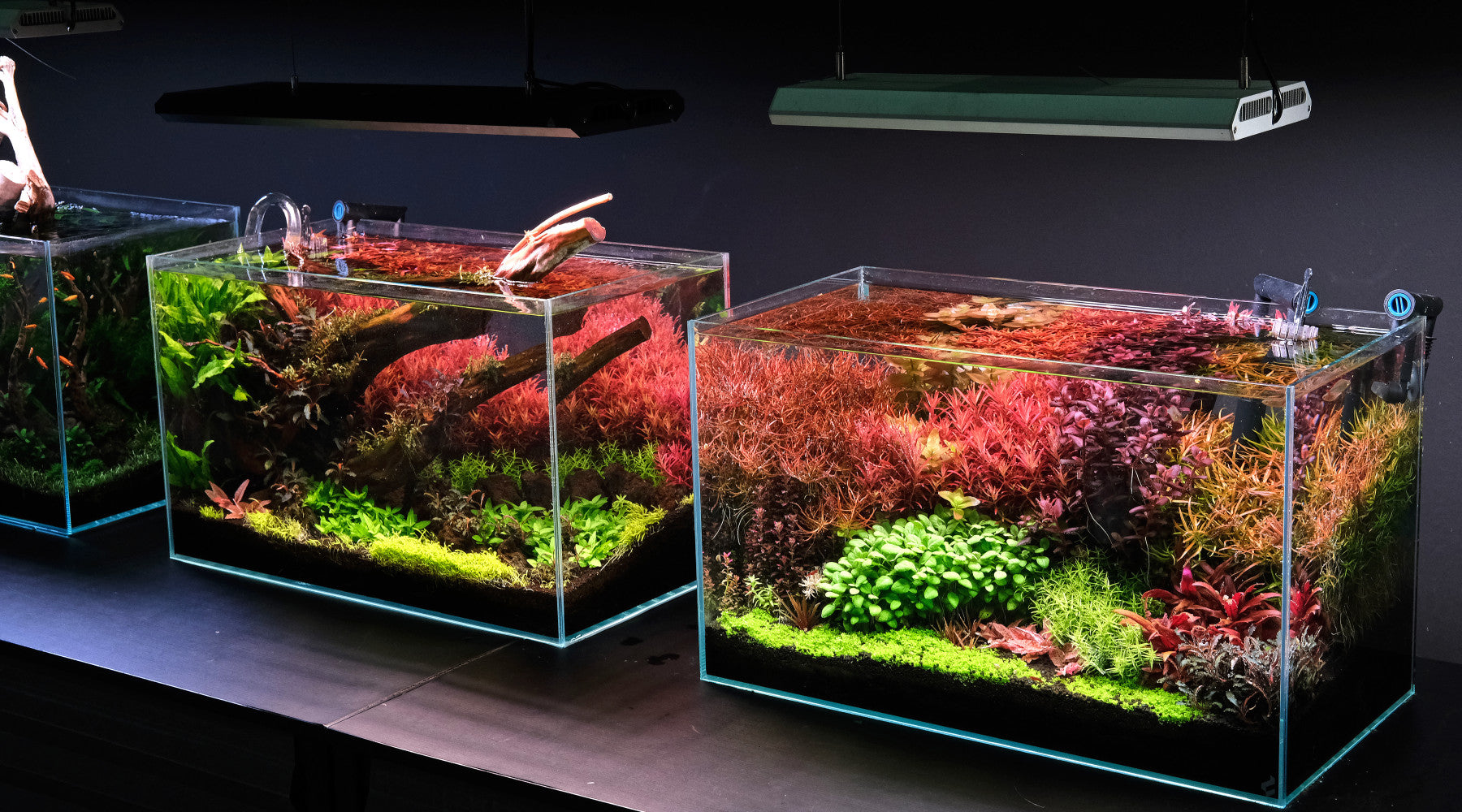
The best LED lights for planted tanks in 2026 deliver enough PAR at the substrate, use a red, green and blue (RGB) spectrum rather than leaning mostly on white diodes, and spread even coverage across the whole tank. For most planted aquariums that puts modern RGB fixtures at the top: Twinstar S, Chihiros WRGB and Vivid, Week Aqua, ONF Flat One and similar. Cheaper lights still grow plants well in low tech and medium tanks, if you accept weaker colour rendition and manage intensity.
-
Deeper tanks need more powerful lights because usable light drops with depth, especially red wavelengths.
-
Low light plants need far less output than carpets, red stems and demanding high tech layouts.
-
Start with intensity lower than you think; modern LED lighting is often overpowered out of the box.
-
Run lights 5 to 6 hours a day in a new tank, 7 to 8 in a stable low tech tank, and 8 to 9 in a stable high tech tank - not all day.
-
Choose lights with dimming and programming if possible; stability beats raw brightness every time.
Why Is Choosing a Planted Tank Light So Confusing?
The confusion is mostly noise, not physics. One review says Fluval lights are fine. Another says only a Chihiros WRGB II or Vivid II counts as serious. A third insists a "full spectrum" label fixes everything. Meanwhile you count diodes and compare wattage figures that say almost nothing about what reaches the plants.
A planted tank does not care about branding. Plants care about photosynthesis, light output at the substrate, and whether the spectrum supports compact growth and good colour. The best light is not the one with the loudest marketing. It is the one that matches your tank depth, your plant list, and your willingness to manage intensity without feeding algae.

The images above were taken on the same day with similar camera settings - the colour differences are even more pronounced in real life than in the images above. While generic LED floodlights or even desk lamps can grow plants well, the visual colour rendition of such units is not great.
LEDs are now widely used in aquariums. They are more energy efficient than older fluorescent bulbs and many come with customisable spectrum and programming. However, not all LED kits produce the same quality of light - there is a huge difference in both output and colour rendering depending on the type of LED used and the arrangement of the diodes;
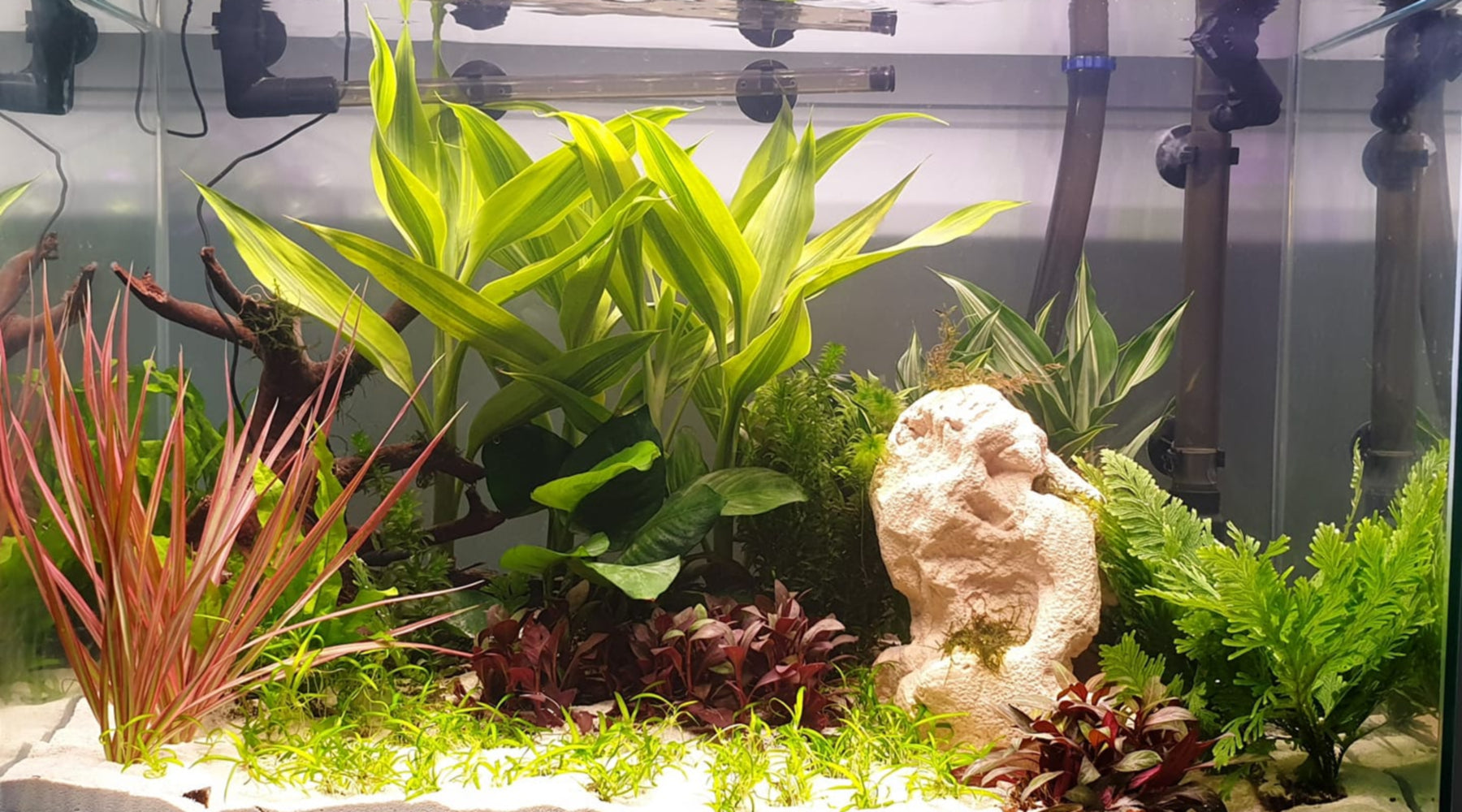
Budget LEDs tend to produce washed out colours. This is not a universal rule, but a generalisation that applies to many cheaper lights, as shown above. This means that visual colour saturation is less appealing - reds and greens are less vibrant. Plants can still grow well under such lighting, but the visual presentation of the colours is less than ideal.

This is largely due to the use of cheaper white LEDs, which generally lack a red spectrum, as shown above. Most white LEDs have a fair amount of blue and significant amounts of green/yellow, but lack red. A sample 6500k LED spectrum curve is shown below; it has a large peak in blue and lots of green and yellow in the spectrum, but not much red.
To improve the situation, many LEDs that claim to be full spectrum or 'RGB' use a mixture of white and red/blue LEDs in addition to white LEDs. Although this adds extra red spectrum to the light, much of the spectrum is still dedicated to large amounts of green/orange.
This type of LED (below) has a better spectrum than the earlier one above. However, it is still not ideal. Having a broad spectrum dilutes the overall visual saturation of plant colours, even though it looks like the light has good coverage across the entire usable light spectrum. Again, such a spectrum will grow plants perfectly well, but will not give the best colour rendering/saturation. Common brands that use this type of diode arrangement include Hygger and Ai prime.

In recent years some LED manufacturers have made use of Red Green Blue diodes to replace most or all of the white diodes. Using only Red, Green and Blue diodes to produce white light gives a spectrum curve more like the one below. We see high saturation in the 3 peaks; Red, Blue and Green with large gaps in between. This narrow spectrum approach seems counter-intuitive to people who think that we need to mimic the broad spectrum of sunlight to grow plants well, but not only do the LEDs that use this spectrum grow plants very well, they also give much higher visual colour contrast than broader spectrum LED models, and render richer looking colours for green, yellow etc as well.

This colour saturation is much more apparent in real life than in pictures. For the best experience, visit an aquarium shop to see the colour rendering differences of different lamps in real life.
Such a LED diode arrangement gives high colour saturation, enhancing red and green tones but still maintaining a neutral white background colour tone. As shown below:

The LEDs that make use of this narrow spectrum bandwidth approach include:
-
ADA Solar RGB
-
Chihiros WRGBII and VIVID Series
-
LEDstar
-
Netlea AT5/AT6 and newer
-
ONF Flat one
-
Twinstar S series
-
Week Aqua Series
-
Hyperspot series
These are the fixtures we recommend for folks looking for LEDs with diode arrangements that give higher colour saturation and contrast.
Some more examples:

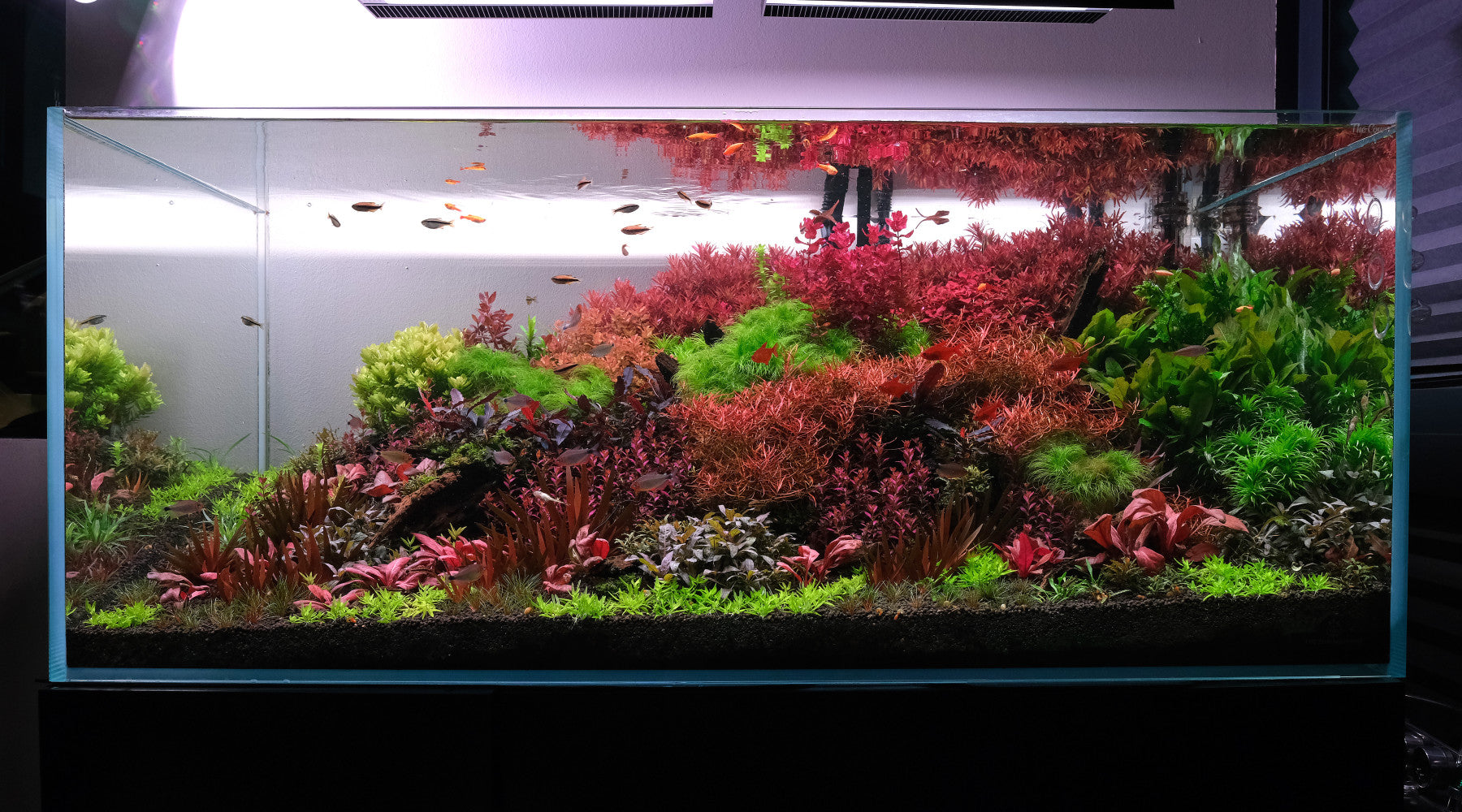
This tank above is lit by an LEDstar unit.

Photo from Viktor Lantos, Green aqua showing ADA solar RGB.
Best LED Lights for Planted Tanks in 2026: Brands and Tiers
For planted tanks in 2026, the best LED units divide into clear tiers.
At the top are the narrow-spectrum RGB specialists: Twinstar S Series, Chihiros WRGB II, Chihiros Vivid series, Week Aqua series, ONF Flat One, ADA Solar RGB, LEDSTAR, Netlea, Hyperspot and similar units. These use diode arrangements with strong red blue and green peaks and fewer plain white leds, which creates high colour saturation, strong contrast and a neutral white background that still looks natural. If you want the best light for a high end aquascape with red plants, carpeting species and a tidy high tech layout, this is where you spend.
Within that tier, the Twinstar S series stands out for spectrum, colour rendition and a rounded, natural look. The newer S-line V adds Bluetooth app control: it is easy to use and stable, which is not a given at this end of the market. The Week Aqua and Chihiros apps work, but they carry the non-intuitive logic common to many China-made hardware apps, and plenty of aquarists find them a chore. For anyone who wants premium RGB output and an app that does not fight back, Twinstar is the current answer. The Chihiros WRGB II and Vivid II remain popular for densely planted tanks that need both power and fine control. Week Aqua provides strong RGB spectrum and output at a lower price ceiling, but quality is far more unreliable. ONF Flat One is worth considering if you seek design and refined output.
Then there is the practical programmable middle. Lights such as the Fluval 3.0 and Finnex 24/7 Planted+ can grow plants and offer useful programmability. They are attractive for people who want Bluetooth or app control, custom schedules, brightness control and easy setup. The catch is that these lights generally do not render colour as richly as the better RGB fixtures. We tested the Fluval 4.0 against the RGB specialists; its colour rendition was poor, no better than the 3.0 it replaces. Both are usable planted tank lights, and that is where it ends. If you want programmability and steady growth, they deliver. If you want saturated reds and high contrast, look to the tier above.
At the budget end, fixtures in the Hygger-type class can be great value for low tech and medium tanks. They often rely more on white diodes and broader spectrum mixes, so they will not make red plants pop the same way premium RGB units do, but many affordable lights still grow plants perfectly well if the tank is shallow enough and your expectations are sane. Budget-friendly aquarium lights are not automatically junk. Many are just visually less refined.
What Is PAR and Why Does It Matter More Than Lumens?
Call the mechanism photon budgeting.
Every planted aquarium runs on photosynthesis. Aquarium plants use photons in the 400 to 700 nanometer range, and the most useful practical measurement for planted aquarium lighting is PAR, not brightness to the human eye. This is where beginners get mugged by bad advice. Lumens tell you how bright a light looks to people. PAR tells you how much usable light actually reaches plants. Short legs, long memory - especially for bad advice.
Spectrum matters too, but not in the “sunlight equals perfect” way. White LEDs often have lots of blue, green and yellow output but a weak red spectrum, which means plants may still grow, yet red plants look washed out and visual contrast is poor. RGB light units that rely more on red blue and green diodes create stronger peaks in those wavelengths, giving more vibrant colour, better contrast and often better growth form in red plants. That is the huge difference between many cheaper aquarium lights and the better high end units.
Water depth changes the math. Red wavelengths are absorbed faster than blue, so deeper tanks need more output or better optics to land the same PAR at the substrate. A light that is fine over a shallow low tech tank can fall short over a deeper one, even when both tanks are the same length.
How Do I Know If My Aquarium Light Is Strong Enough?
Ignore the label on the box and read the tank instead.
The first signal is new growth form. If stems grow compact, leaves are fuller, and carpeting plants spread instead of stretching upward, your planted aquarium lighting is doing its job. If the tops are thin, internodes are long and the bottom growth thins out, you probably do not have enough usable light at the substrate, even if the tank looks bright to your eyes.
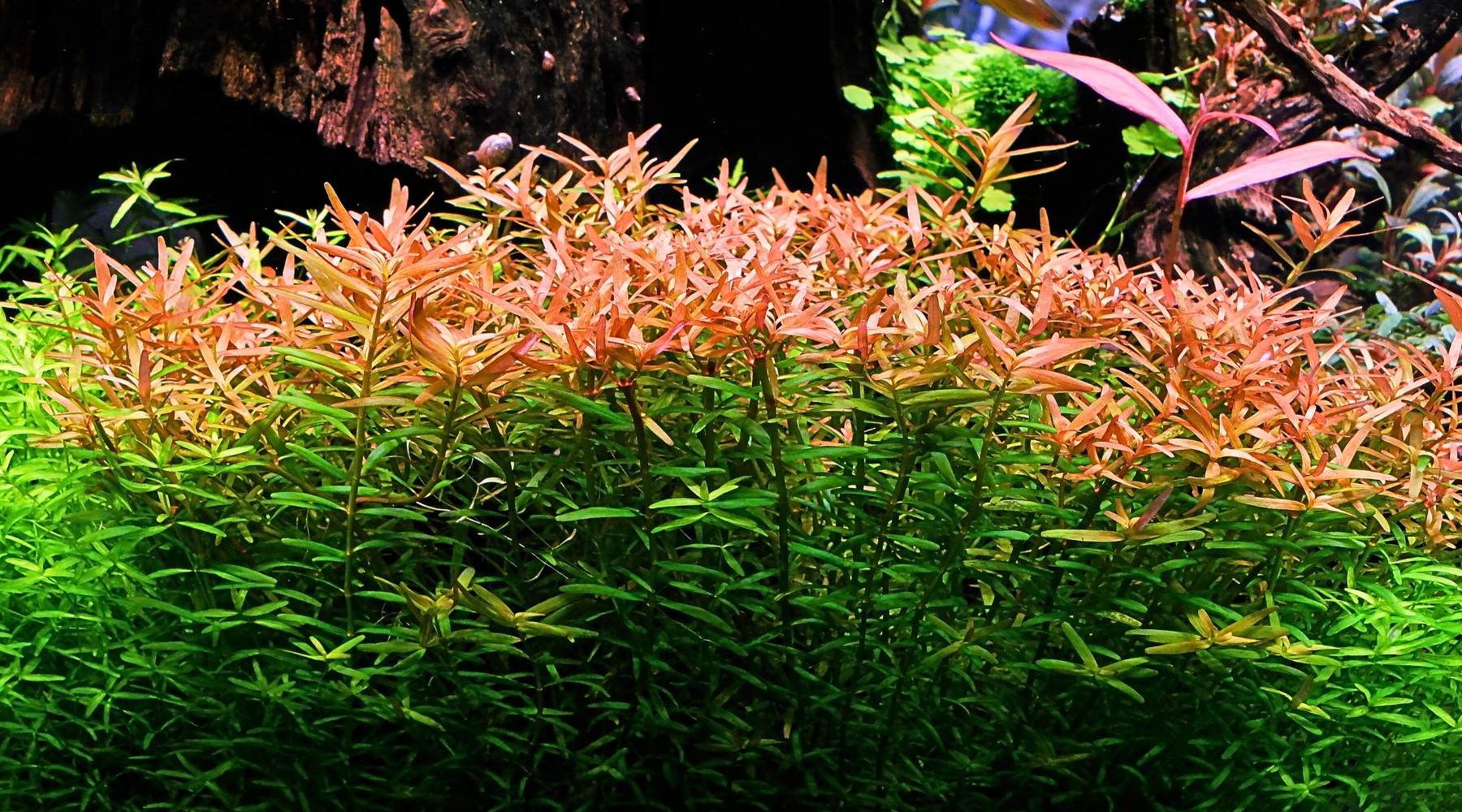
The second signal is colour quality, not just whether plants grow. White light heavy fixtures can grow plants, but many produce flatter greens, weaker reds and less contrast. Better RGB units make red plants look deeper, fish look crisper and the whole aquarium look more vibrant without turning the tank into a nightclub in magenta trousers.
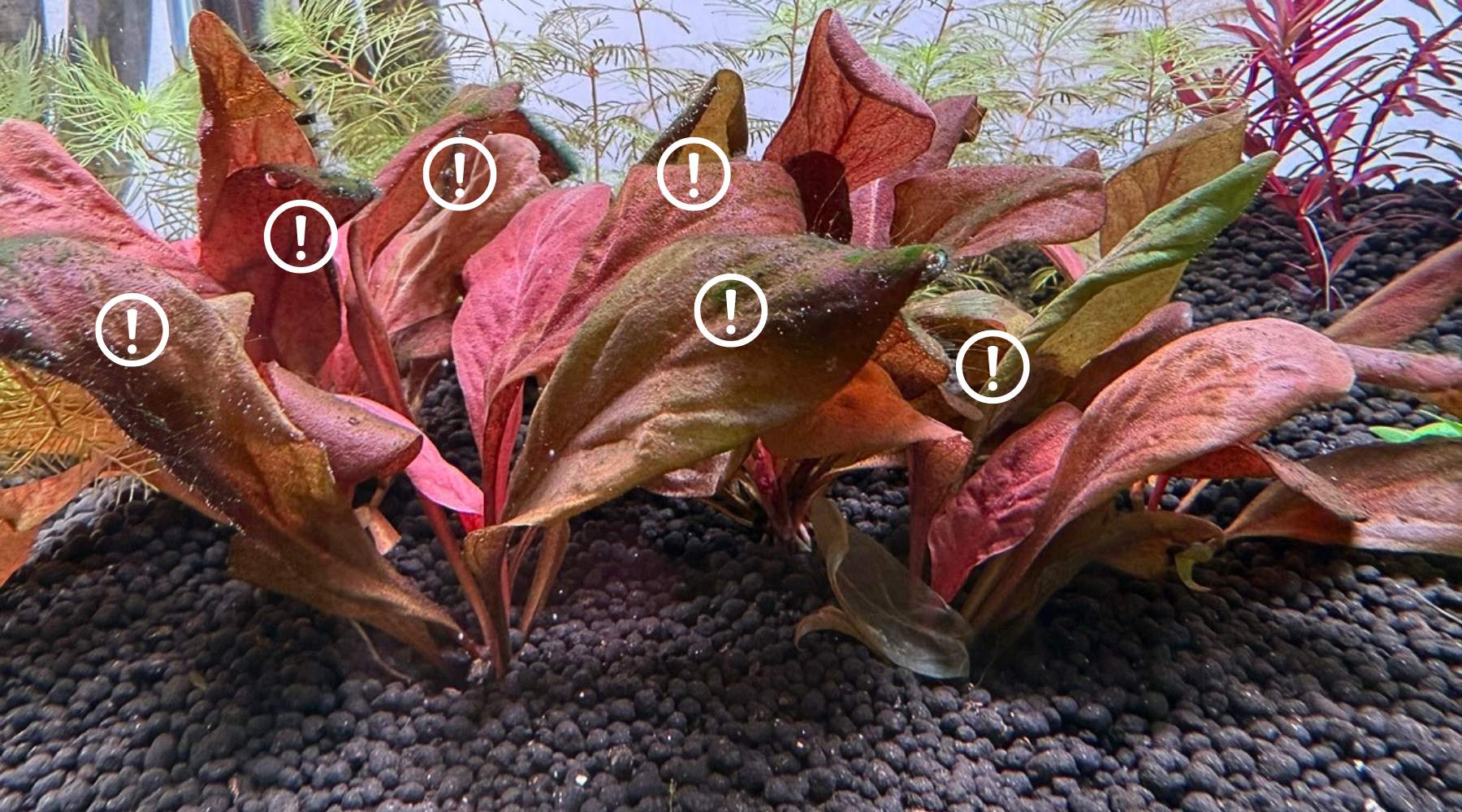
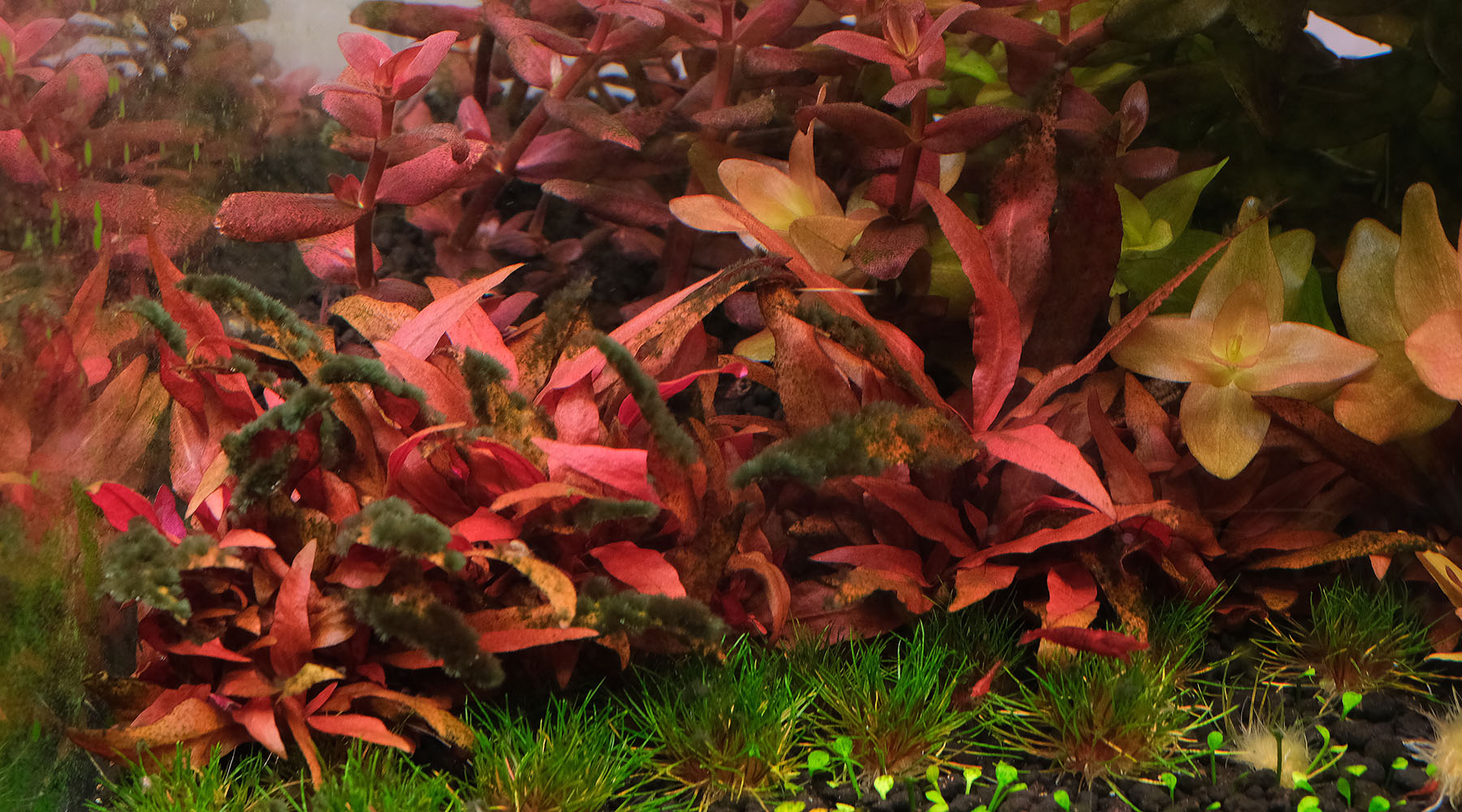
The third signal is algae response under stable conditions. The common misconception: more blue light causes more algae. It does not. Total light intensity can trigger algae faster when plant health, cleanliness, CO2 or nutrient balance are off, but spectrum on its own is not the culprit. Push intensity harder than the plants can use and algae takes the surplus. That is a husbandry problem, not a spectrum problem.
Watts and Lumens: Which matters?
Two shopping shortcuts deserve a closer look.
The old 1-to-1 or 1-to-2 wattage rules - watts equal to gallons for a decent light, double for a good one - are rough legacy shortcuts. They can help a beginner avoid buying something laughably weak, but they are blunt instruments because LED efficiency, optics and diode quality vary enormously between brands. Two 40 watt aquarium lights can produce very different usable output and very different colour quality.
Lumens per liter has the same weakness. You will see figures like 10 to 20 lumens per liter for low light plants and 40 plus for high light. Usable as a rough filter when nothing better exists, but still behind PAR, because lumens reward green-heavy output that reads bright to the eye rather than light that drives growth. Fall back on lumens or wattage only when a manufacturer gives nothing else and you are comparing similar fixtures. Otherwise use PAR charts, real tank examples and your actual plant list.
How Does Tank Depth Affect Which Planted Aquarium Light to Choose?
Smaller tanks and shallow tanks can get away with surprisingly modest lights because less water means less loss before the light reaches the substrate. That is why cheap LED lighting can do a decent job over a nano planted aquarium with low light plants. Deep tanks are less forgiving. If the aquarium is tall, you need more power, better optics, or a fixture mounted closer to the water if you want strong plant growth at the bottom.
In a low tech tank, stronger is not better, and this is the point most keepers miss. Low tech tanks run on limited CO2, so extra light only widens the gap between what the plants can photosynthesize and what they are being pushed to, and algae fills that gap. Keep intensity moderate, dim if you can, and hold to 7 to 8 hours.
In a high tech tank with solid CO2 and nutrients, more light can mean tighter growth and deeper colour, and healthy plants resist algae far better. Even here there is a ceiling: high output without clean maintenance and stable CO2 is how an expensive LED ends up feeding algae rather than plants
Pendant vs Bar: Which Light Setup Works Best for Your Aquascape?
If your scape is hardscape-heavy with wood, rocks and lots of shadows, two lights often beat one. A pair of mounted light bars can cover front and back better than a single unit, while pendant lights hung from the ceiling give cleaner access and better presentation if they are powerful enough to compensate for height. If you are growing mainly green plants and low light species, you can spend far less and still get very good results. If you want vivid reds, compact stems and high contrast fish colours, this is where the better RGB brands justify the higher price.
That is the honest answer to "best LED lights for planted tanks in 2026." Not a single winner. A hierarchy matched to the tank.
For outright performance and visual quality, the RGB specialists lead: Twinstar S, Chihiros WRGB II and Vivid, Week Aqua, ONF Flat One and their peers. For programmable convenience with steady growth, the Fluval 3.0 and 4.0 and the Finnex stay useful, within their colour limits. For value in low tech or medium tanks, a broad-spectrum bar does the job if you respect what it cannot do. There is no single best light, only the one matched to your depth, your plants and the PAR you are willing to manage.
Best LED Light Settings for a Planted Aquarium: A Setup Guide
-
Match the light to the plants you want to grow: low light plants such as Anubias, Java fern and Crypts need far less than red plants, carpets and demanding stems in a high tech tank.
-
Judge strength by PAR first, not lumens or marketing wattage: around 20 to 40 umols at the substrate suits low light plants, 40 to 90 covers most medium plants, and 90 to 150 or more is where demanding red plants and dense carpets start looking properly serious.
-
Choose RGB-heavy fixtures over mostly white leds when colour matters: red blue and green diode mixes generally give better contrast, more vivid reds and greener greens than plain white light or “full spectrum” labels that are really just broad white output with a token red diode tossed in.
-
Dim modern lights aggressively at the start: many powerful LED units from recent years can produce much more light than a planted tank actually needs, especially in low tech setups, and too much intensity is a reliable way to buy yourself more algae.
-
Use two lights or a wider spread fixture on complex hardscape tanks: a single central stick can create brutal hotspots and deep shadows, while two lights front and back often produce more even coverage and better plant health across the aquarium.




Share:
The Twinstar S Series III Light: Output, Spectrum, and Dimmer Settings
What Light Spectrum Do Aquatic Plants Use for Photosynthesis?