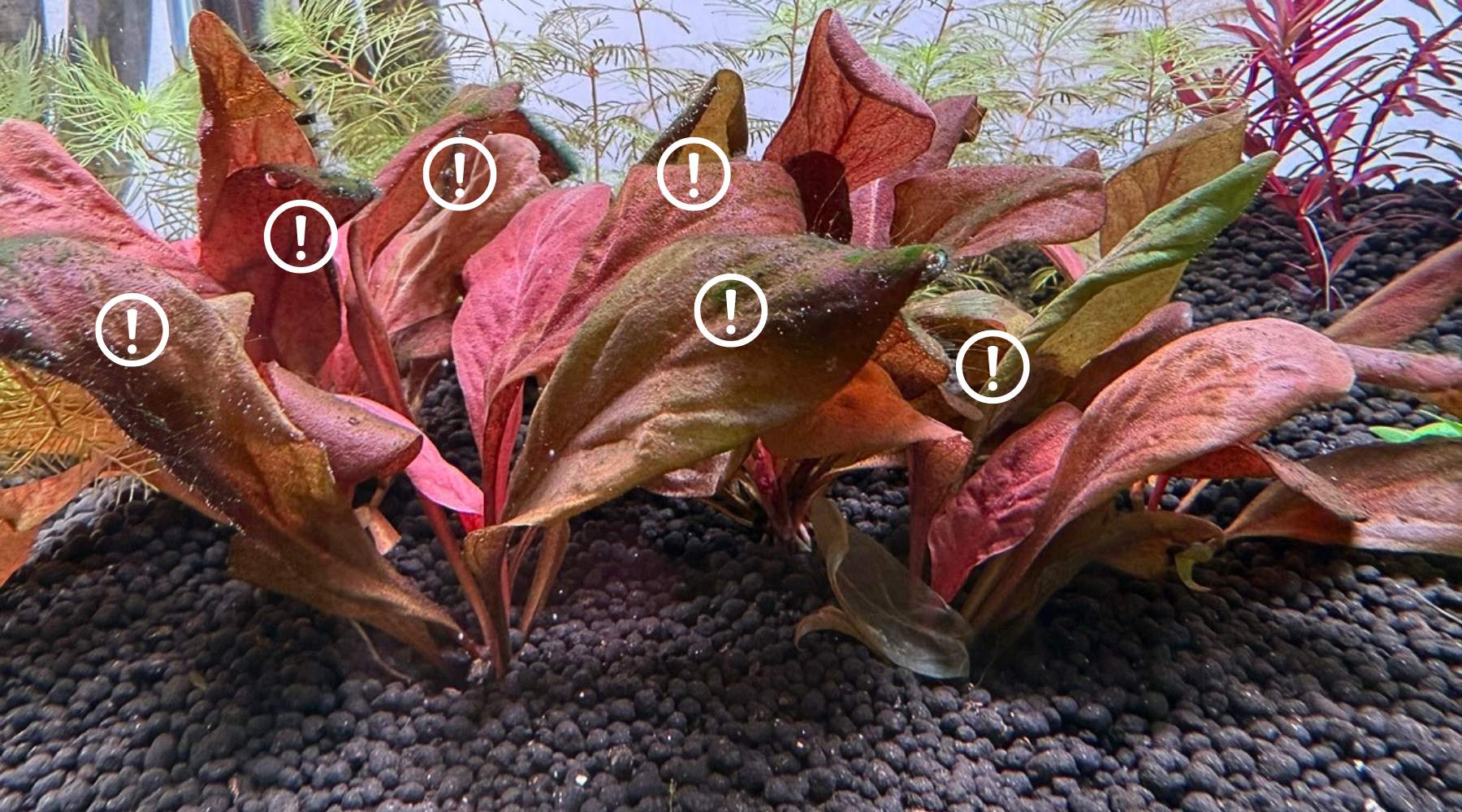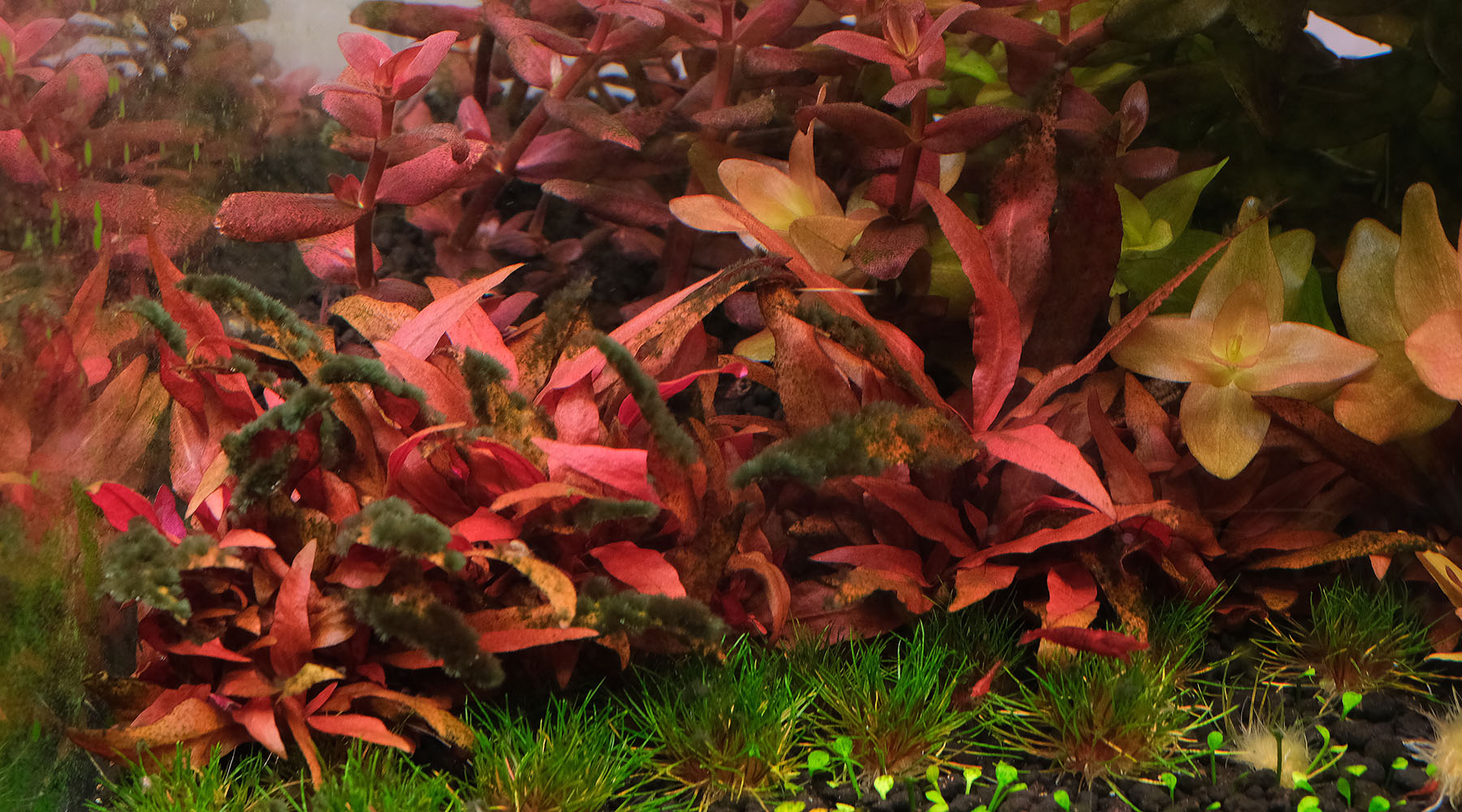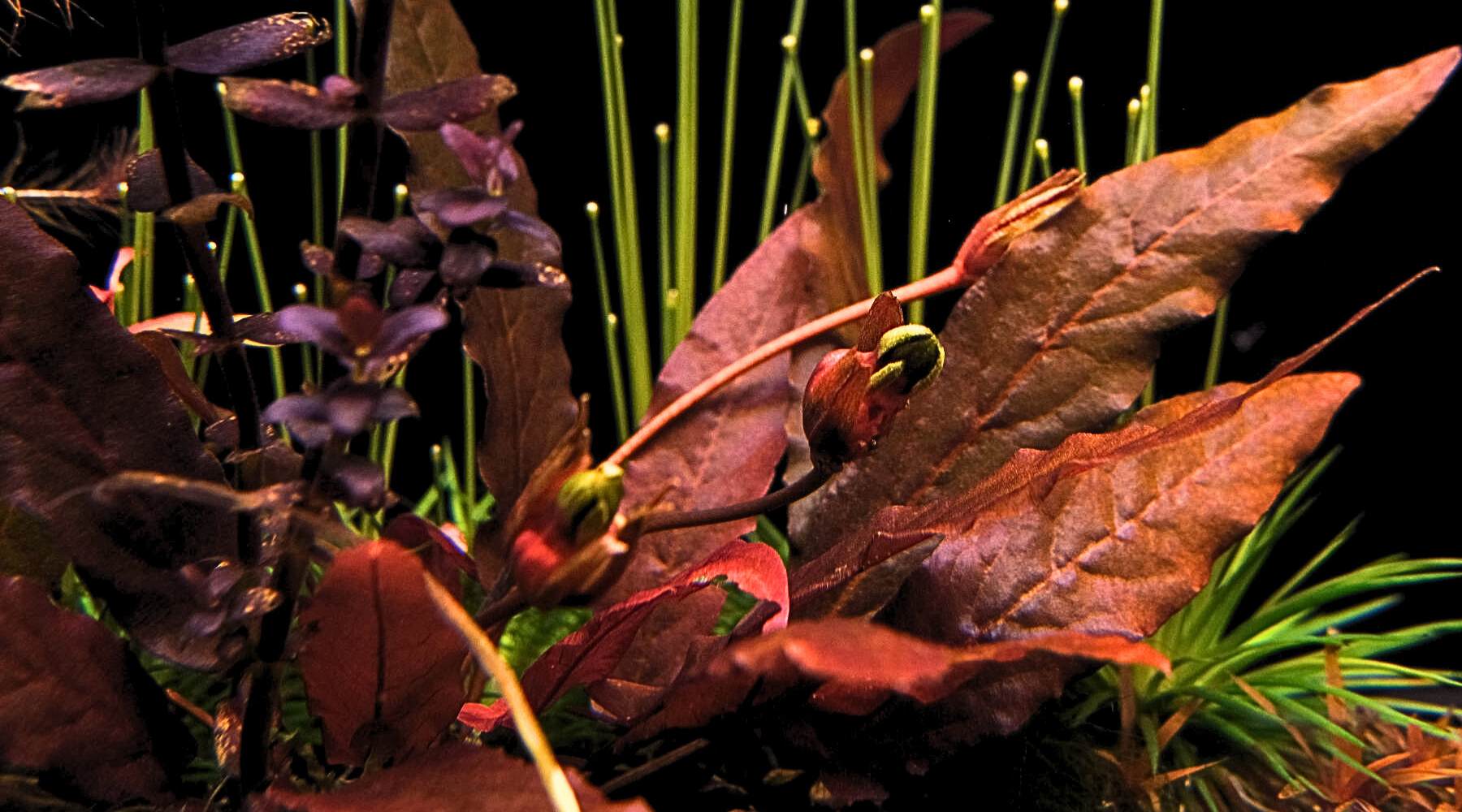

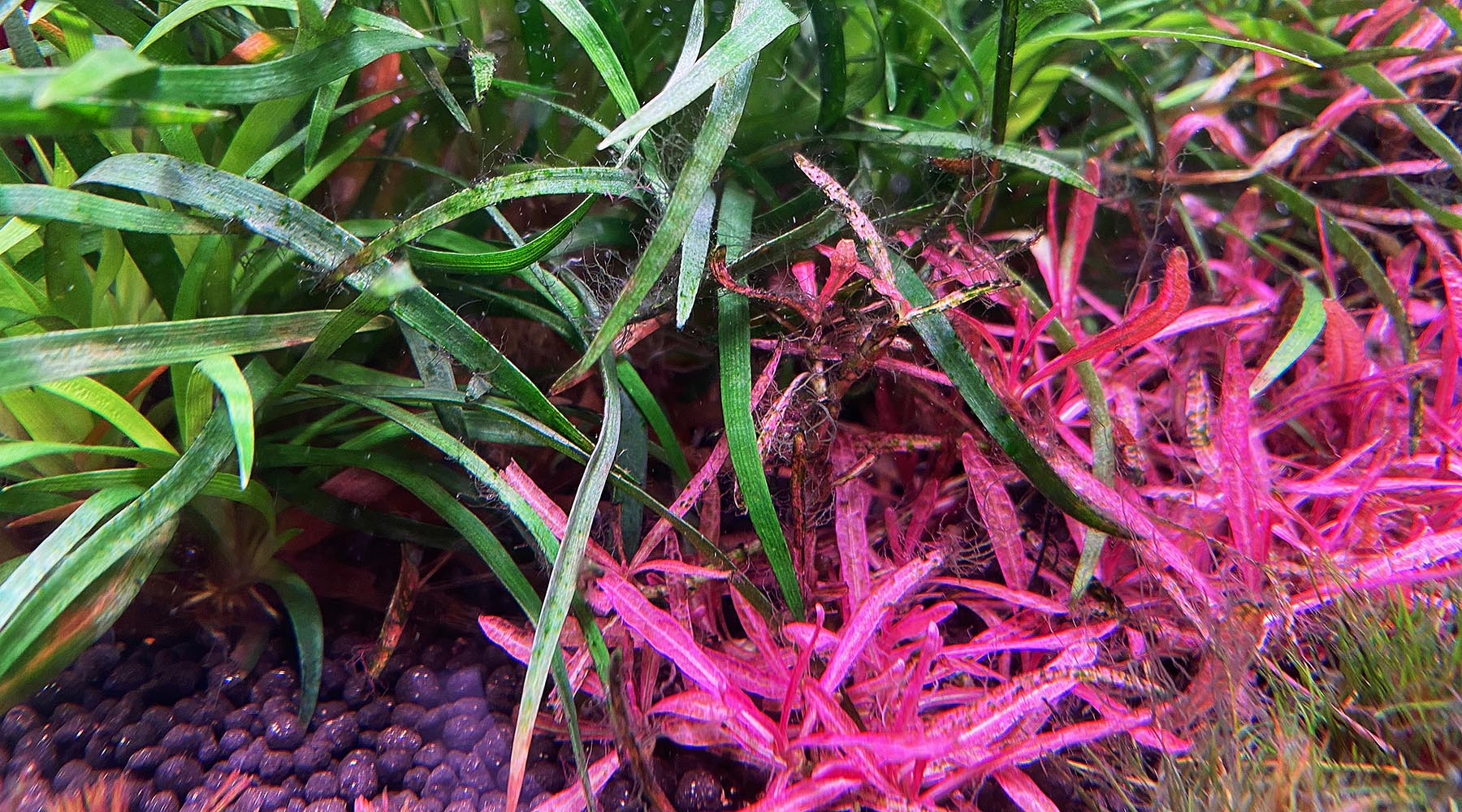
Above: During the transition, healthy plants in perfect parameters can easily look terrible for 2 to 3 weeks - with algae, deteriorating leaves and lackluster colors. But this is a natural, temporary phase of adaptation.

Plants typically go through a 2 to 3 week transition in new tanks when they are moved/replanted, and when tank parameters change significantly (e.g. new light or filter, change in CO2 levels).

Transition stress is more pronounced in "high energy" tanks with strong lighting, CO2, and fast-growing or finicky plants.

This can be a frustrating and worrisome time.

How do we manage this phase?


#1 Observe new leaves. 

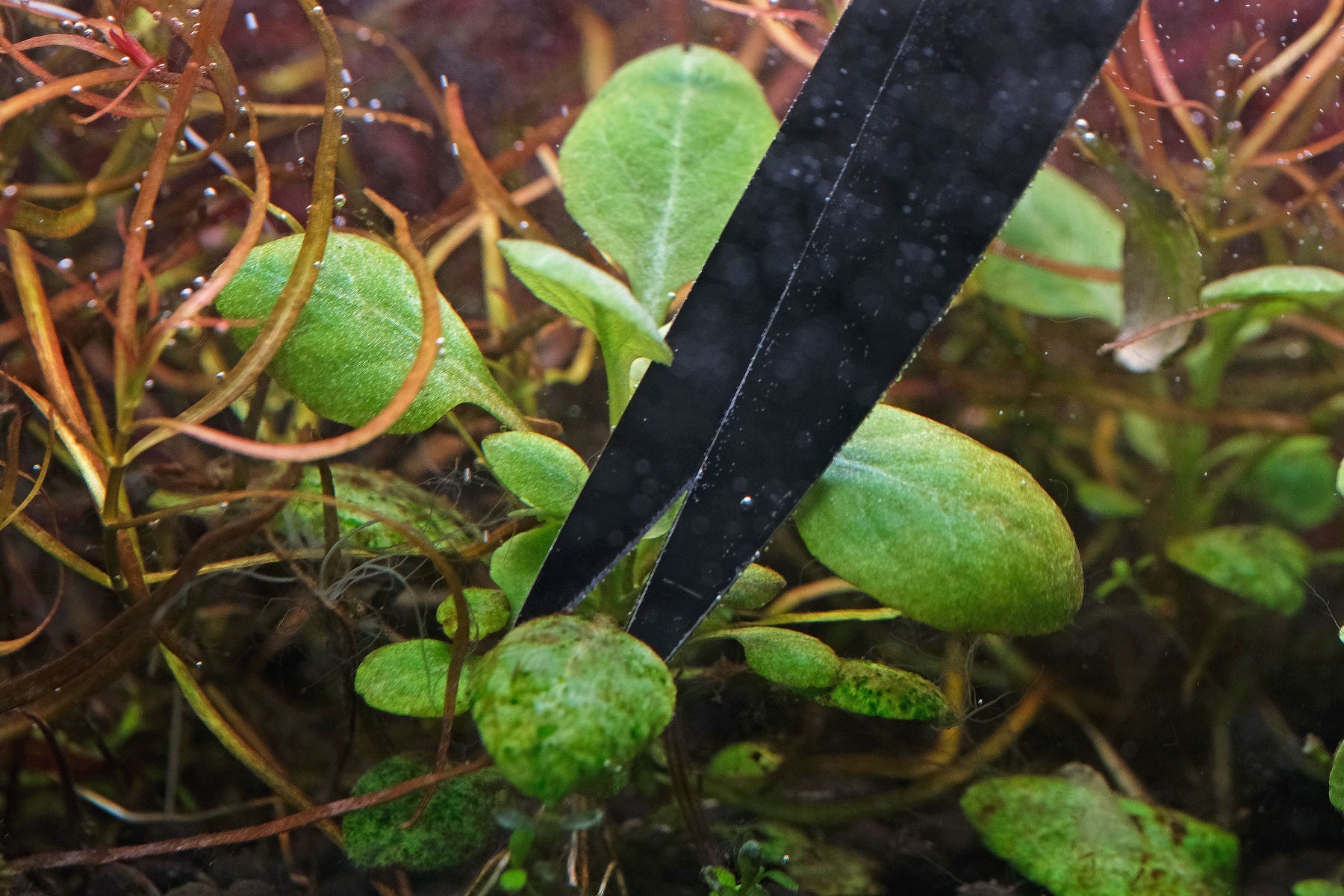
The appearance of larger, algae-free and more vibrant foliage (note the newest Lobelia leaves above) signals that the plants are adapting well. 

Old leaves generally continue to deteriorate - this is expected and natural. Aquatic plants are not perennial and channel their energy into new growth rather than maintaining damaged leaves.

If new leaves do not appear, or if they are curled, stunted, smaller, or appear diseased, it is a sign that there are deeper problems.

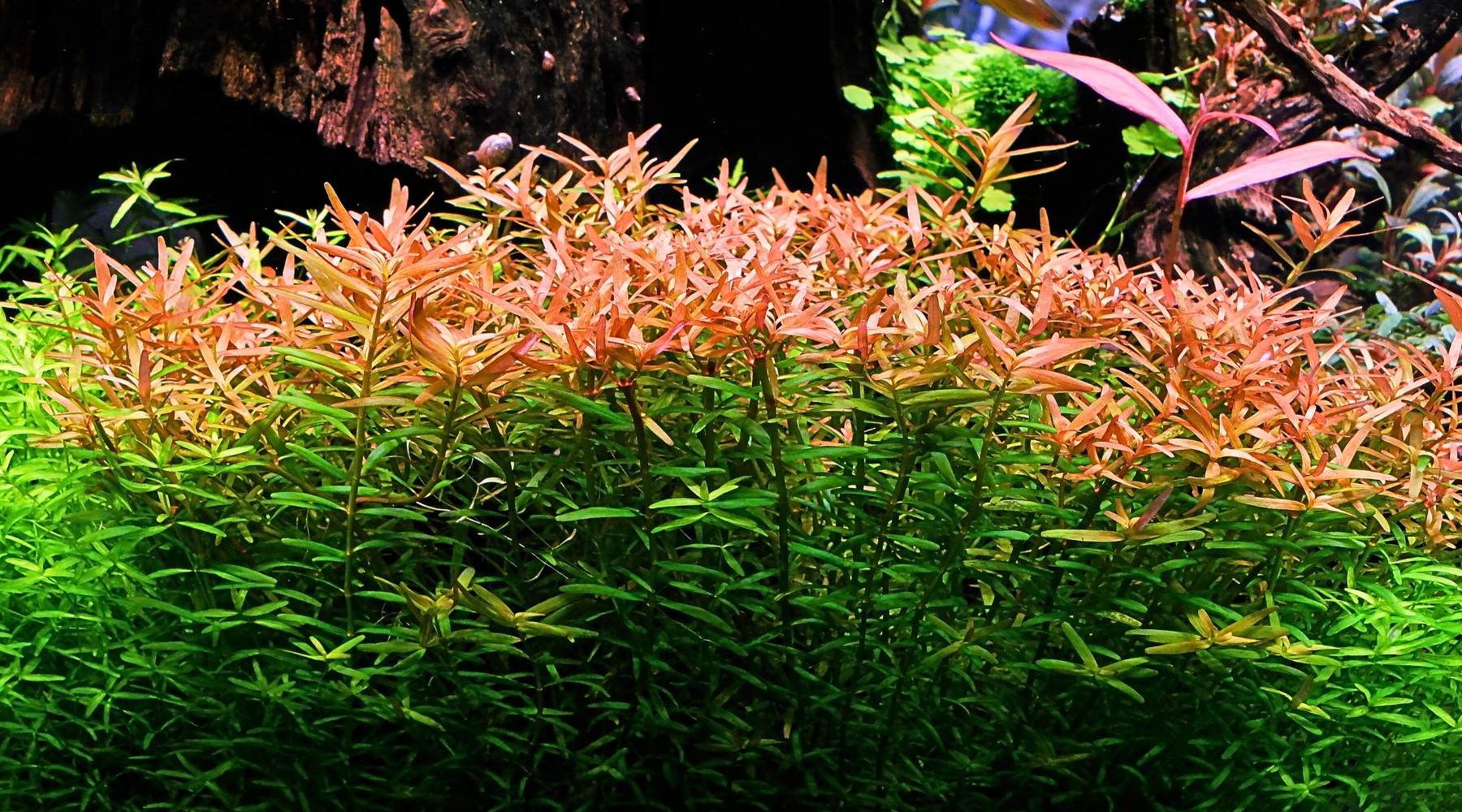
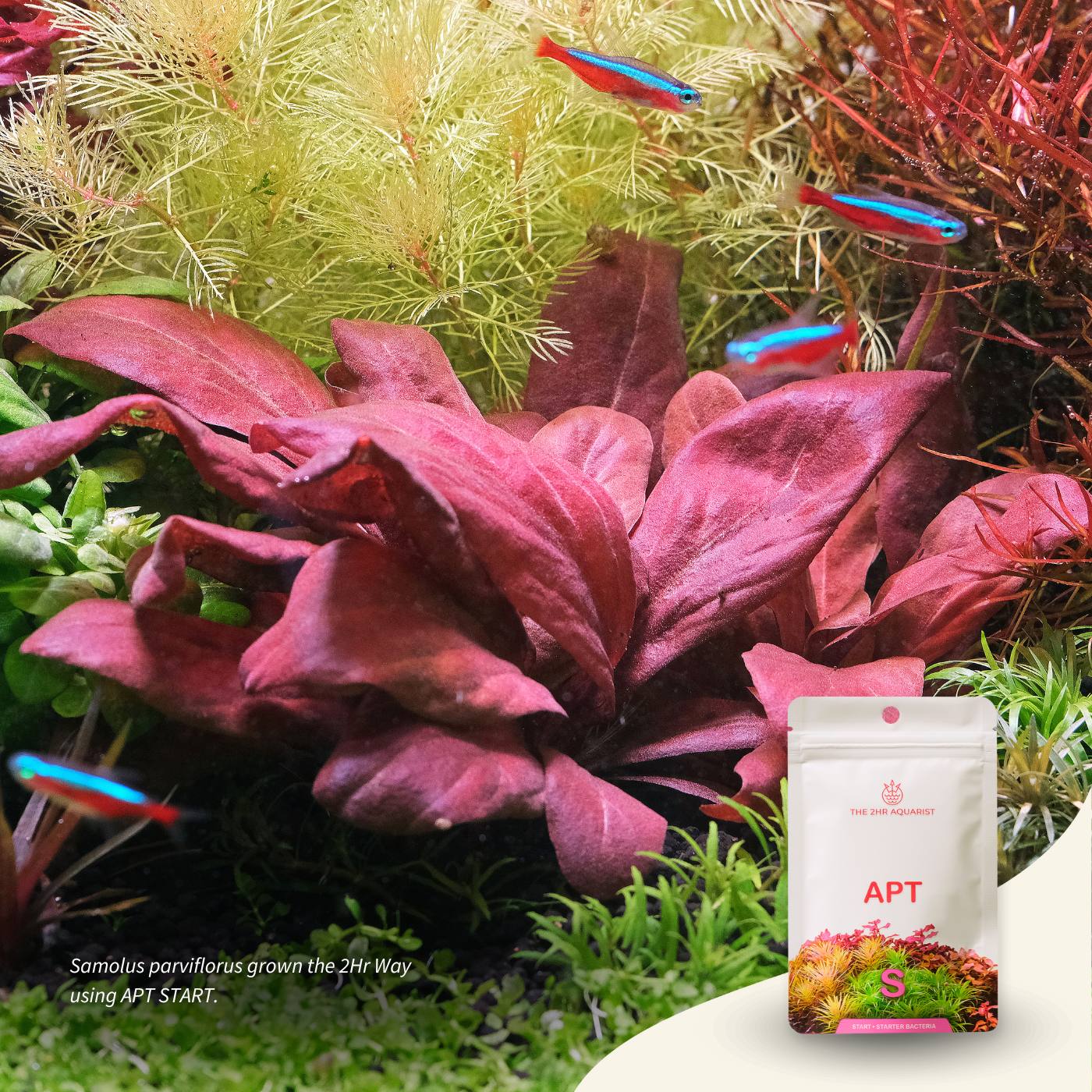
Another example, featuring Samolus parviflorus red above. Note the smaller, new algae-free leaves. The same plant is shown 3 weeks later below:


#2: More frequent large (70%) water changes.

Do this 2 or even 3 times a week and remove surface detritus. Our aquariums are tiny closed systems, even if they look "natural," and organic waste goes beyond measurable ammonia, nitrites, and nitrates.

Of course, this only works if our water supply itself is stable. In areas where tap water is highly variable, water changes can introduce more unknowns.


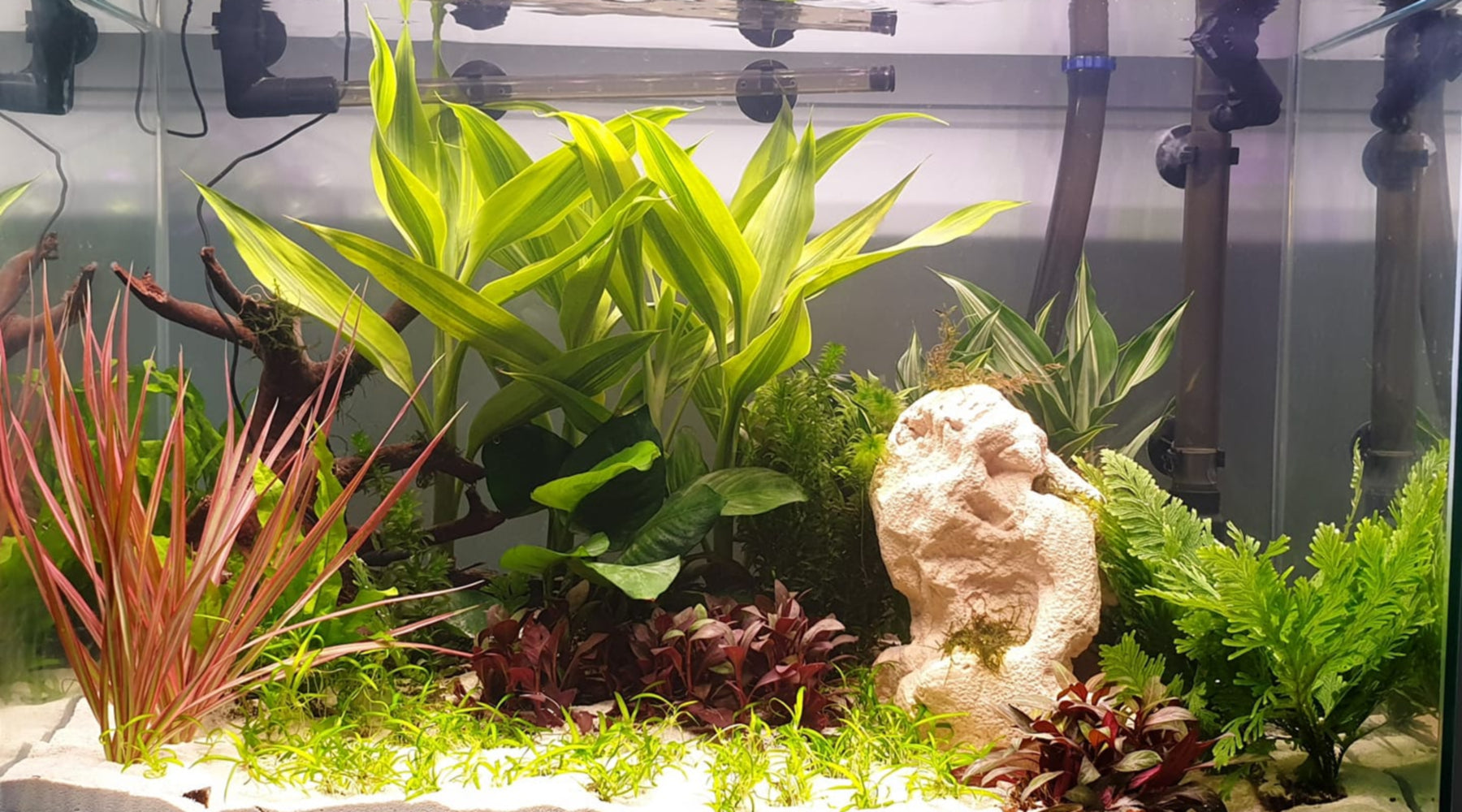
Above, a beautiful landscape courtesy of a community member. The tank looks "full" but is actually considered very sparse, barely 30% planted. Note the open areas in the foreground and the area occupied by the hardscape. The stems are tall but not dense.


#3 Add new healthy plants to target "70% planted".

This is extremely effective for sparse tanks and tanks with mostly slow-growing plants. New plants support the complex microbial diversity that underpins healthy, stable tanks. It is also a useful test for experienced aquarists. If the new plants are happy, it is a quick indication that things are likely to improve. If they do poorly, it calls for a closer look at the existing tank conditions.

#4 Keep the environment stable.

This means maintaining a consistent fertilizer regime and keeping flow, light and CO2 stable. The worst thing is to add supplements every few days "oh, today I suspect potassium deficiency - let me add more" and adjust flow, light and CO2 every few days trying to "hit the right spot".

Physiologically, plants use a lot of energy to adapt to their environment.

But how can I trust that my existing environment is OK?

This is a good question. When growing more demanding or picky plants, CO2 has huge impact but is deceptively tricky to get right. As we describe in detail, relying on drop-checkers can give a false sense of security. The 1pH drop approach is simple and effective (best done with an electronic pH meter). Kits that rely on interpretation of the color change tend to be less accurate, as the determination of color can vary considerably.y).

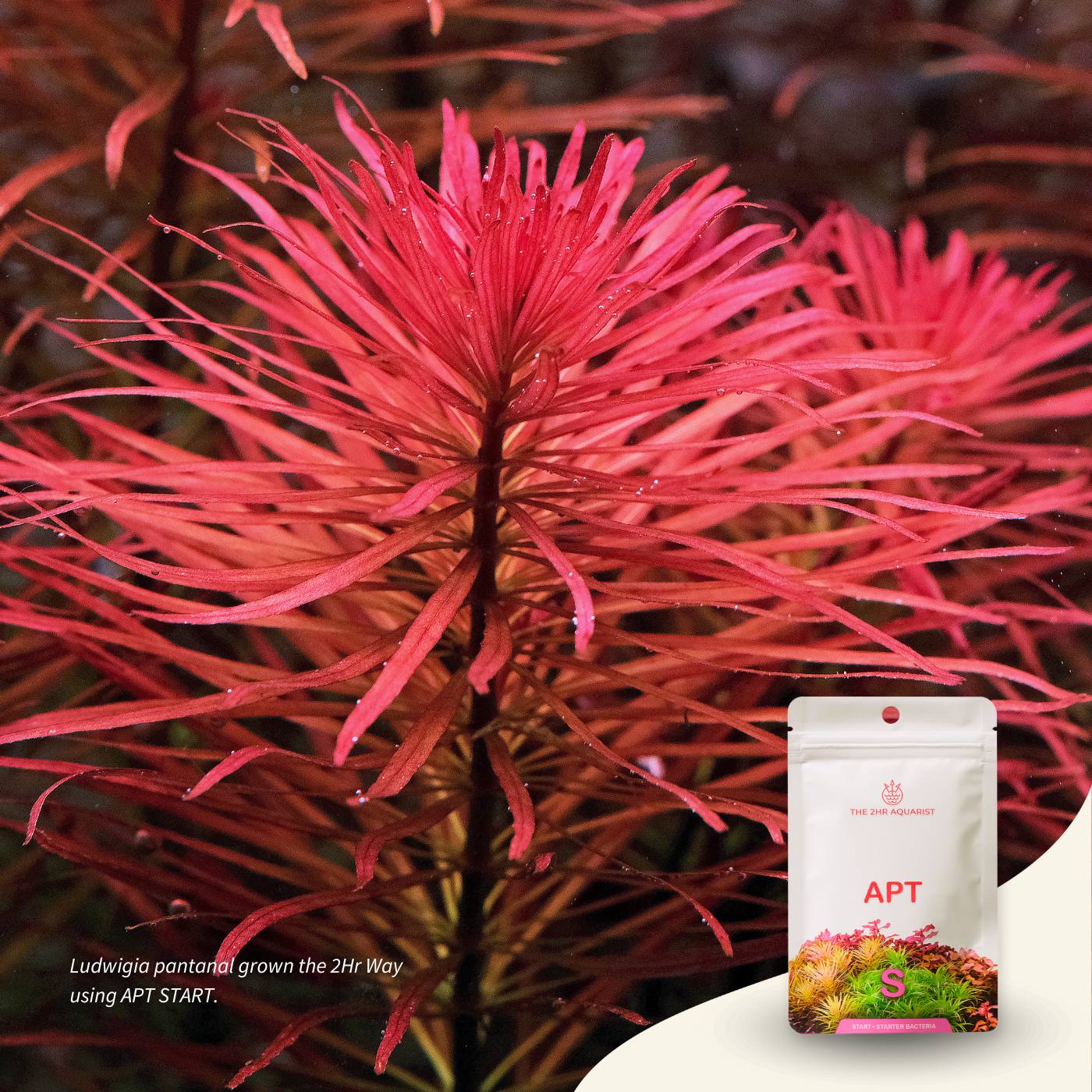
APT's comprehensive Capstone Formula makes it easy to remove any nutrient deficiencies or nutrient-related concerns. Because APT is so concentrated, the recommended dosage or less is more than sufficient. When it comes to nutrition, more is rarely better.


Can I avoid this transition phase?

Hardy plants (especially Java fern & Anubias species) in low-tech environments (above) can often avoid this phenomenon. This is because with CO2 injection, metabolism and changes occur ~10X slower, so the plants often appear to have little or no transition period. This makes the low-tech approach attractive to many beginners. Hardy plants are also, by definition, more versatile.
Explore

View all

Close up photo of algae on older aquatic plant leaves

Why do leaves deteriorate? Understanding the leaf renewal cycle in aquatic plants

This article delves into the topic of how plants continually renew themselves through the production of new leaves.

Read moreabout Why do leaves deteriorate? Understanding the leaf renewal cycle in aquatic plants

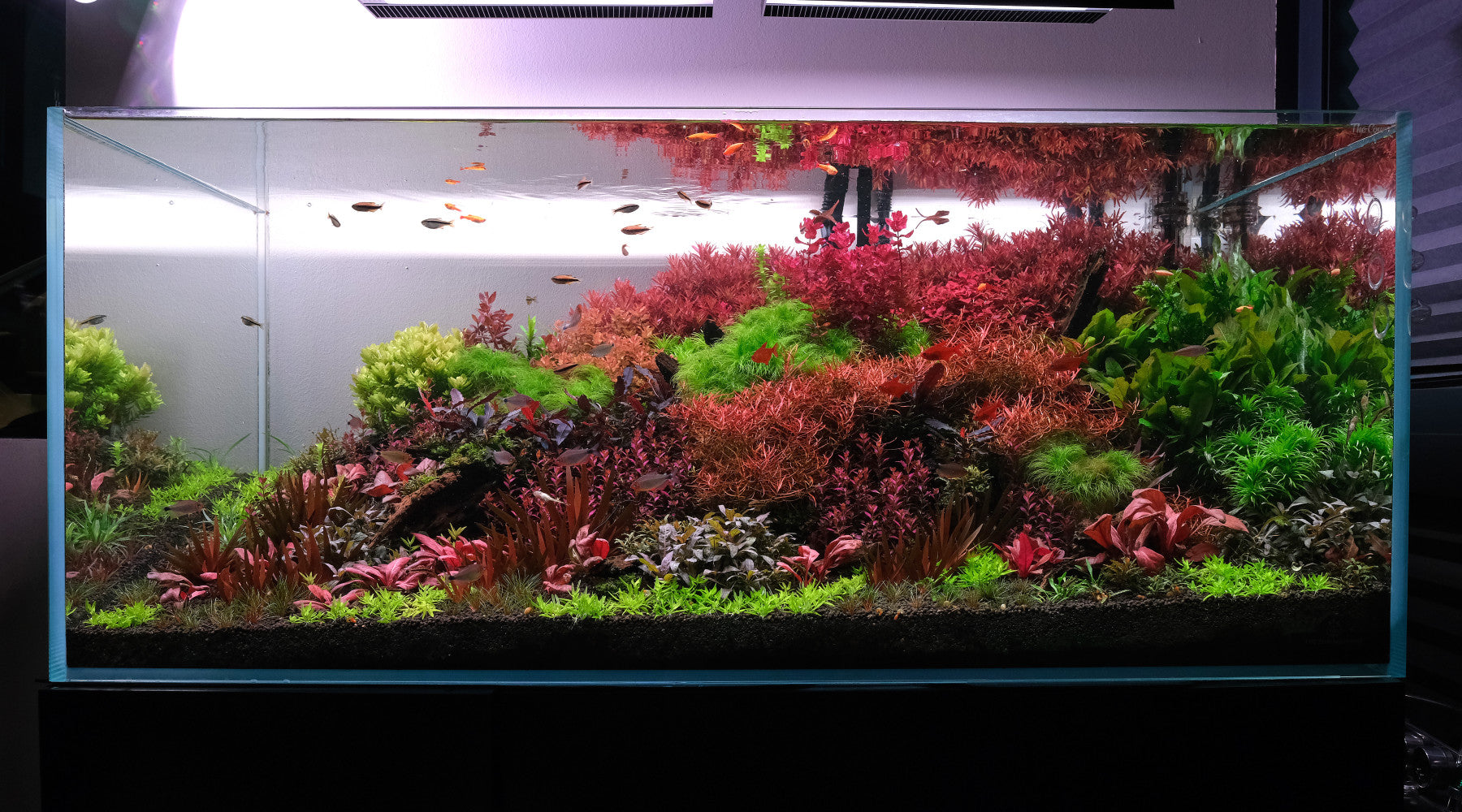
4ft Rotala florida community aquarium: Showcasing the 2hr Way

4ft Rotala florida community aquarium: Showcasing the 2hr Way

Full details of tank parameters, plants and fish species, and the maintenance regime of the 4ft Rotala florida aquascape are described here.
Read moreabout 4ft Rotala florida community aquarium: Showcasing the 2hr Way

Non-Aquatic Aquarium Plants: A Beginner's Buying Guide to Avoid Them

Non-Aquatic Aquarium Plants: A Beginner's Buying Guide to Avoid Them

Some of the most attractive plants on shop shelves are not aquatic at all. They persist for weeks, then rot and feed algae. This guide identifies the common non-aquatic species sold as aquarium plants, shows how genuine aquatics shift form above and below water, and lists what to check before buying..
Read moreabout Non-Aquatic Aquarium Plants: A Beginner's Buying Guide to Avoid Them

New Tank Journey | Ugly Duckling

New Tank Journey | Ugly Duckling

New tanks can be frustrating at the beginning. Here, we describe one important signal that things are actually progressing well, despite plants having algae. 

Read moreabout New Tank Journey | Ugly Duckling

When Less is More

When Less is More

How to get Rotala rotundifolia redder? Interestingly, less can be more in this case.

Read moreabout When Less is More

System Shocks

System Shocks

Sudden widespread algae infestation can take place when changes in environmental parameters induce adaptation stress that weaken plants which become vulnerable to algae.

Read moreabout System Shocks

Flowering Underwater?

Flowering Underwater?

Do aquatic plants flower underwater? Is flowering a sign of good health? Which plants can I grow that will flower easily in my aquarium?

Read moreabout Flowering Underwater?