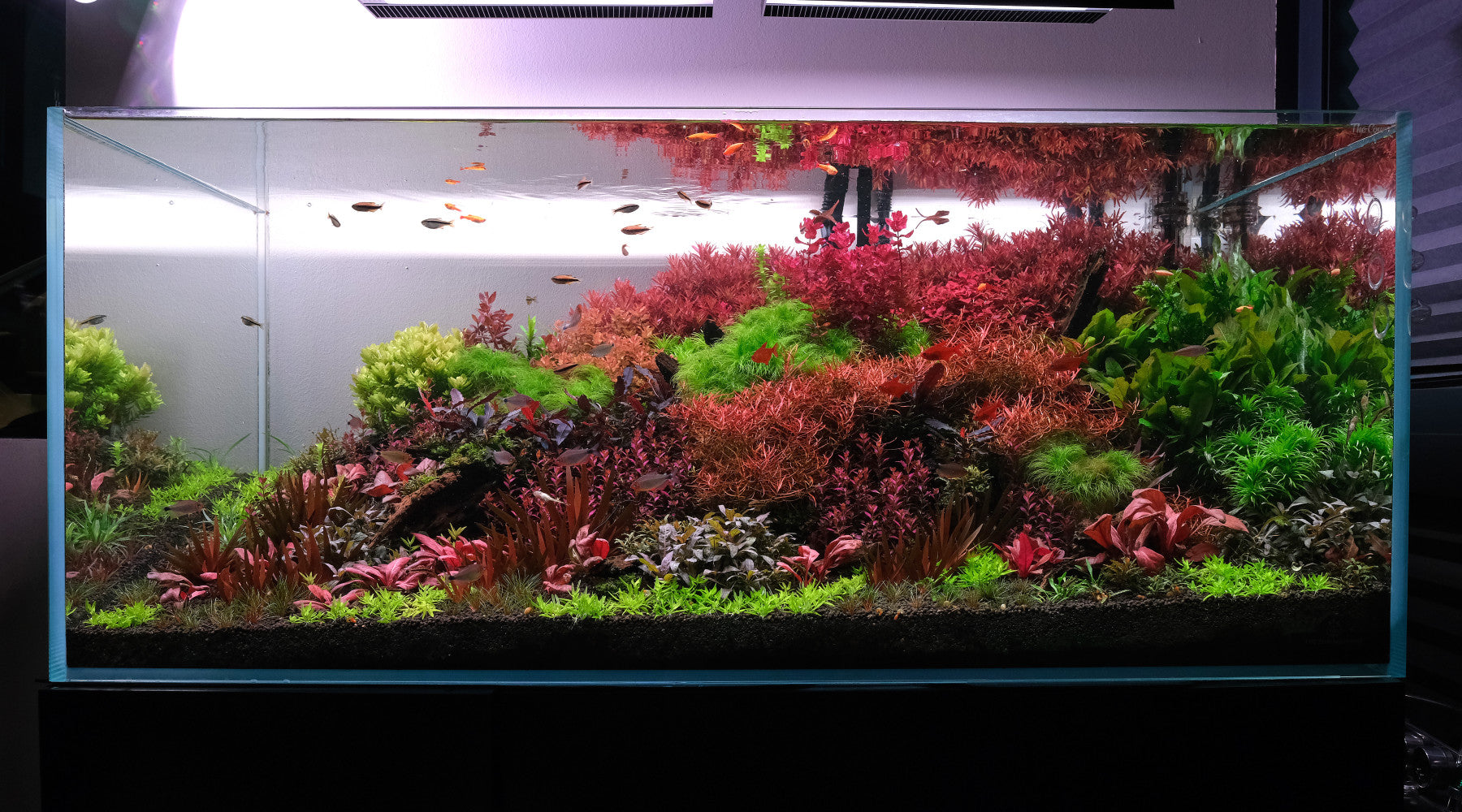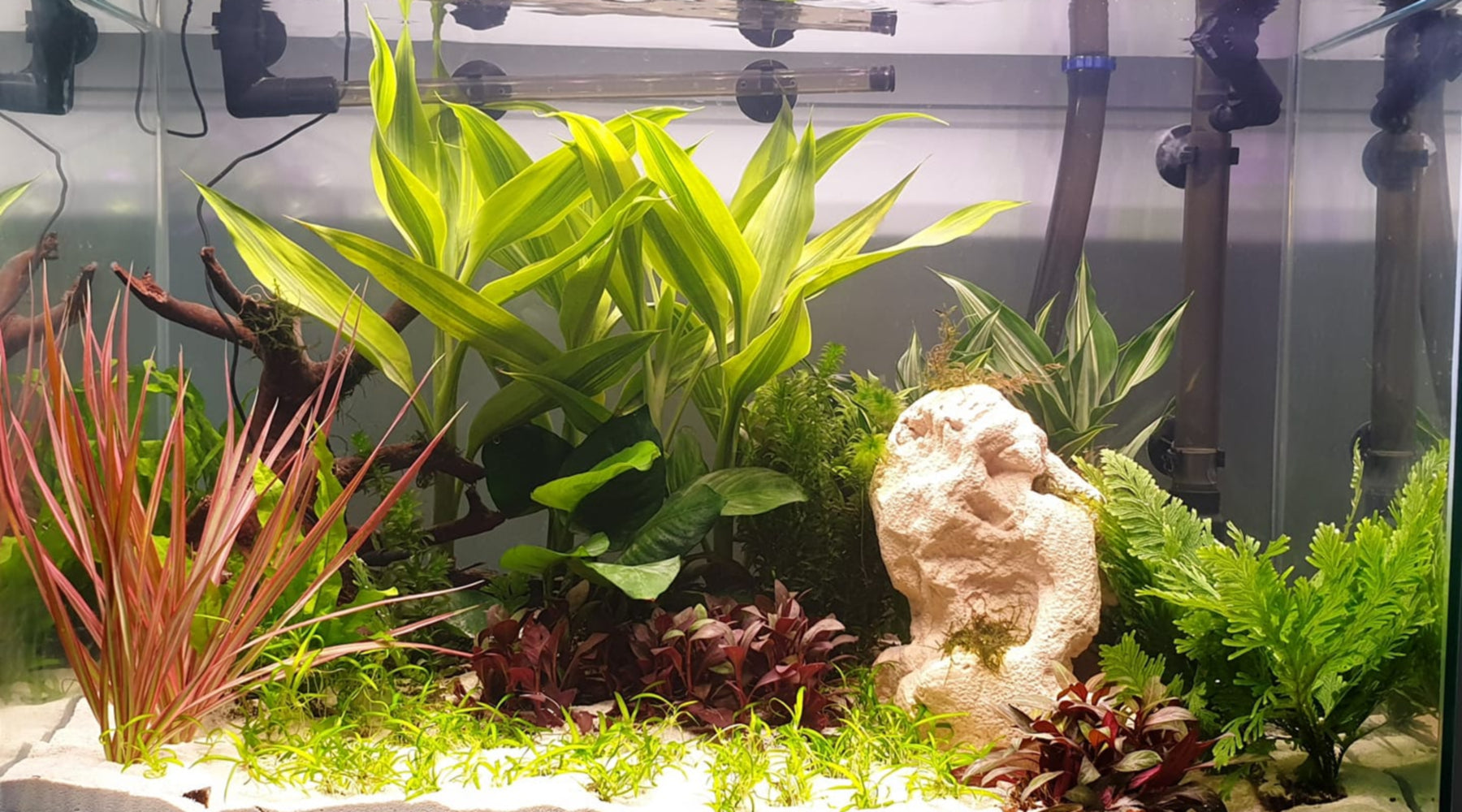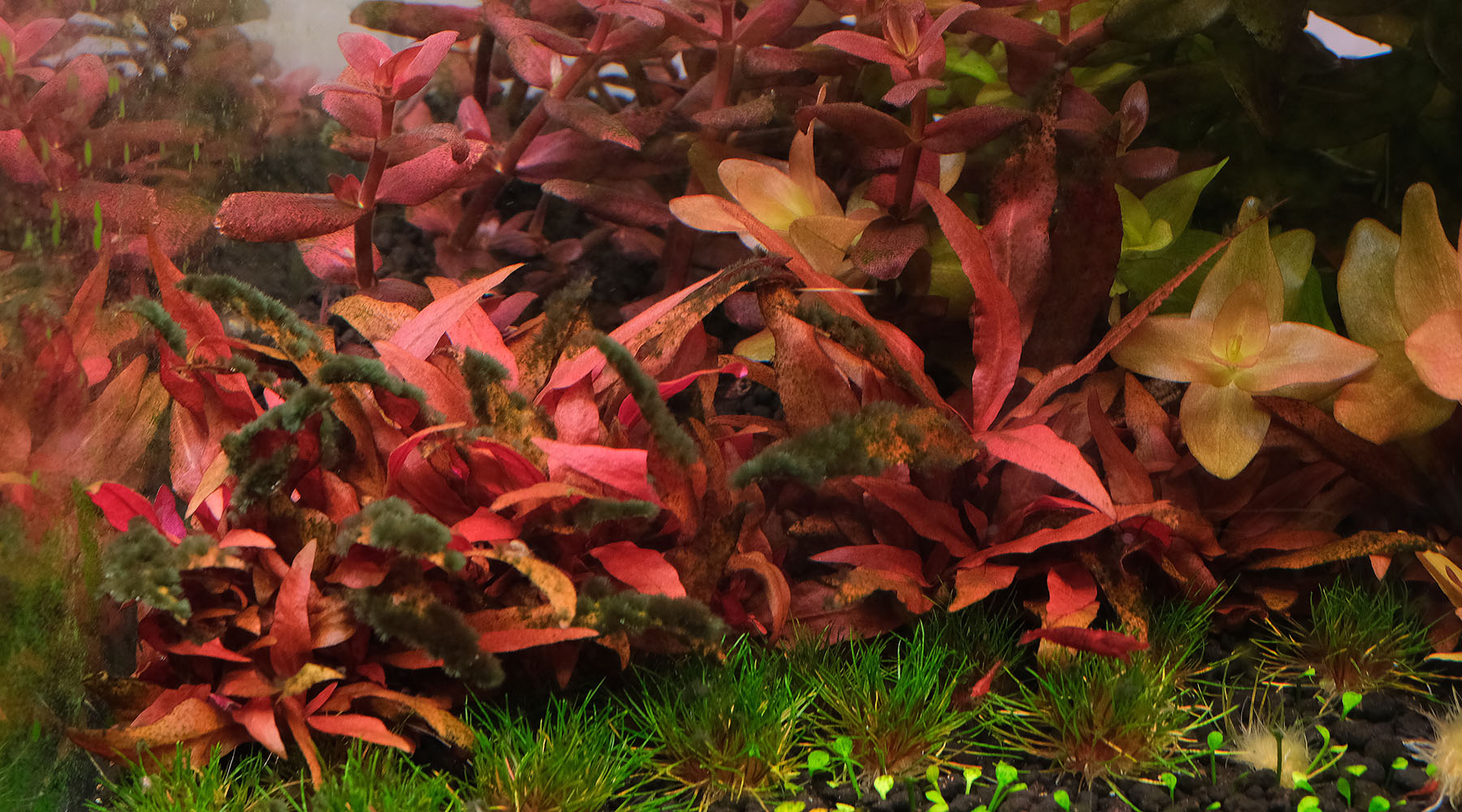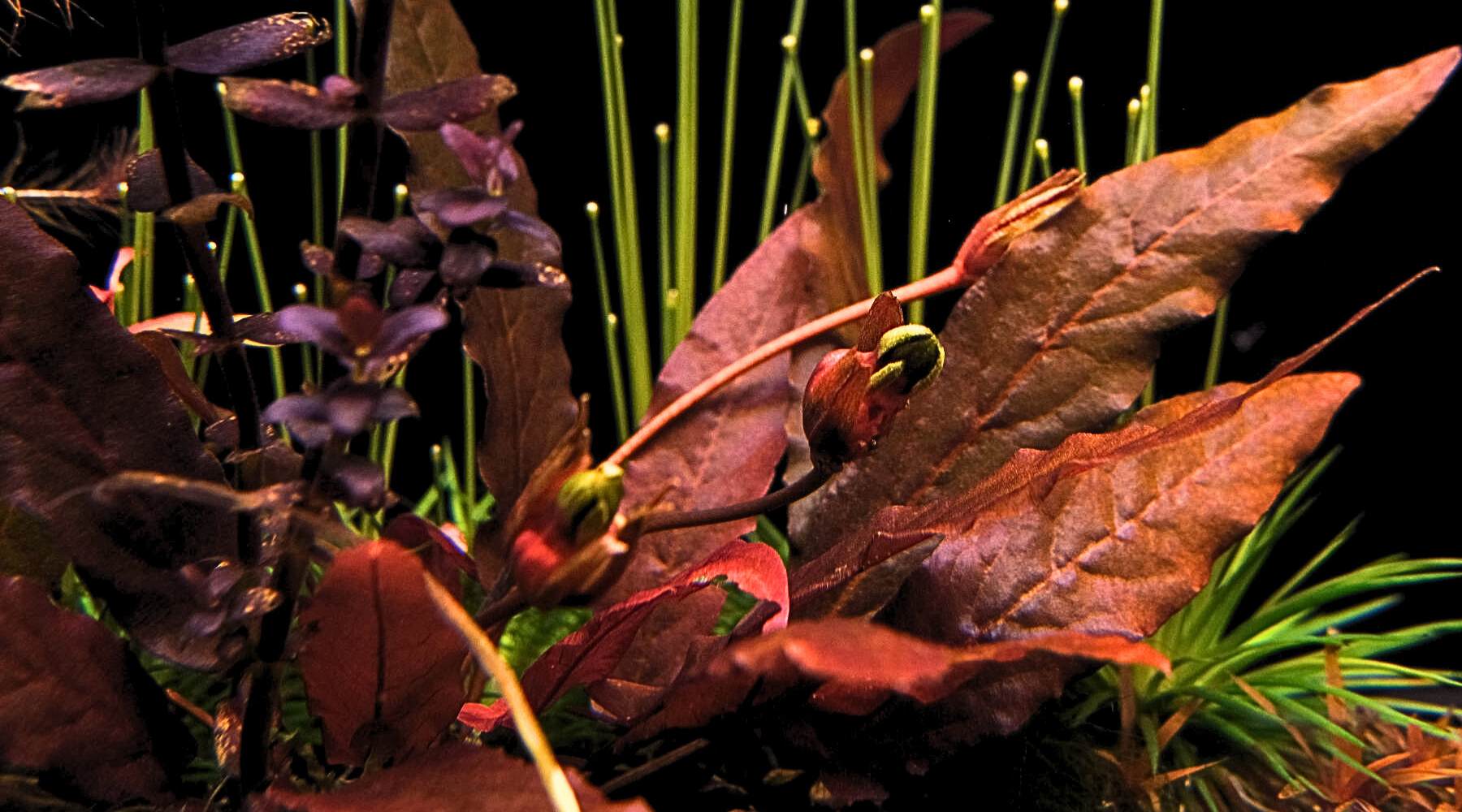
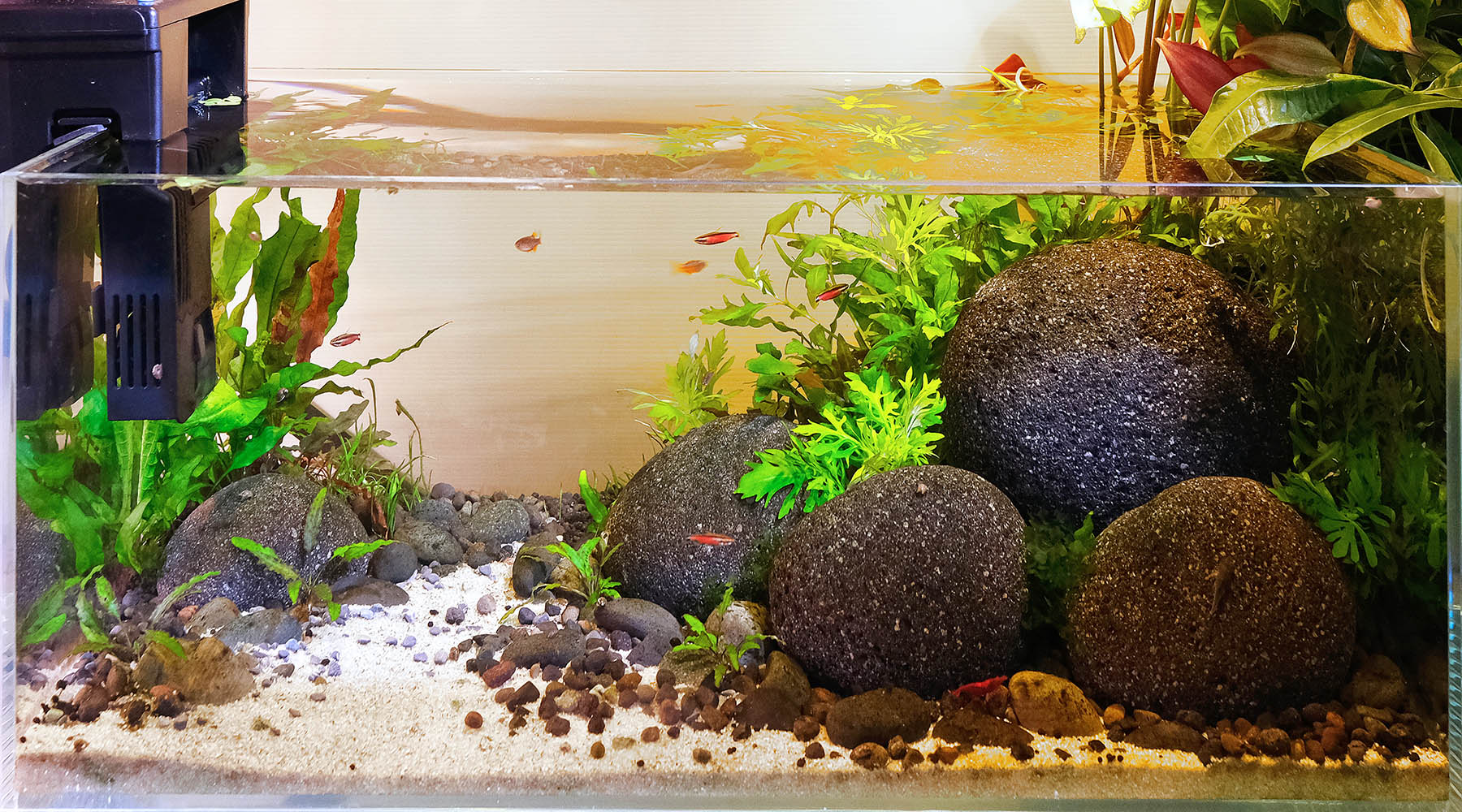
Above: A 2Hr A20 non-CO2 tank requires minimal maintenance and remains algae free. APT1 (lean water) + JAZZ enriched substrate (happy shade plants) and 20 PAR lighting.

Above: The hardscape of a 2Hr A40 Iwagumi remains algae-free with minimal maintenance. The 2Hr Way? APT1 (lean water) + JAZZ-enriched substrate (nourished carpet) and 50 PAR lighting.

We don't aim for an optimal R,G,B setting as research shows that plants utilize almost all of the visible light radiation from 400 to 700nm. However, we are precise in setting the light level - 50 PAR in this example.

We use PAR (Photosynthetically Active Radiation) because it measures what plants use. Unfortunately, neither watts (a measure of power consumption, not output) nor lumens (a measure of "brightness" as perceived by the human eye) nor lux (1 lumen per square meter) provide sufficient precision, especially when it comes to aquarium LEDs.

Why does it matter?

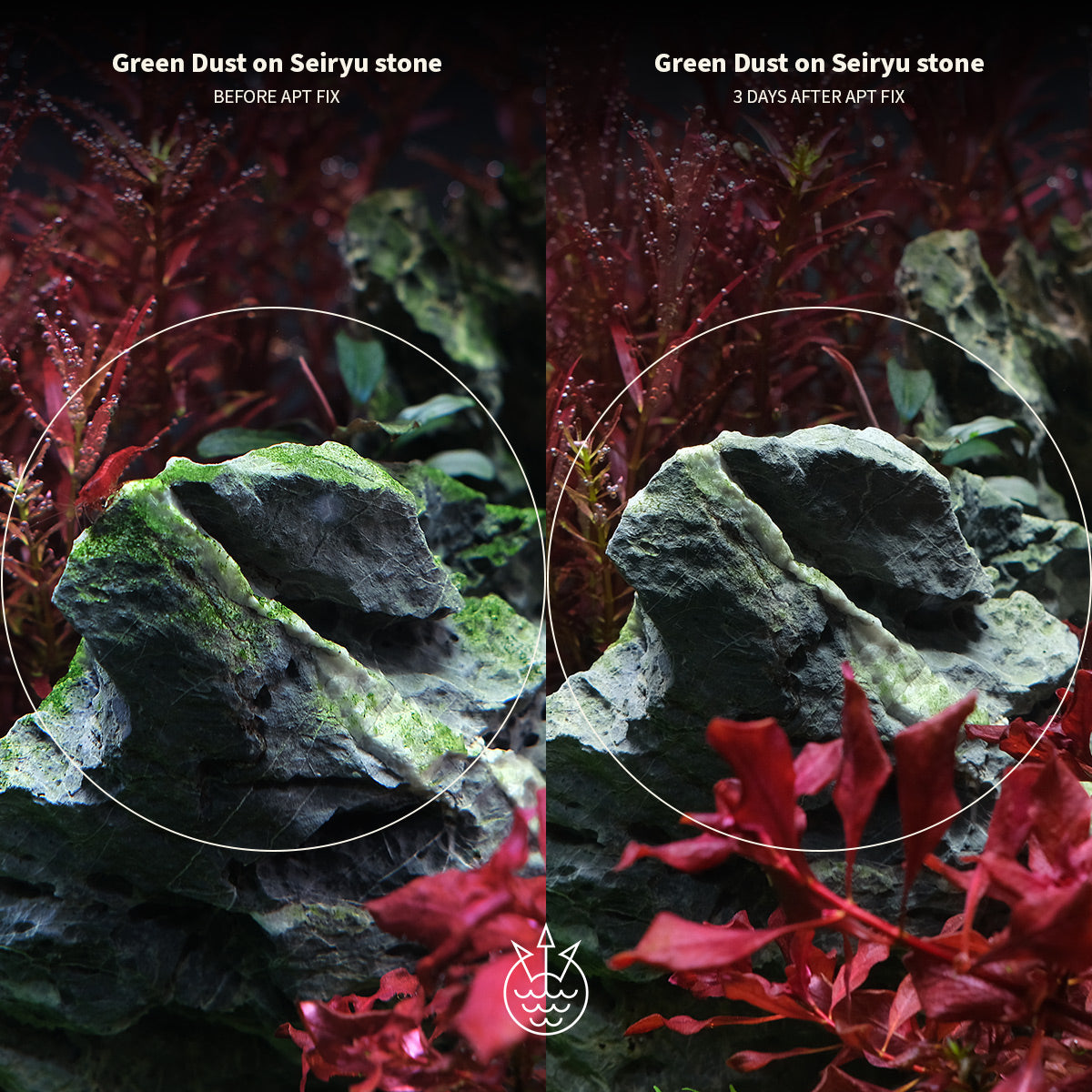
The 2Hr A40 Iwagumi above would look visually similar at both 40 PAR and 80 PAR, but at 80 PAR (twice the power) we would have a constant battle with Green Dust Algae on the rocks and sand.

The 2Hr A20 non-CO2 tank would look indistinguishable at twice the light level (40 PAR), but would also suffer from Green Dust Algae on the rocks and glass.

As aquarium LEDs become more powerful, it is much easier than before to accidentally have too much light.

How do I measure PAR?

Proper PAR meters such as the ones from Apogee can be expensive, costing ~US$700. Inexpensive household Lux meters measure 'brightness' but unfortunately does not consistently match PAR, especially across LEDs / light sources.

PHOTONE APP?

A easy tool would certainly be helpful, so this well-reviewed app caught our attention. We compared the readings on a variety of phones (iPhone 11 to iPhone 15 and Android - Samsung, Google, Xiaomi) with the PAR meters we use: Apogee's MQ-500 and MQ-510. We used a 70gsm plain paper diffuser according to Photone's instructions.

  1. The app is surprisingly usable on iPhones. However, the readings vary considerably between Android models. This is probably to be expected, as the camera sensors on Android phones are likely to vary much more than on iPhone models. Basically, we find the app usable on iPhones, but a hit or miss on Android models.
  2. Paid profile worth it. As the app uses different light profiles to extrapolate / estimate PAR, purchasing the 'Full Spectrum LED' profile significantly improved the accuracy to within 10 PAR (against aquarium LEDs) Note - we are not affiliated with Photone in any way.

What this means

  • If you have an iPhone, this app is a worthwhile (and inexpensive) tool to gauge PAR and tune light-strength.
  • It is not a precision tool (we would not use it to fine-tune between 17 PAR and 20 PAR) but it is surprisingly accurate for broader estimates: is this 70 PAR or 100 PAR? Is this 20 PAR or 50 PAR? (when both would appear similar to the human eye).

Use Cases


Note: Readings are at substrate level. PAR is strongly affected by distance, so readings will be higher closer to the surface/light source.

The emphasis is on "simple". Of course you can run tanks at much higher light levels. But that is like driving a much faster car with algae in pursuit!


Explore

View all

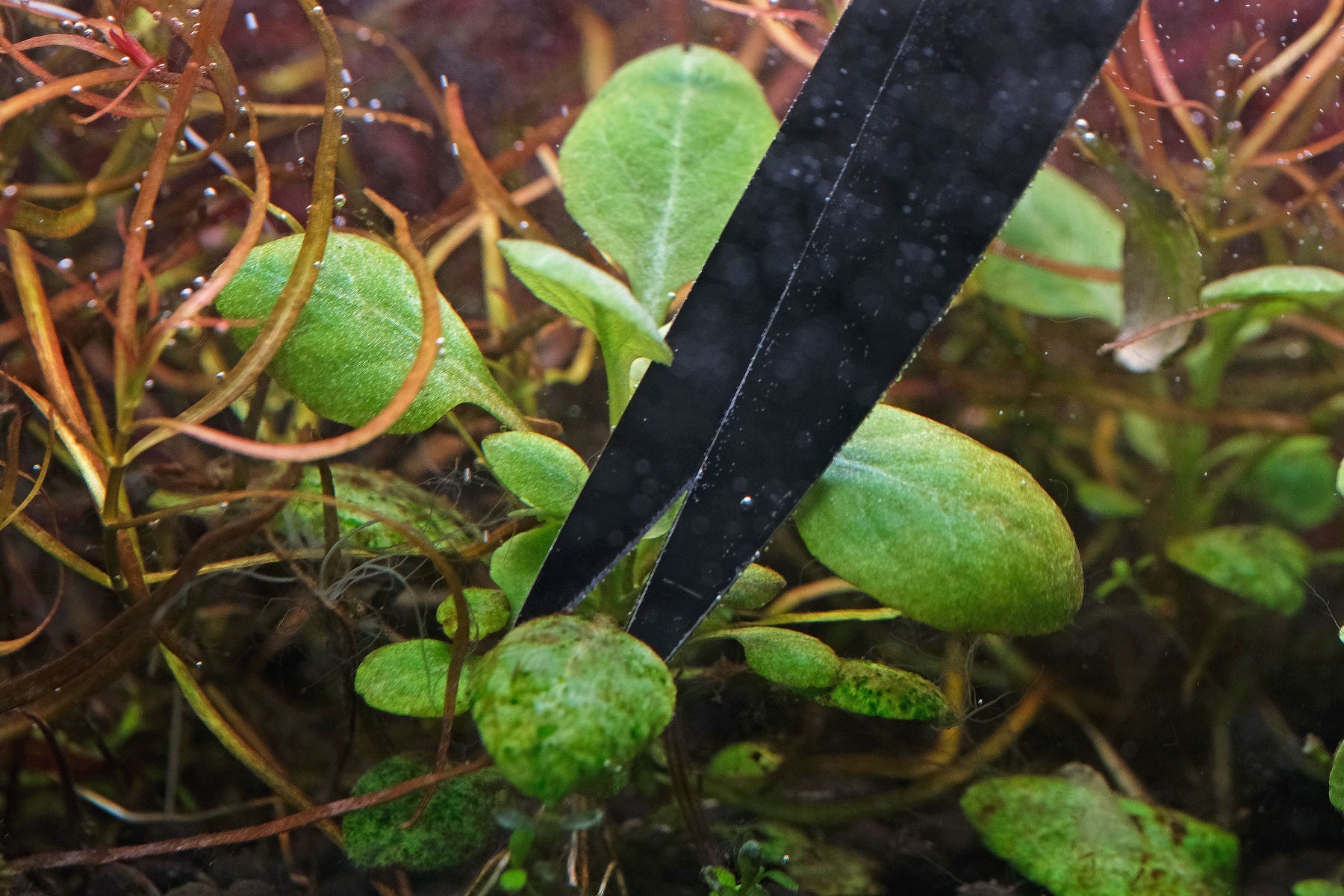
Close up photo of algae on older aquatic plant leaves
Why do leaves deteriorate? Understanding the leaf renewal cycle in aquatic plants
This article delves into the topic of how plants continually renew themselves through the production of new leaves.

Read moreabout Why do leaves deteriorate? Understanding the leaf renewal cycle in aquatic plants

4ft Rotala florida community aquarium: Showcasing the 2hr Way

4ft Rotala florida community aquarium: Showcasing the 2hr Way

Full details of tank parameters, plants and fish species, and the maintenance regime of the 4ft Rotala florida aquascape are described here.

Read moreabout 4ft Rotala florida community aquarium: Showcasing the 2hr Way

Non-Aquatic Aquarium Plants: A Beginner's Buying Guide to Avoid Them

Non-Aquatic Aquarium Plants: A Beginner's Buying Guide to Avoid Them

Some of the most attractive plants on shop shelves are not aquatic at all. They persist for weeks, then rot and feed algae. This guide identifies the common non-aquatic species sold as aquarium plants, shows how genuine aquatics shift form above and below water, and lists what to check before buying..

Read moreabout Non-Aquatic Aquarium Plants: A Beginner's Buying Guide to Avoid Them

New Tank Journey | Ugly Duckling

New Tank Journey | Ugly Duckling

New tanks can be frustrating at the beginning. Here, we describe one important signal that things are actually progressing well, despite plants having algae. 

Read moreabout New Tank Journey | Ugly Duckling

When Less is More

When Less is More

How to get Rotala rotundifolia redder? Interestingly, less can be more in this case.

Read moreabout When Less is More

System Shocks

System Shocks

Sudden widespread algae infestation can take place when changes in environmental parameters induce adaptation stress that weaken plants which become vulnerable to algae.

Read moreabout System Shocks

Flowering Underwater?

Flowering Underwater?

Do aquatic plants flower underwater? Is flowering a sign of good health? Which plants can I grow that will flower easily in my aquarium?

Read moreabout Flowering Underwater?