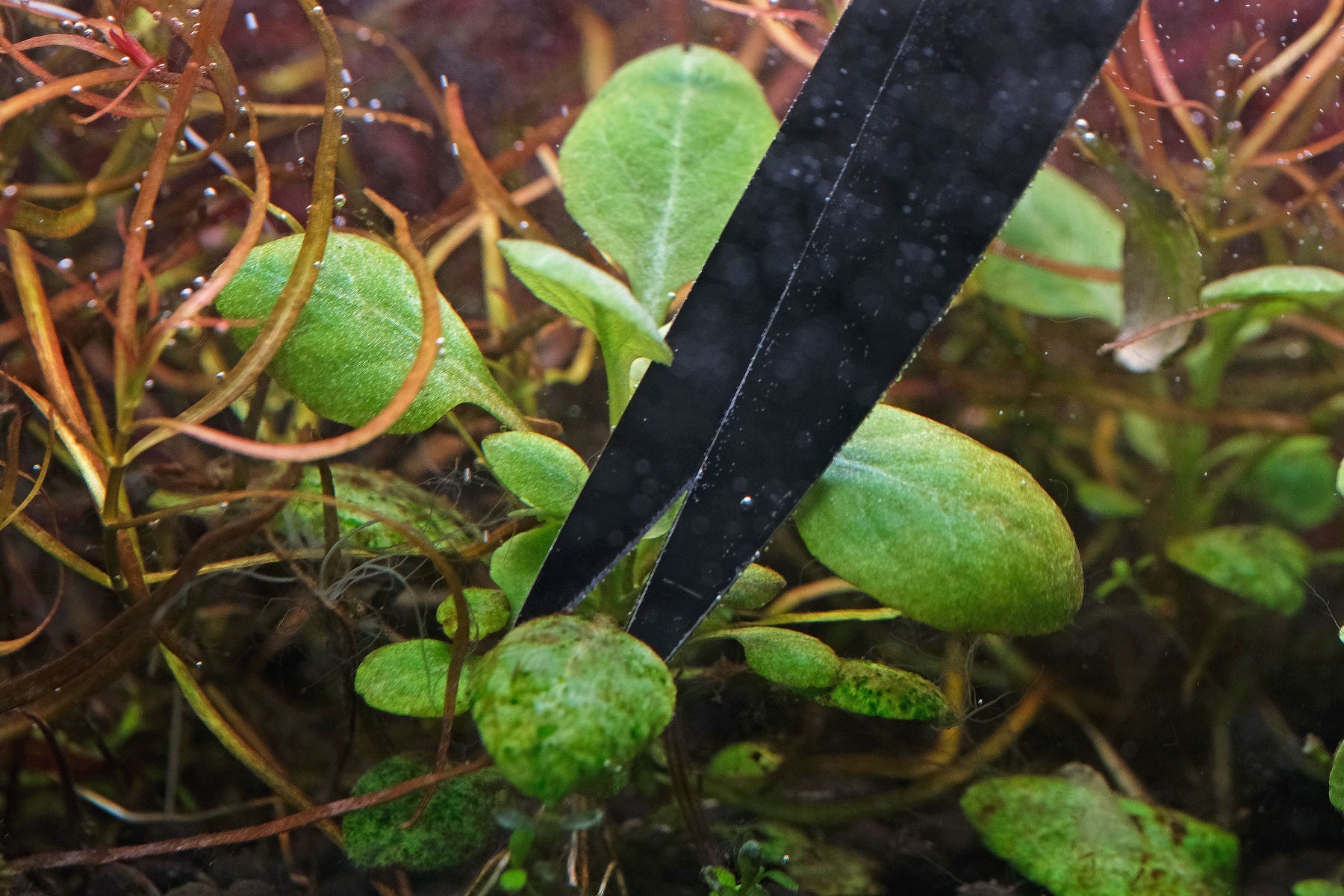

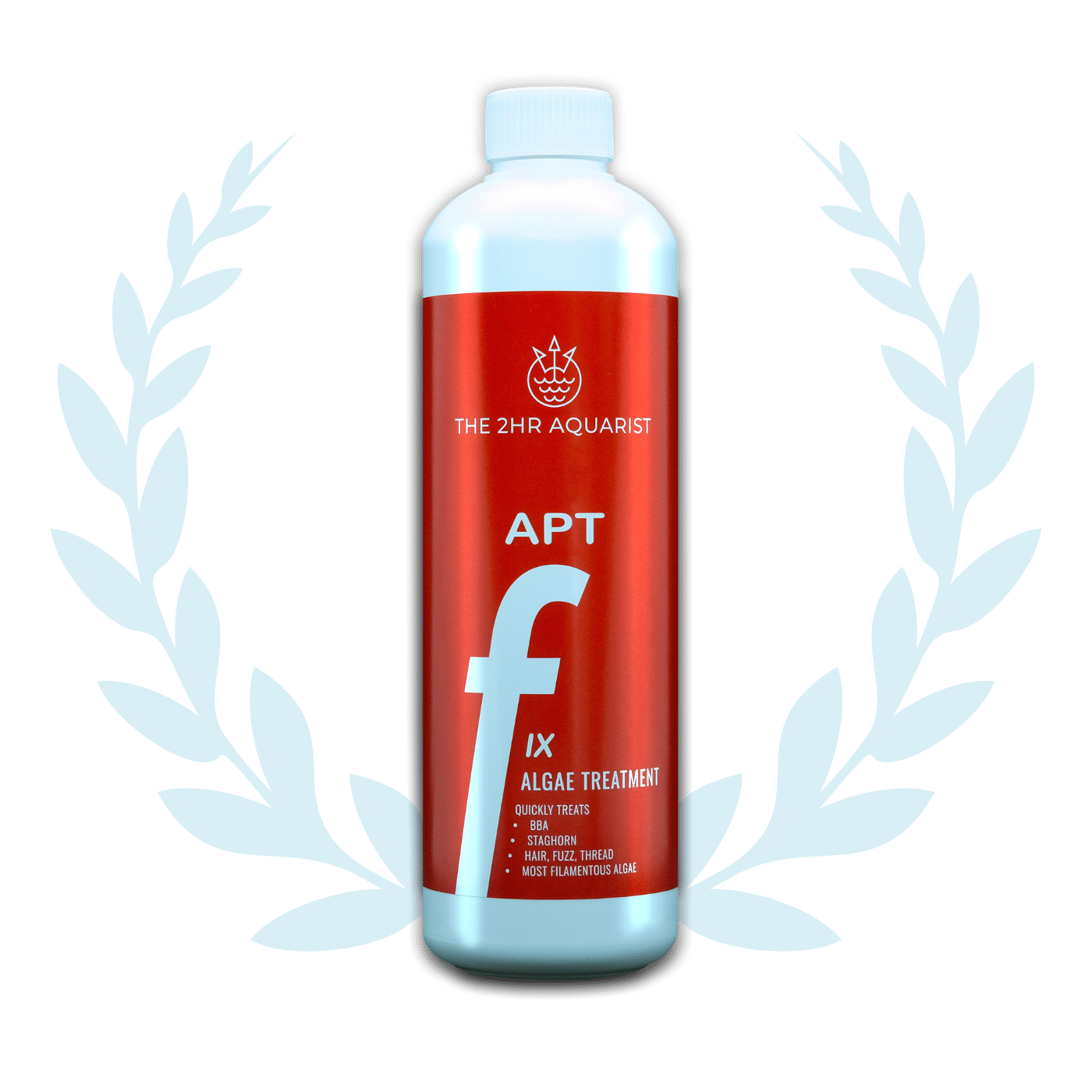
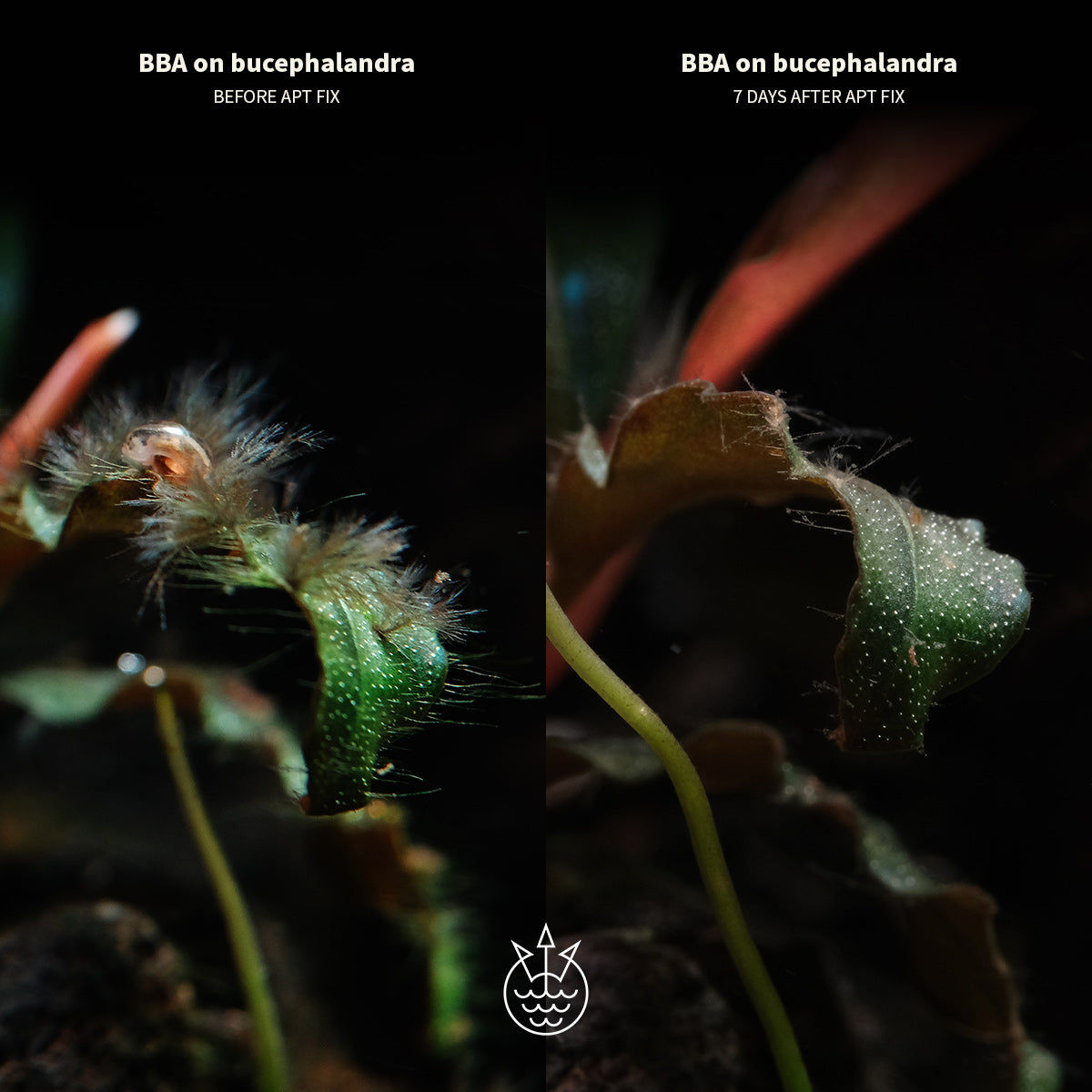
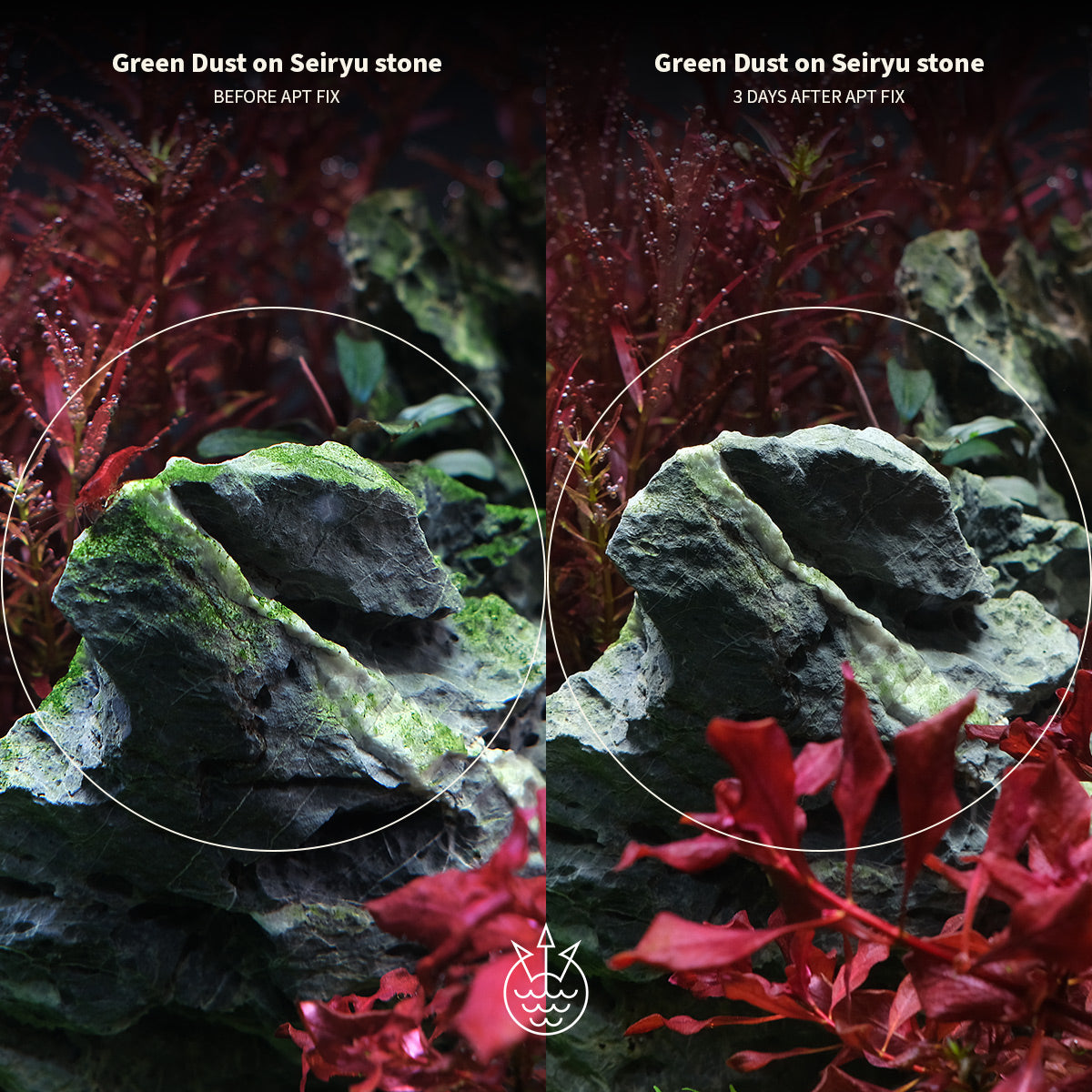
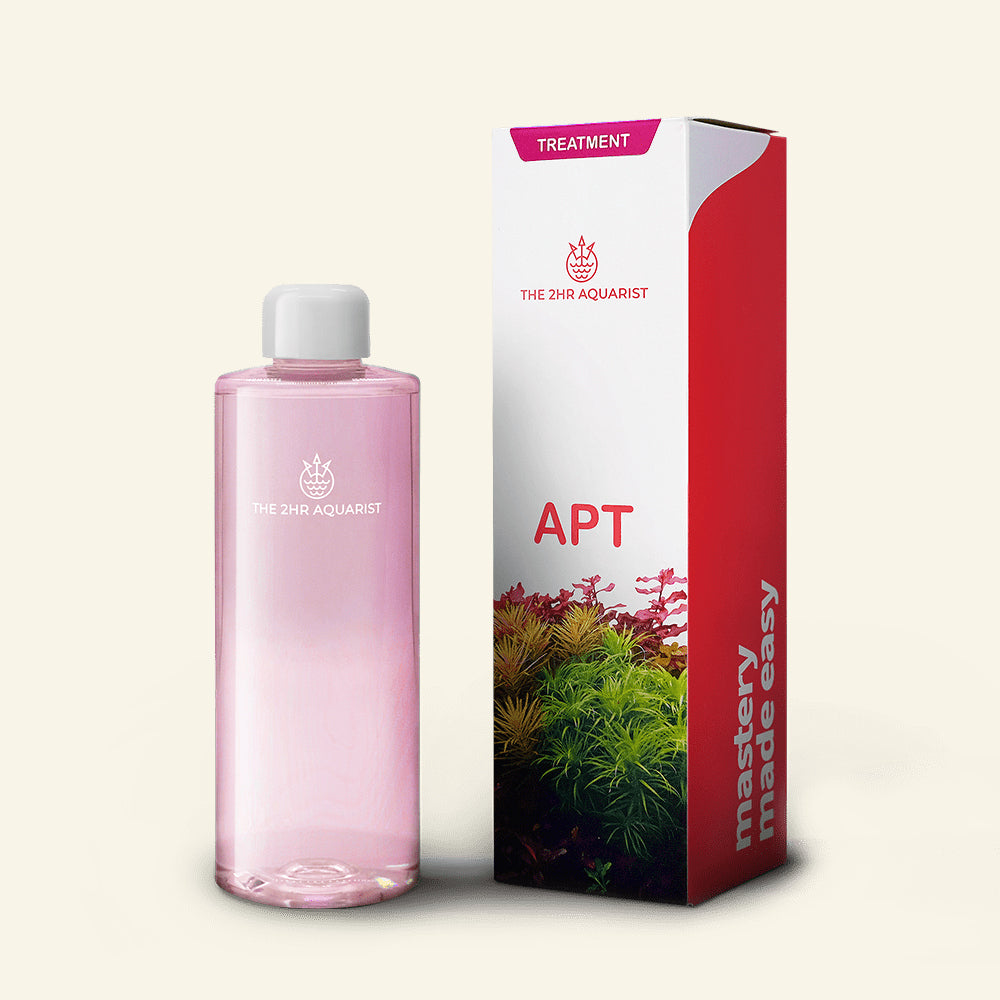
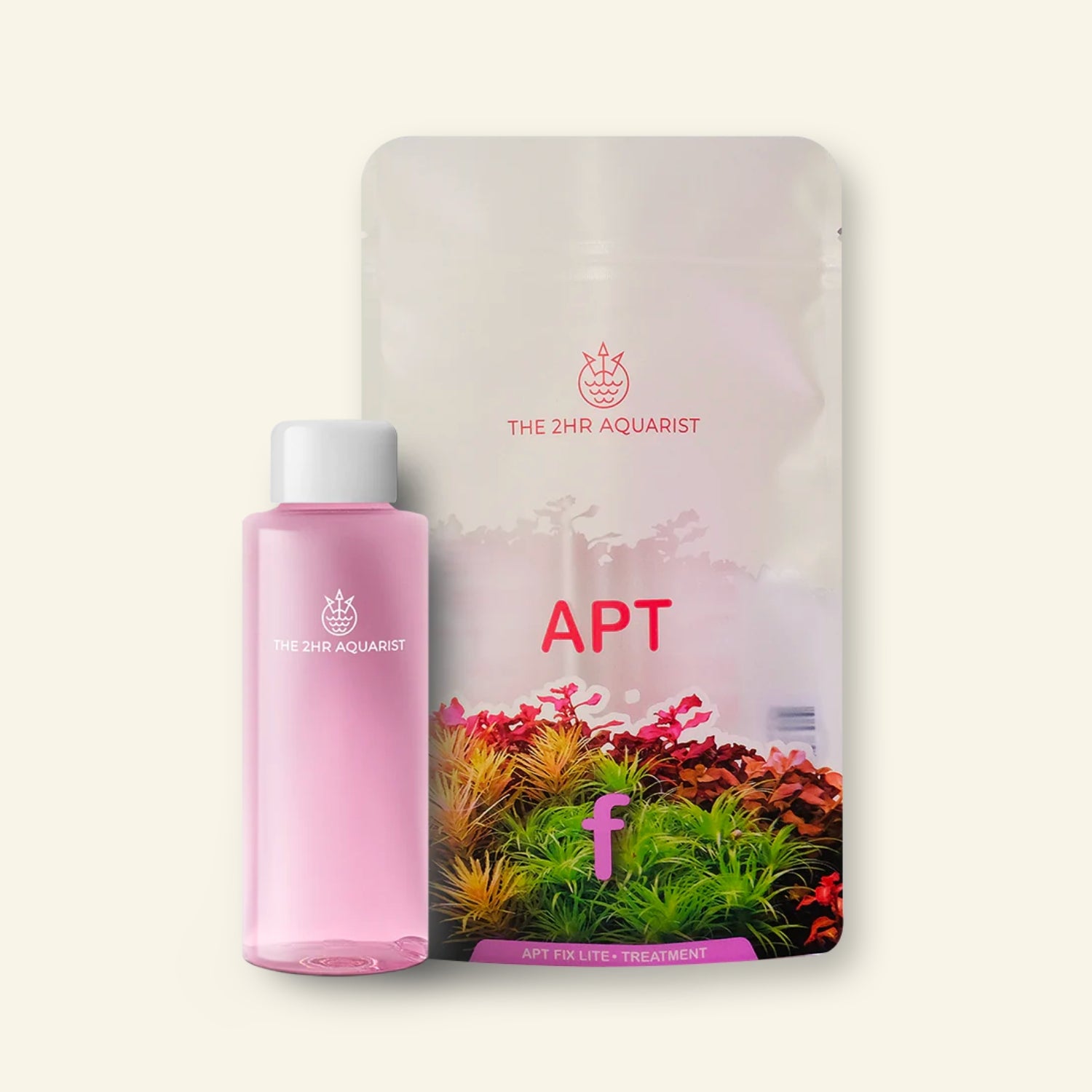
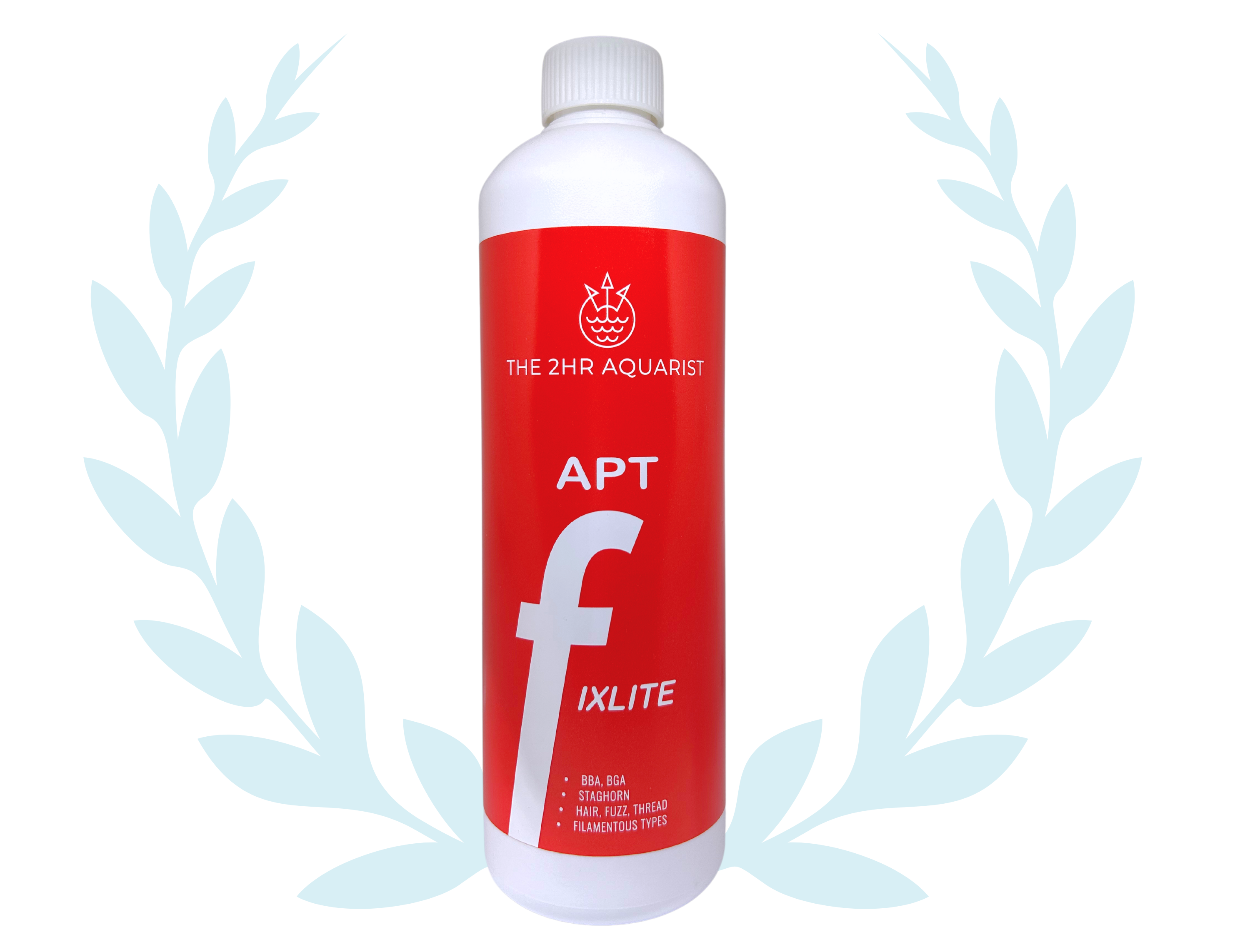
Aquarium algae treatments fall into two groups: whole-tank dosing, where the compound disperses through the water, and spot-dosing, where it is applied directly onto the algae itself. APT Fix and APT Fixlite are spot-dosed. That makes them simultaneously stronger at the point of contact and gentler on the tank as a whole.

2 productos

2Hr Aquarist APT Fix

A partir de $11.80

2Hr Aquarist APT FIXLITE

A partir de $11.80

FAQs

APT Fix or APT Fixlite: which do I need?

Choose by how delicate your plants are, not by how bad the algae is. APT Fix is for tougher jobs - black beard algae, hair, string and fuzz algae, and most filamentous forms - on hardscape and established plants. APT Fixlite is designed for mosses, liverworts such as Riccardia and Riccia, Vallisneria and other delicate species. The two use entirely different base formulations, which also means one can overcome resistance where the other has been used repeatedly. Fixlite, despite being the gentler of the two, works faster than APT Fix on several forms of algae.

Why spot-dose instead of treating the whole tank?

Because it is both stronger and gentler at once. Applied directly onto the algae, the compound meets it at full concentration - far higher than any dose dispersed through the tank could safely reach. At the same time, the total quantity entering the system is a fraction of a whole-tank dose, so fish, shrimp, plants and beneficial microbes are barely exposed.

How do I apply it?

Pause the filter briefly, up to two minutes, and pipette directly onto the affected areas. The limit is 1ml per 10L. If you need to cover more ground than that allows, exceed it and perform an 80% water change immediately afterwards.

Is it safe for fish and shrimp?

Used according to instructions, yes. Do not spot-dose directly onto animals, and ensure good flow and oxygen levels afterwards. Both formulas biodegrade completely within roughly 12 to 24 hours and leave no accumulating residue - unlike algaecides that build up and erode a tank's ecosystem over time.

Insights

Close up photo of algae on older aquatic plant leaves

¿Qué deterioran las hojas? Comprender el ciclo de renovación de las hojas en las plantas acuáticas

Este artículo profundiza en el tema de cómo las plantas se renuevan continuamente mediante la producción de hojas nuevas.
Leer mássobre ¿Qué deterioran las hojas? Comprender el ciclo de renovación de las hojas en las plantas acuáticas

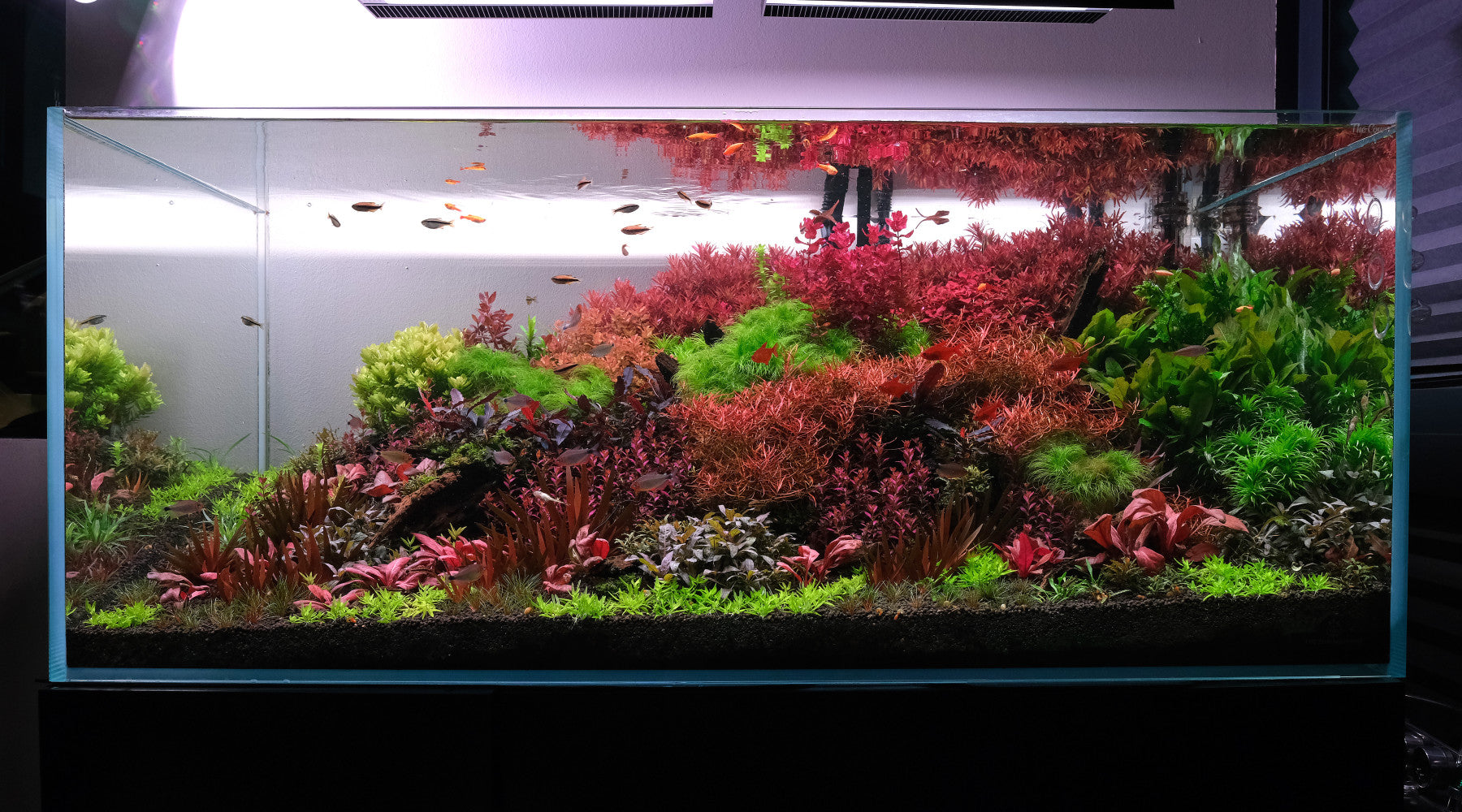
4ft Rotala florida community aquarium: Showcasing the 2hr Way

Acuario comunitario de 1,20 m con Rotala florida: Presentación del método 2hr Way

Aquí se describen todos los detalles sobre los parámetros del acuario, las plantas y las especies de peces, así como el régimen de mantenimiento del paisaje acuático de Rotala florida de 1,20 m.

Leer mássobre Acuario comunitario de 1,20 m con Rotala florida: Presentación del método 2hr Way
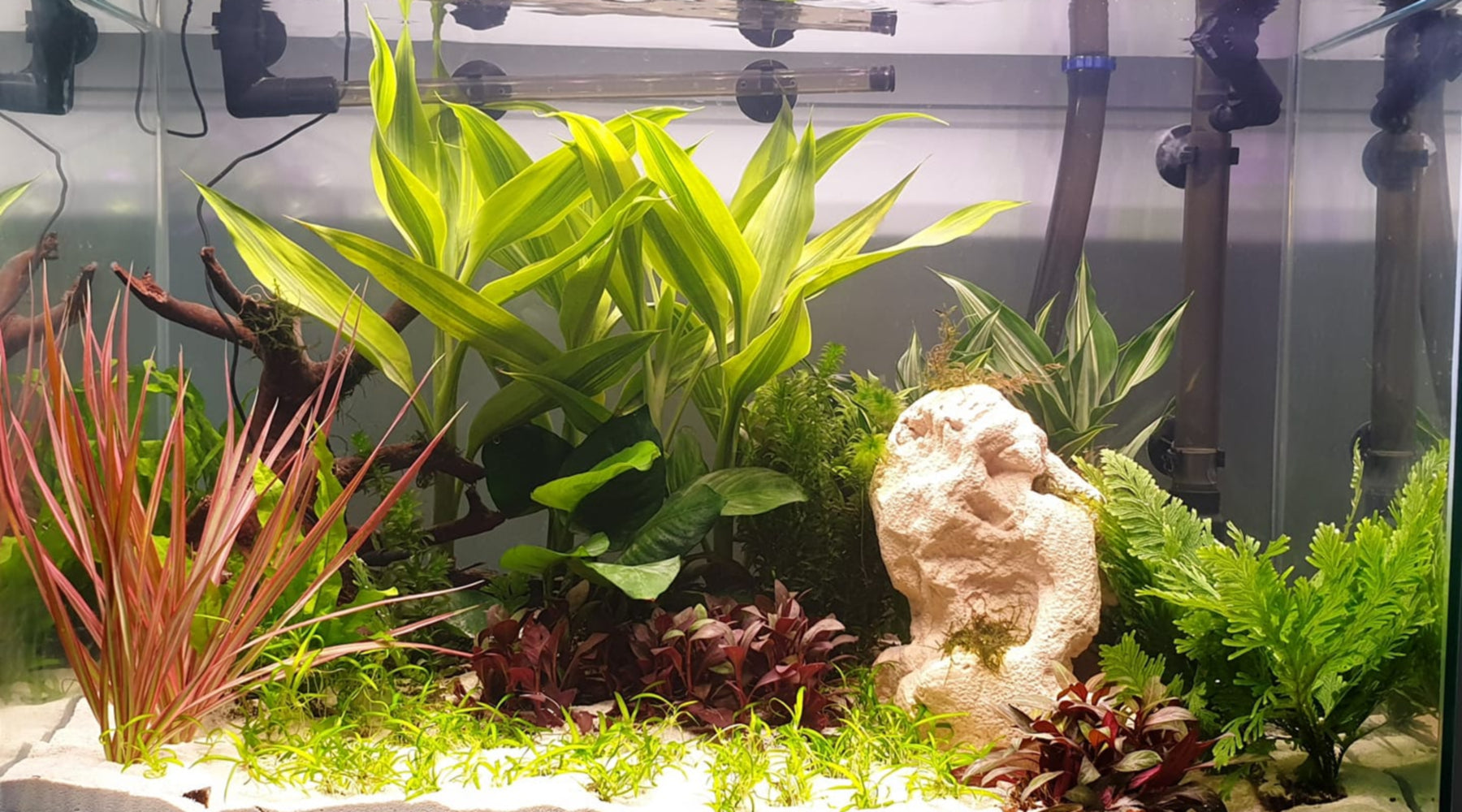
Non-Aquatic Aquarium Plants: A Beginner's Buying Guide to Avoid Them

Guía para principiantes para evitar las plantas no acuáticas en las tiendas

El mayor escollo para los principiantes es que las tiendas de acuarios suelen tener especies de plantas no acuáticas que no crecen bien en el acuario a largo plazo. Esta guía destaca algunas especies no acuáticas comunes que los aficionados deben evitar, y también muestra la diferencia entre las formas emersas y las formas de crecimiento sumergidas para especies de plantas acuáticas comunes.

Leer mássobre Guía para principiantes para evitar las plantas no acuáticas en las tiendas