

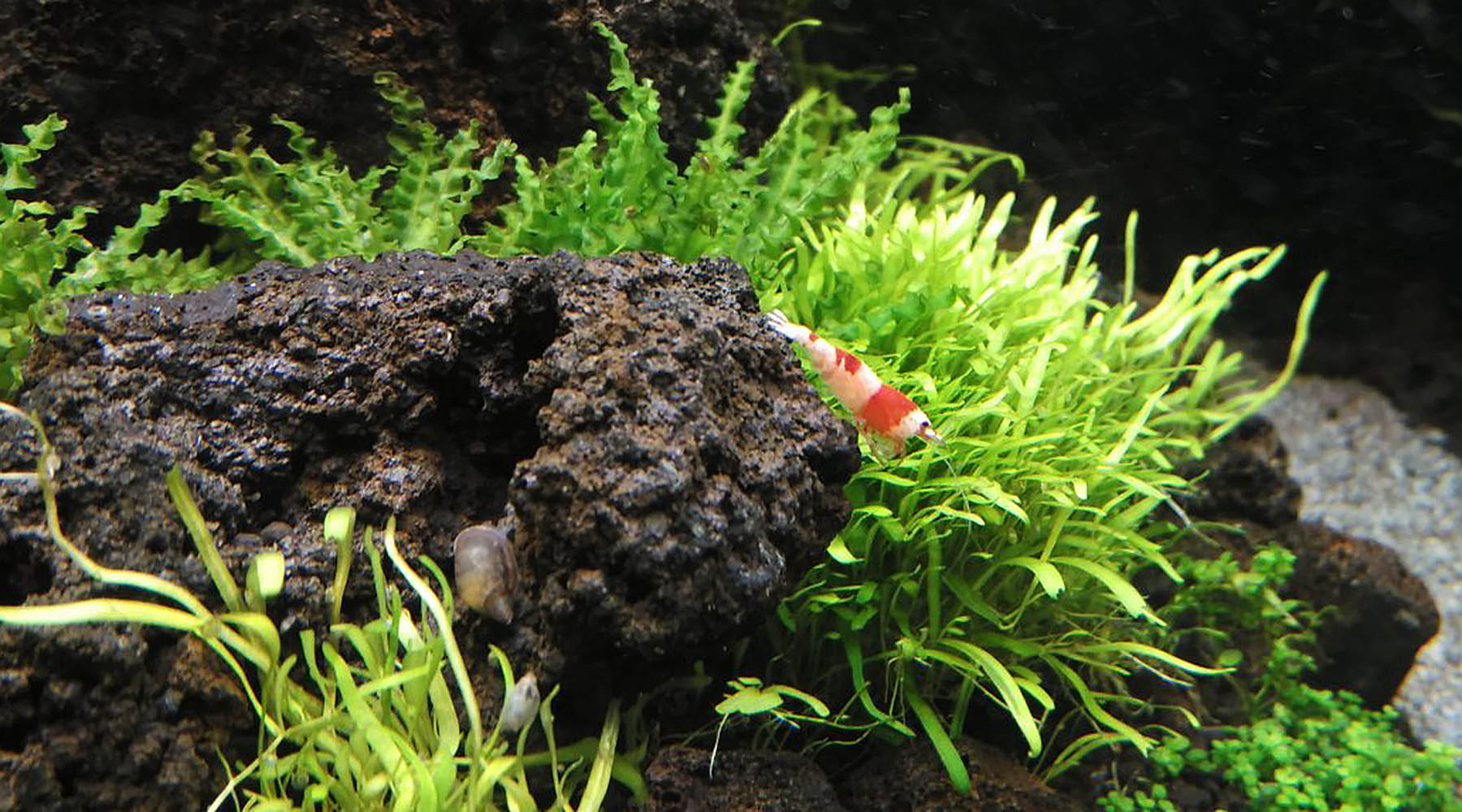
The main problem for both plants/livestock is that while many can survive over a wide range of GH/KH values, the transition process from water bodies with different salinity concentrations can be stressful. It is mainly the difference in alkalinity and salinity that causes osmotic stress when moving animals between two different water bodies. The difference in alkalinity can be measured by the KH value of the water.
For example, Red Cherry Shrimp can be found thriving/reproducing in tanks with as low as 1-2 dKH as well as in tanks with much more alkaline water at 12+ dKH.
However, if we transfer shrimp directly between these 2 tanks, we will lose a good number of them due to osmotic shock as the KH difference between the two tanks is very large. In both tanks the shrimp have adapted to their water parameters.
In addition, in the CO2-injected tanks, the animals need to acclimatise to the CO2 levels in the tank. Overcoming this is generally easy - only add animals when the CO2 injection is switched off, never add them when the tank water is CO2 saturated.

when drip acclimatisation works...
For sensitive species such as dwarf shrimp, transferring them between tanks with a KH difference of 3dKH or more is stressful and potentially fatal. The symptoms of osmotic shock are often not immediate - it takes many hours/days for the stress to manifest itself, so seeing animals moving around the tank environment in the few hours after they have been added is not the correct way to check whether or not they are suffering from osmotic shock. Shrimp that have been rushed into a tank will stress and weaken over many days, not immediately. This is why many people claim to see shrimp moving around well after being added, but disappearing by the end of the week.

One way to get around this problem is to buy animals from dealers that have similar water parameters to your own tank - especially for sensitive species such as shrimp. If the difference between the tanks is small (less than 5dKH), drip acclimatisation over many hours will work to minimise stress. If the difference is very large (i.e. 10dKH+), acclimatisation will take days and there is no quick fix.
You can drip acclimatise new animals by running a thin tube (aquarium air hose pinched with a clip works well) from the aquarium to the bag the animals came in. Aim to double the amount of water in the bag every 2 hours or so. You can remove some of the water from the bag as it fills with aquarium water. You can add the animals to the tank after 2 to 4 hours.

Sensitive livestock such as these Sundadanio axelrodi do not like large fluctuation in water parameters.
and when it may not
Drip acclimatisation does not work for large parameter differences. If the difference is large, e.g. 10 dKH, drip acclimatisation will not be sufficient.
In such cases, you can place the animals in a holding tank and slowly increase the parameters in the holding tank, 2-3 dKH per week, until they reach the required target parameters of the main tank. A much simpler option is to buy from a dealer who will keep the animals in water similar to your tank parameters.
Plop and drop?
In many situations, animals can be placed directly into the tank without drip acclimatisation. The main advantage is that animals that have been transported over long distances sometimes suffer from ammonia build-up in the bag - the benefits of immediate introduction outweigh the potential transition stress of remaining in ammonia saturated water for a prolonged period.
Adding alkaline tank water to a bag of ammonia rich acidic bag water is potentially lethal as ammonia toxicity increases with alkalinity - ammonia is more toxic above pH 7.
Most commercially bred fish are hardy enough to withstand a fairly wide range of water parameters. So removing the fish and adding them directly to the tank makes sense for many species.
I would not try this approach if the parameter difference is huge - i.e. from a 1 dKH bag to a 10 dKH tank.
For learn more about GH, click here.
For learn more about KH, click here.








Share:
How to grow softwater plants
pH, KH, GH, TDS - Introduction to basic water parameters