
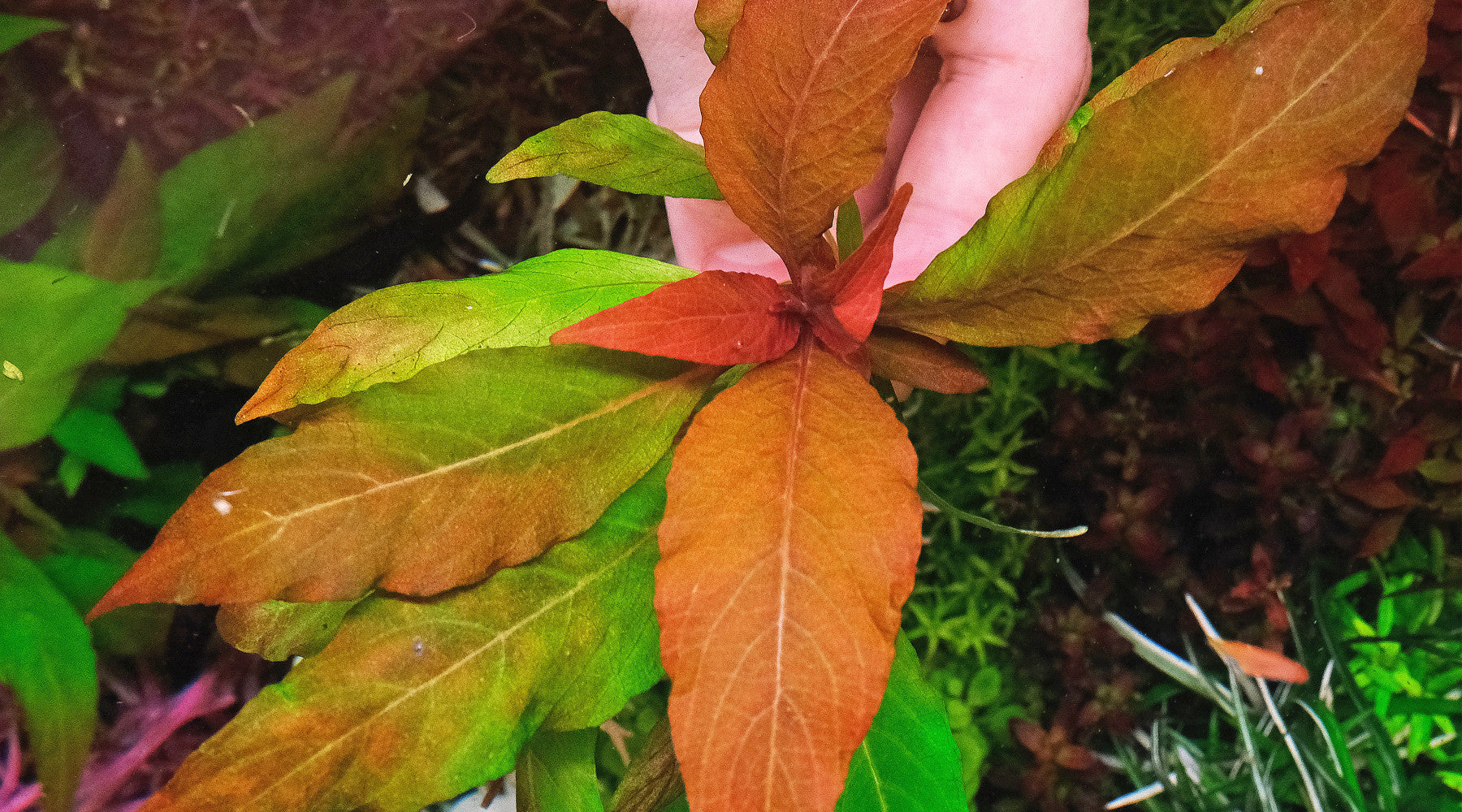
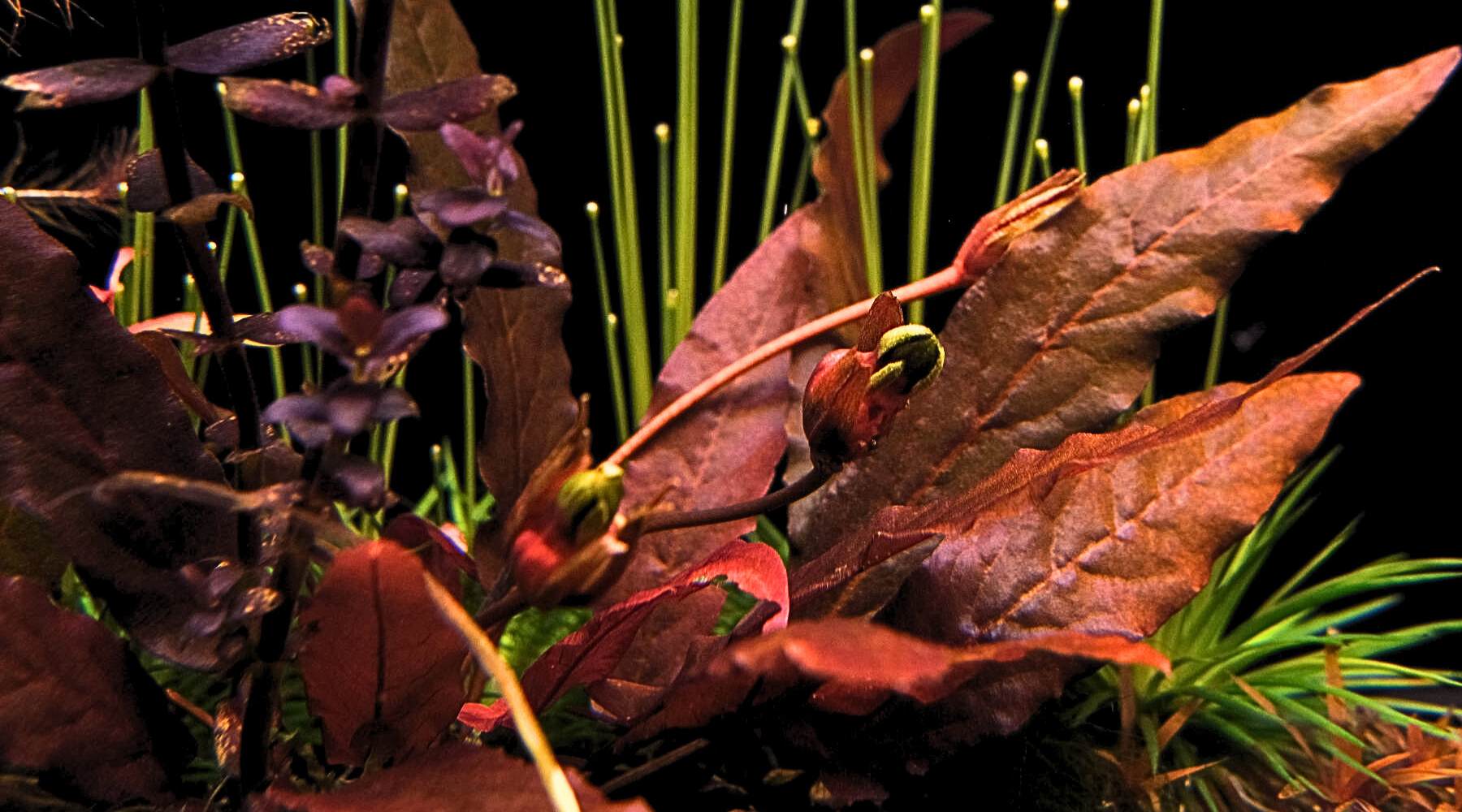
Hygrophila corymbosa has been a staple in the aquarium trade since early days of the hobby. It is a stem plant with bright green leaves about 3 to 4 inches in length. The "cherry leaf" varietal has leaves that turn reddish in high light conditions, in shade conditions the leaves will remain green. The full size of the plant is quite large; a couple of feet tall if given enough substrate depth and space to grow. However, in most home aquariums, it will grow to around 8-12 inches. The "compact" varietal has shorter internodes and will grow much shorter with regular trimming - this varietal is most popular in the aquarium trade as the default varietal grows very large very fast.
Hygrophila corymbosa is an easy plant to grow and can be grown in either soft or hard water. It is flexible to a large range of temperature and water parameters. It is an aggressive feeder and will grow faster if ample light, carbon and nutrients and provided.
It is best used in the mid and background of larger sized aquariums. In smaller tanks (below 2ft in length), the plant becomes too large for the tank quickly (takes longer to hit maximum size in low tech tanks).

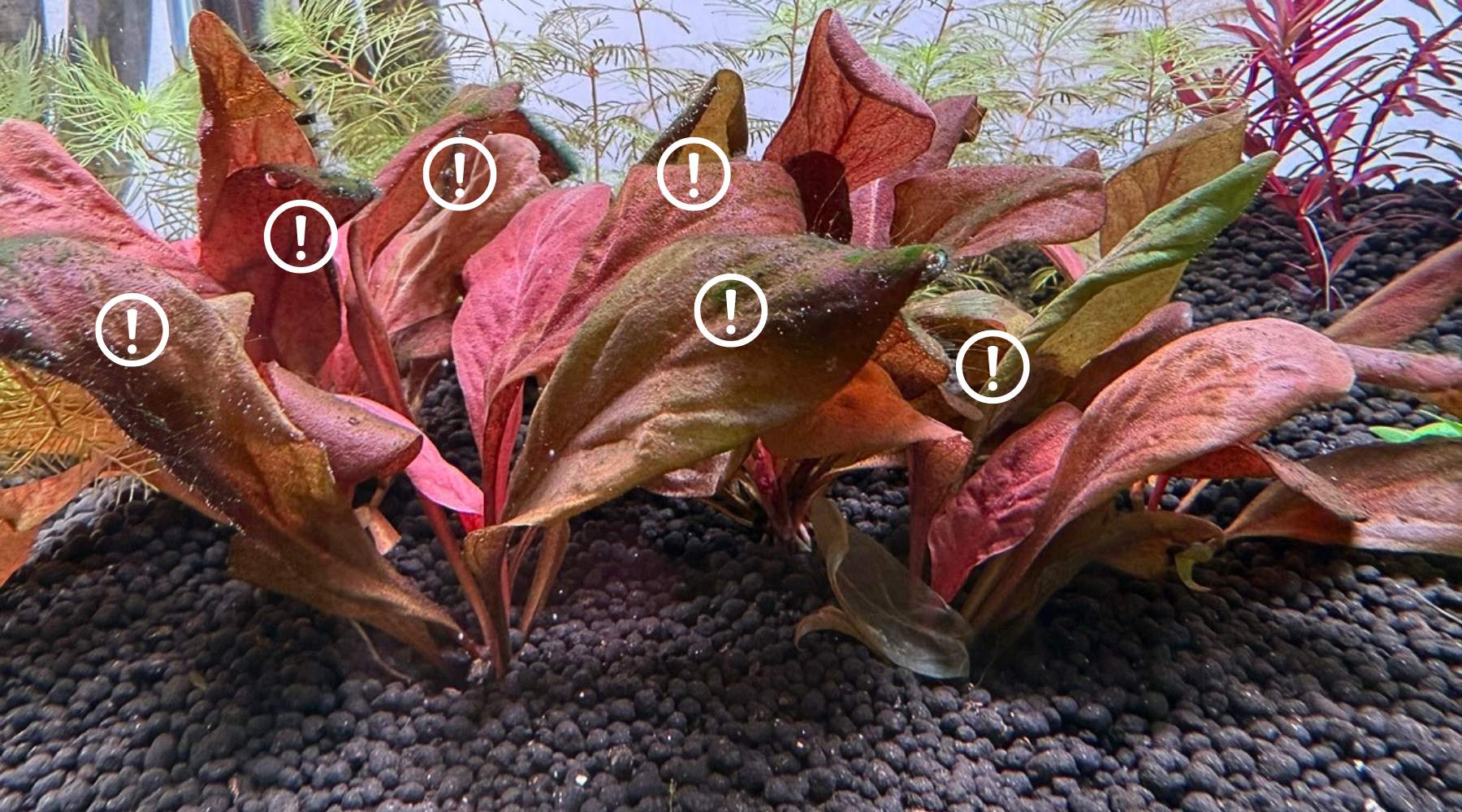
Loss of lower leaves, or leaves turning transparent and melting usually indicate insufficient nutrients or carbon. Loss of lower leaves is common in non-CO2 injected tanks and is an indication of poor Carbon access. Very poor light conditions can also cause loss of lower leaves, however, in non-CO2 injected tanks, lack of carbon is the most common causation factor.
For the red varietal, it attains deep red coloration at 100umols of PAR and above.

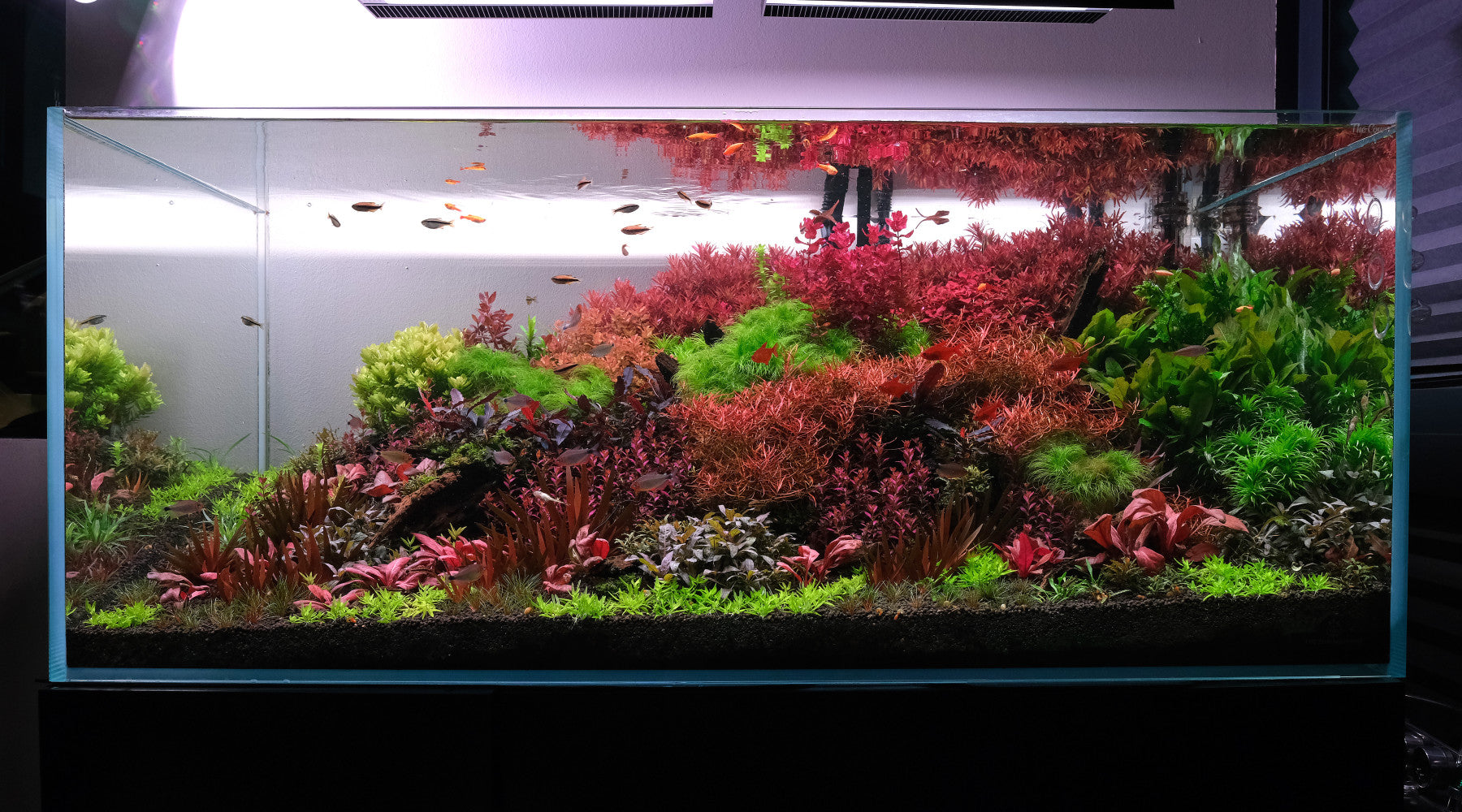
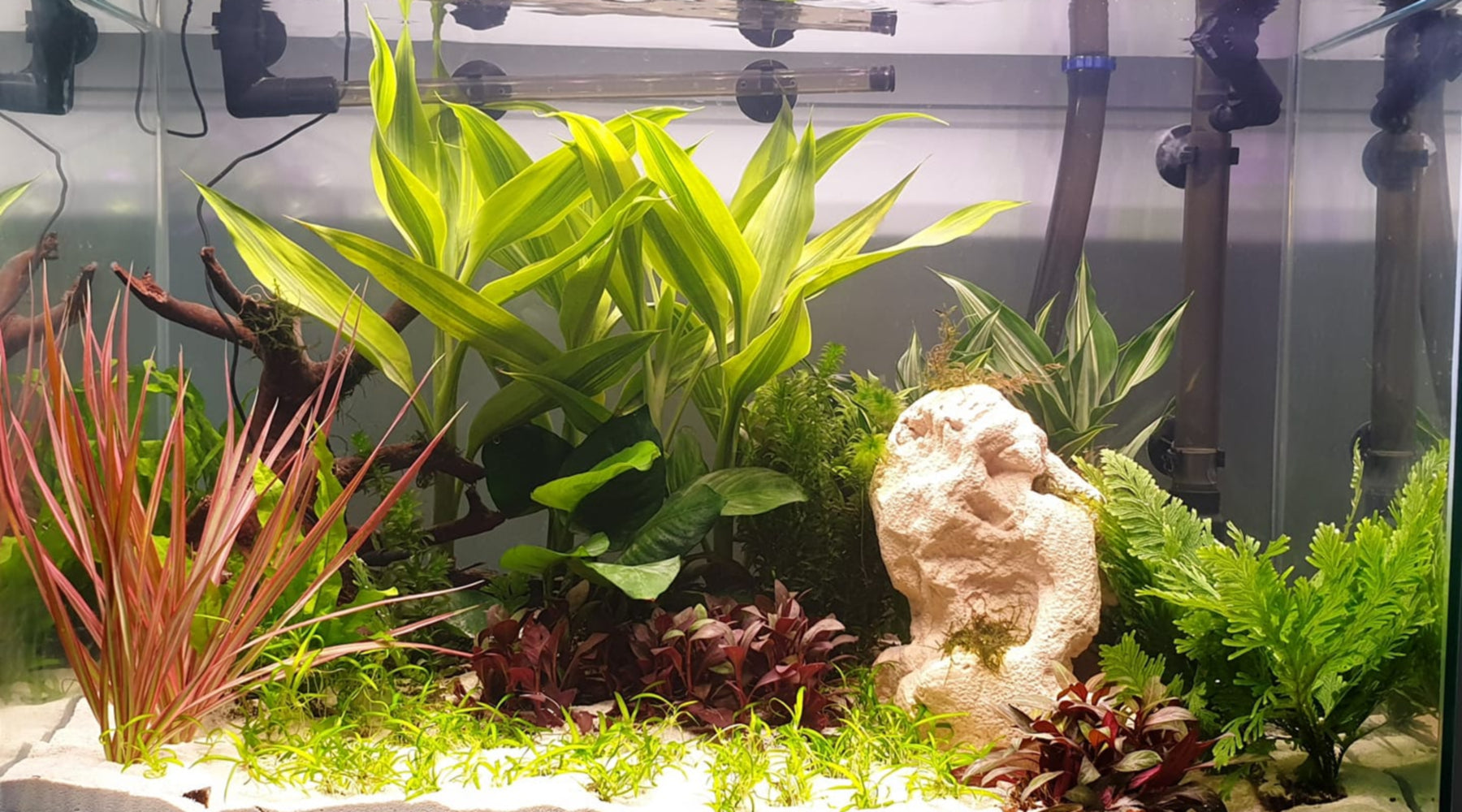
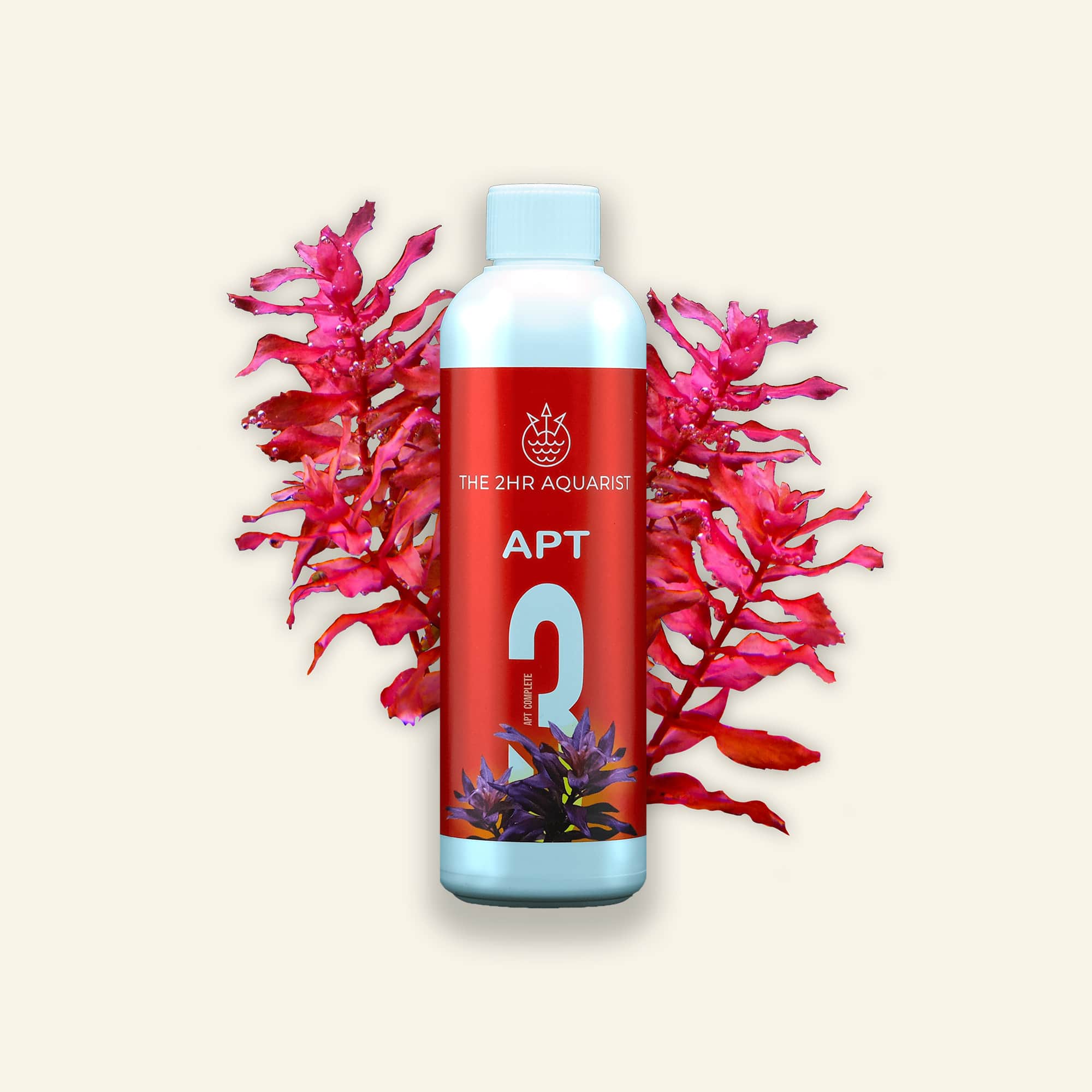
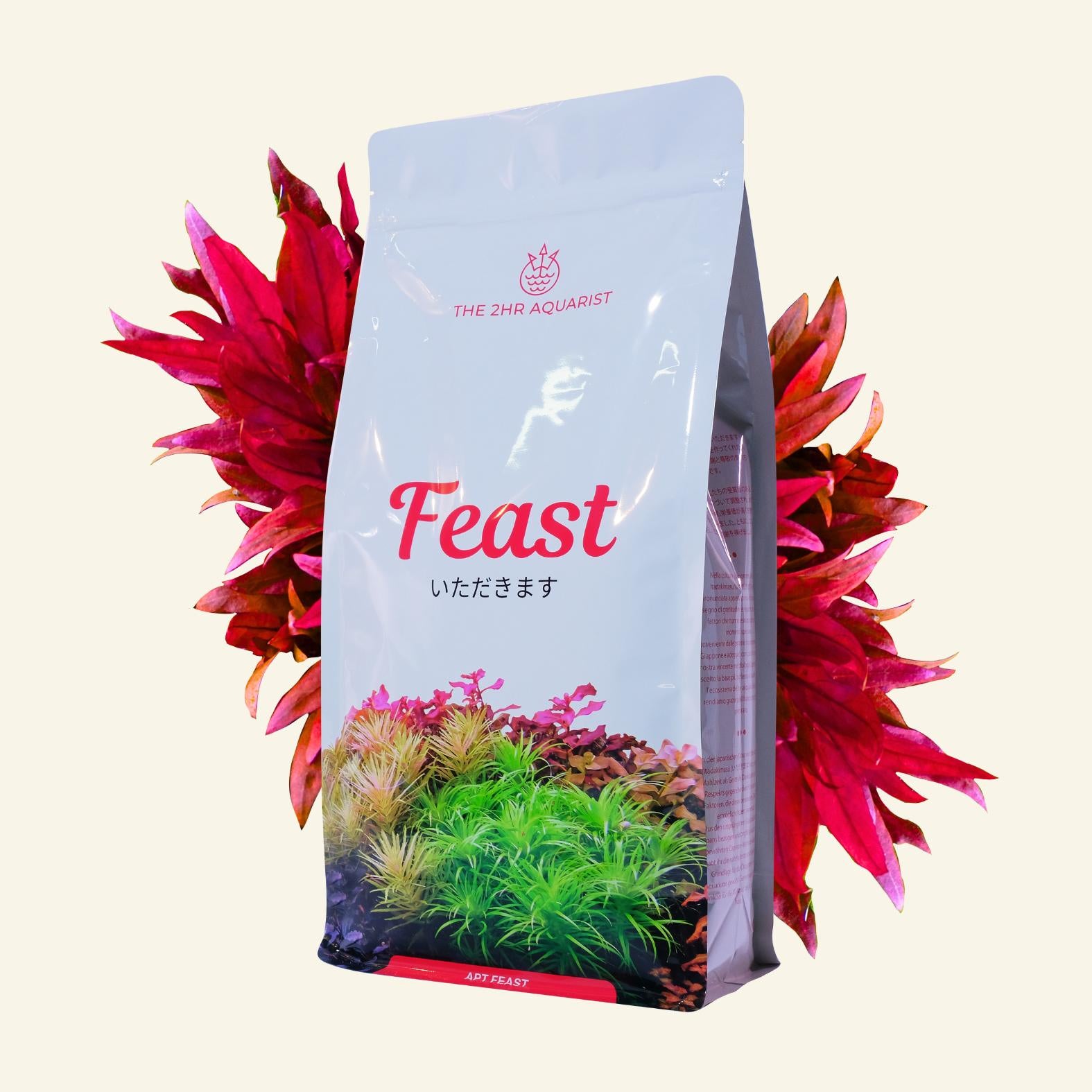
This tank is grown using APT 3 in the water column, and APT Feast as the substrate.
Key success factors
- At least medium light levels (50+ Umols of PAR)
- Comprehensive water column nutrient availability necessary for long term health
- Carbon availability helps maintain lower leaves and bushiness
Trimming and propagation
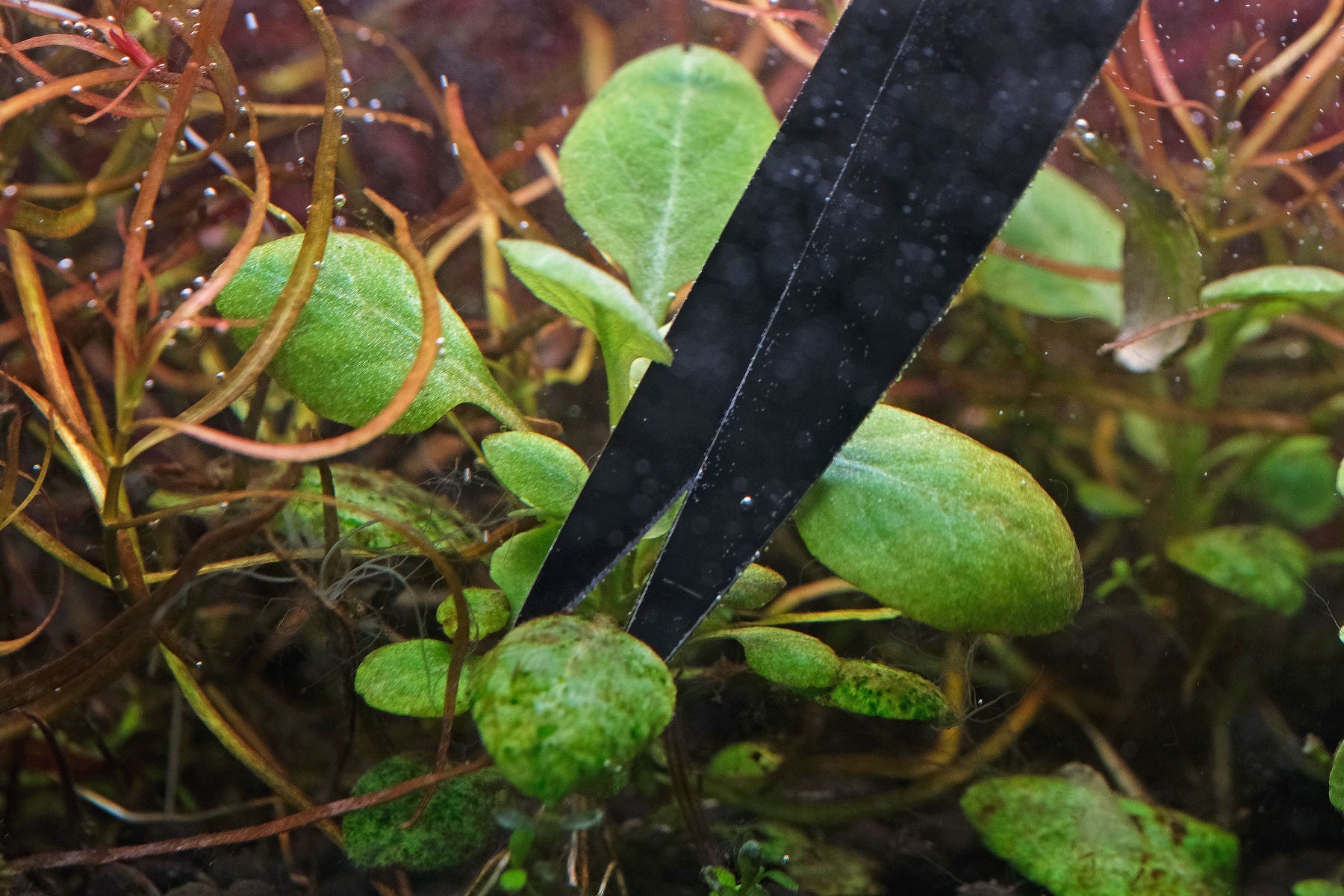
To propagate the plant, the plant can be cut a couple of inches from the top at an internode and the top portion planted straight into substrate. Roots will grow from the lowest internode. The remaining original rooted portion will grow new side shoots even though the top has been cut off. This is also the way to get a more bushy plant and prevent the plant from growing too tall.
The plant takes trimming well, and should be topped off regularly to prevent the plant from reaching the top of the aquarium.
Click here to find out how to maintain stem plants long term.
Click here to find out how to grow red aquarium plants.
Click here to read on how to optimize CO2 levels
Click here to browse more plant growing profiles
Click here to read on how to stabilize a new planted tank

Share:
10 Best Low Tech Plants
How to grow Rotala tulunadensis