
What Is a Dutch Aquascape?
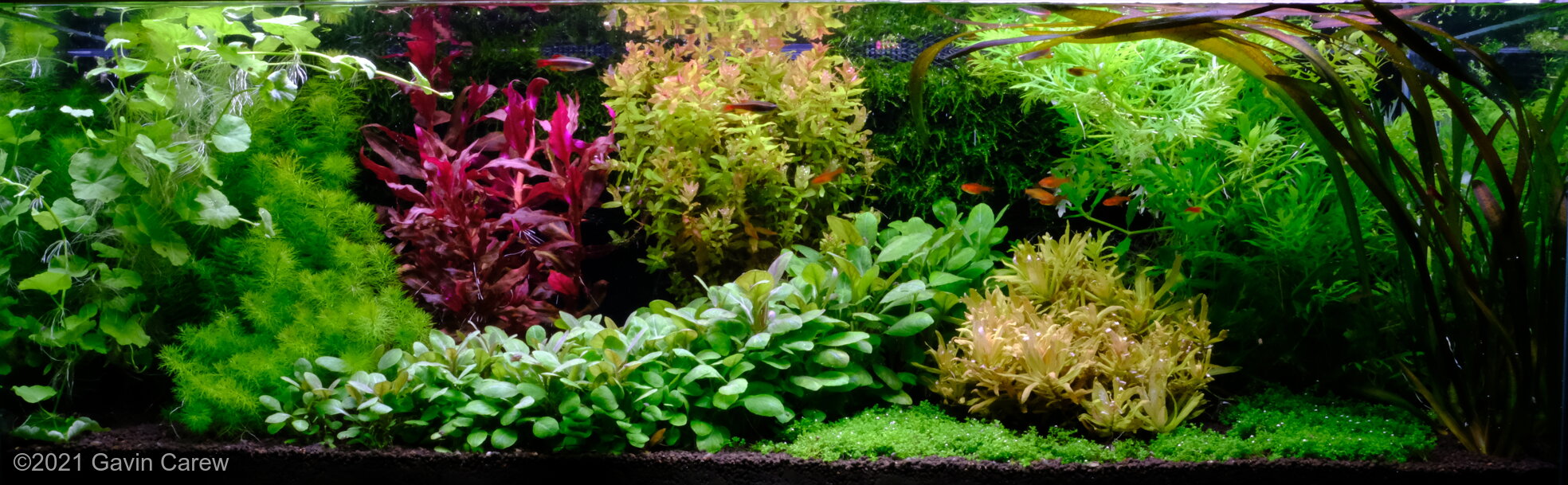
Walk past a well-executed Dutch aquarium and it stops you cold. Blazing reds, electric greens, deep purples- dense columns of colour arranged like a living tapestry. It's the kind of tank that makes people ask whether it's freshwater or marine. It absolutely is freshwater, and it's achievable. But it rewards those who go in clear-eyed about what it demands. This article will describe the key characteristics of the Dutch aquascaping style for beginner aquarists.
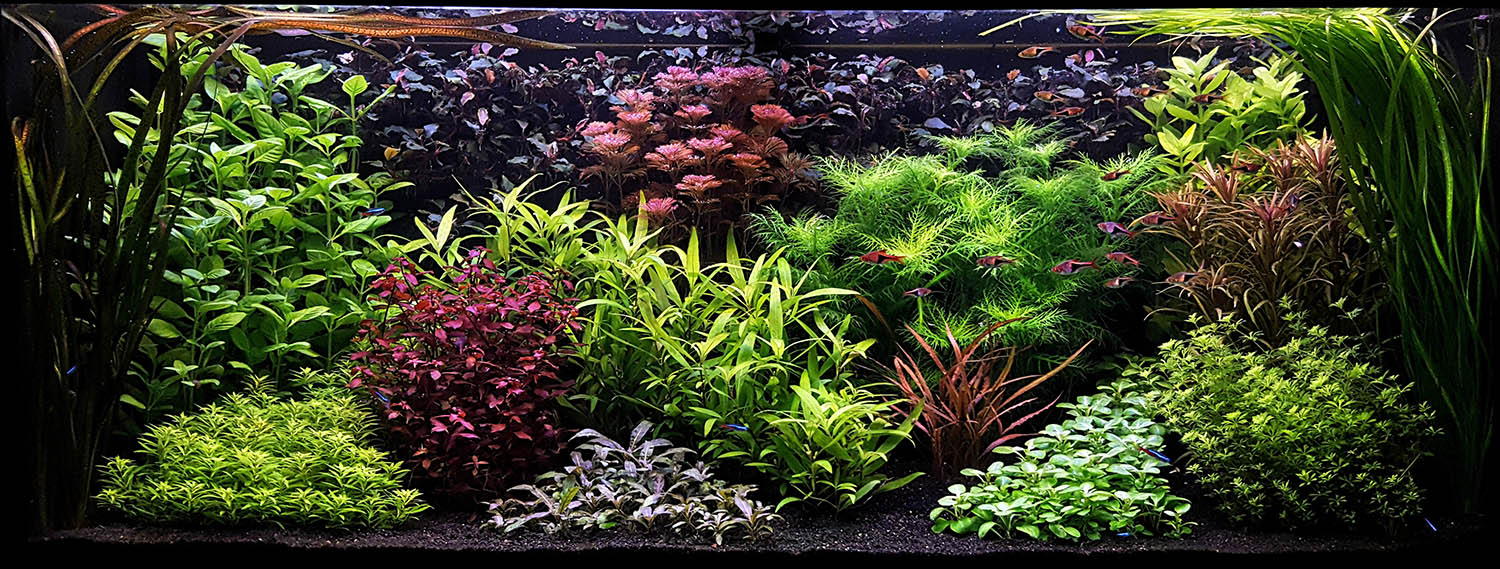
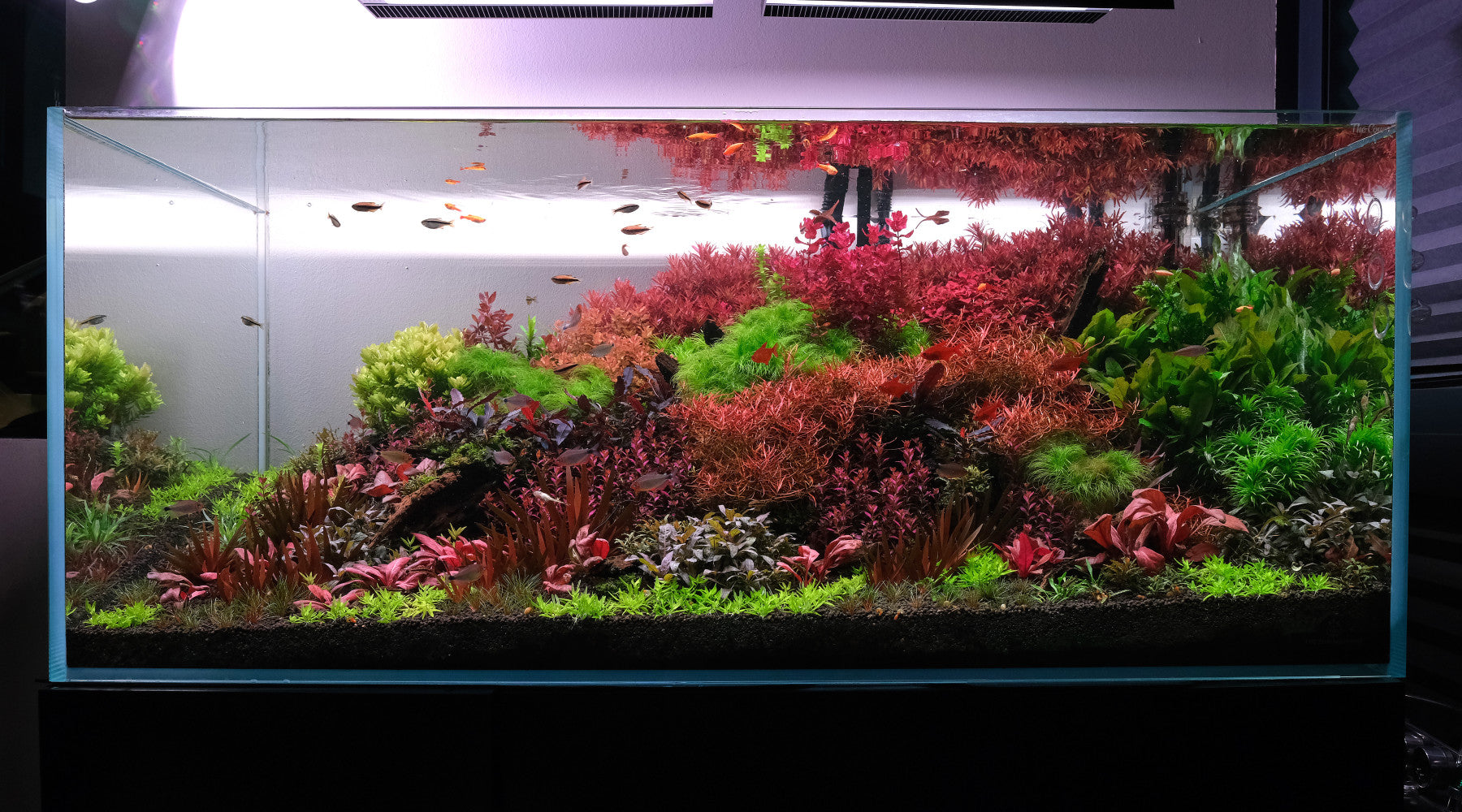
(Above) A Dutch aquascape by Joe Harvey.
Dutch vs Nature Aquarium: What's the Difference?
Dutch aquascaping is the oldest planted tank style in the hobby. The Dutch style aquascape emerged in the Netherlands in the 1930s and was later codified by the NBAT, the Dutch society for aquarium and terrarium keeping, into a judged competition standard, which is why a strict 'Dutch Style' aquascape is the most rule-bound style you'll encounter.
Dutch aquascaping aims to showcase the beauty of aquatic plants through planting them in groups that contrast colors and textures of different species. This style aims to showcase the beauty of the colors, leaf shapes, and growth characteristics of individual aquatic plant species. Strong distinction between groups is not only encouraged, but scored positively in Dutch aquascape competitions. Neatness and order are prioritized - classic dutch style tanks aim for uniform growth and neatly trimmed bushes. There is also a wide spread showcase of red and other exotic colored plants.
Dutch aquascaping often make use of plant "streets" and triangles as a neat way to separate different groups of plants. Height variation of plant species is important, as most Dutch aquascapes do not make use of a substrate sloping to fill the vertical space - having different plant species stagger in height in an orderly fashion towards the back of the tank is how the backdrop is filled.
While Dutch aquascaping does not prohibit the use of small pieces of hardscape, Dutch style aquascapes often forego hardscape entirely to focus on just showcasing plants.
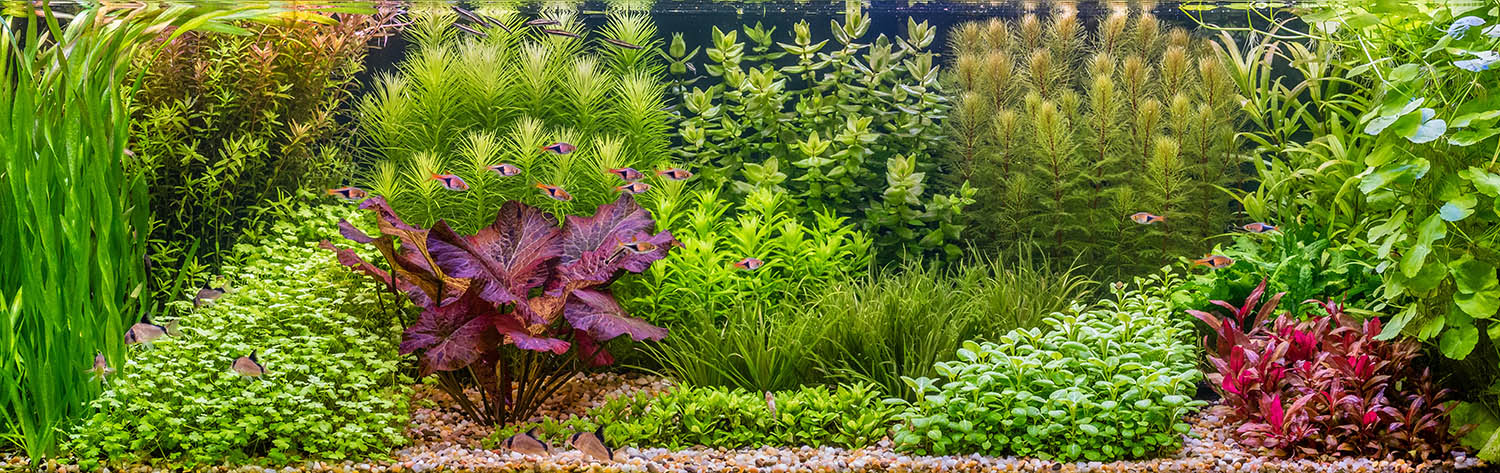
(Above)A Dutch aquascape by Scott Miller, showing great contrasts in different leaf shapes and clear distinction between groups.
The Nature Aquarium style pioneered by Takashi Amano builds a landscape from rock and wood. The principles are entirely opposite to Dutch style aquascapes. Plant groups are blended together in a naturalistic manner, and overt contrast between different species is avoided. The nature style aquascape aims to mimic the slight chaos of nature - and avoids large patches of uniformly grown plants. Similarly, the use of color in Nature aquarium style is greatly restrained, and loud colors are seen as garish or unnatural.
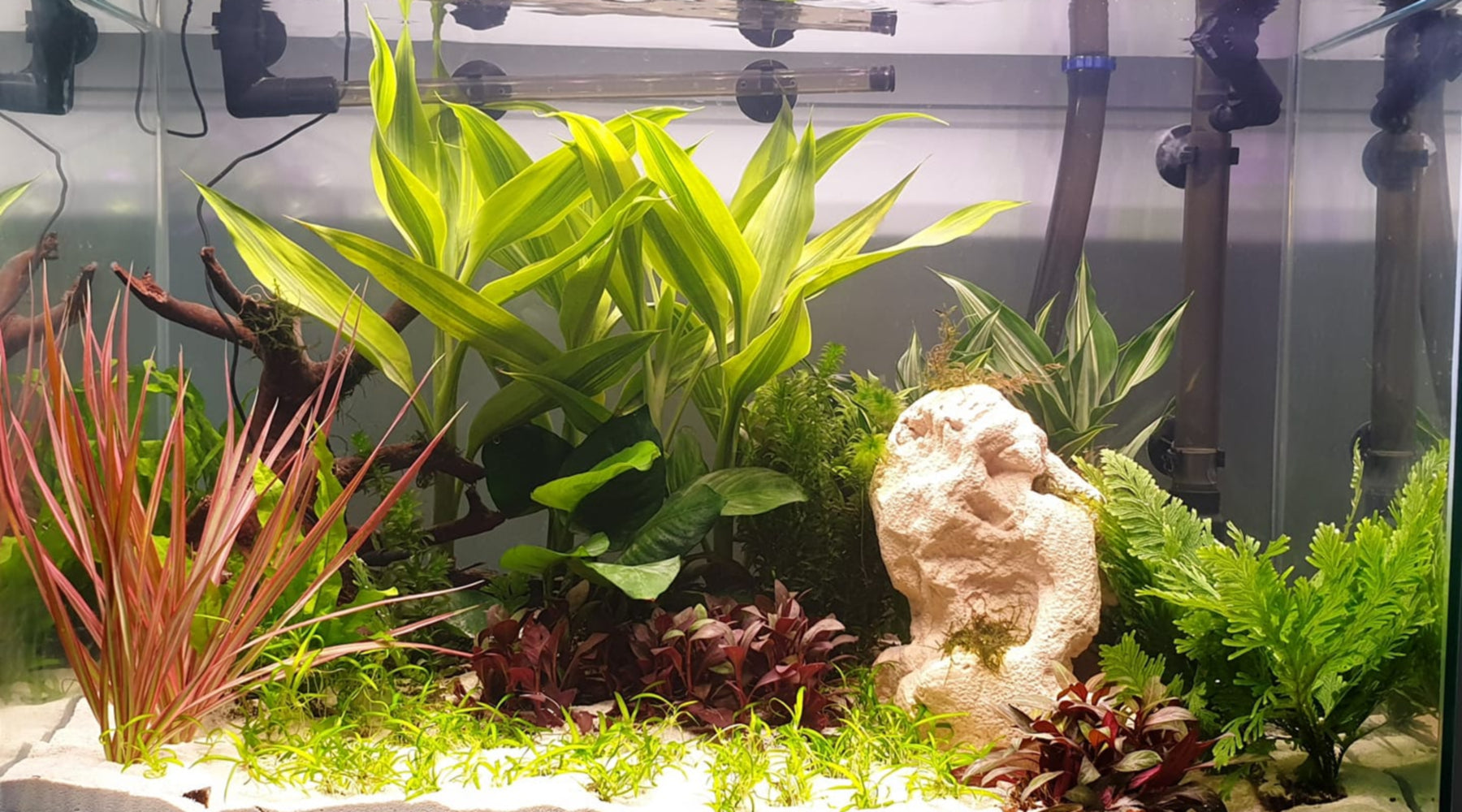
At 2hr Aquarist, most of our aquariums are a blend of both approaches. We dislike the strict rules of true Dutch style aquascapes, and yet we make use of many principles such as contrast between groups to show off color/leaf shapes of different species. We neatly trim some bushes while also blend species together to get a sense of natural mixing.
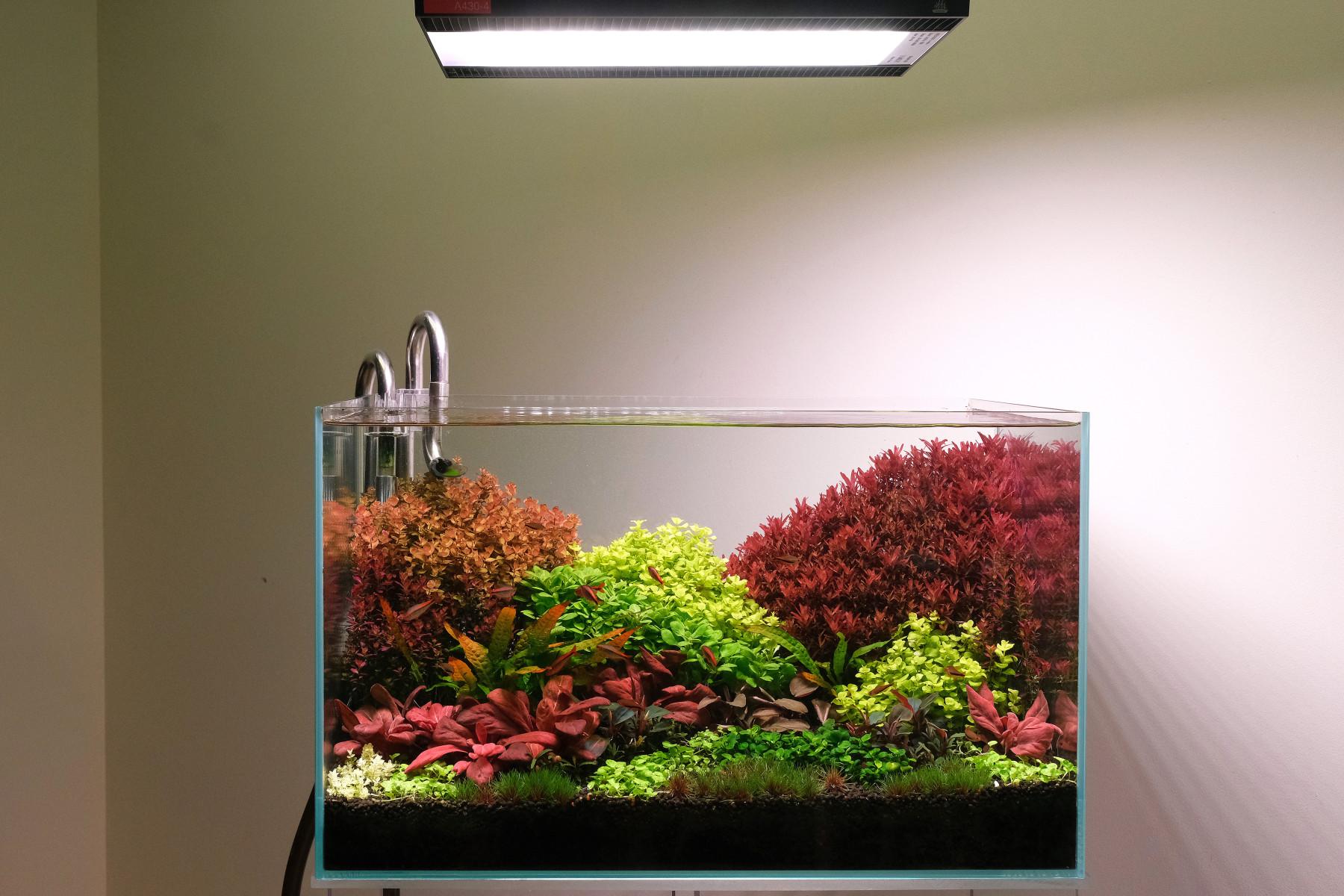
The Rules of Dutch Aquascaping:
How Many Plant Species Should a Dutch Aquascape Have?
Plant in groups, not in mixtures. The basic unit of a Dutch layout is the group: a single species, massed together, reading as one block of colour and texture. The rule is one species per 10cm of tank length - or three species per foot. Leave an inch or half of clear space between groups when planting so each group stays distinct rather than blending into a messy tangle. Same species are also traditionally not repeated in Dutch style aquascape.
What Is a Dutch Plant Street (Plantenstraat)?
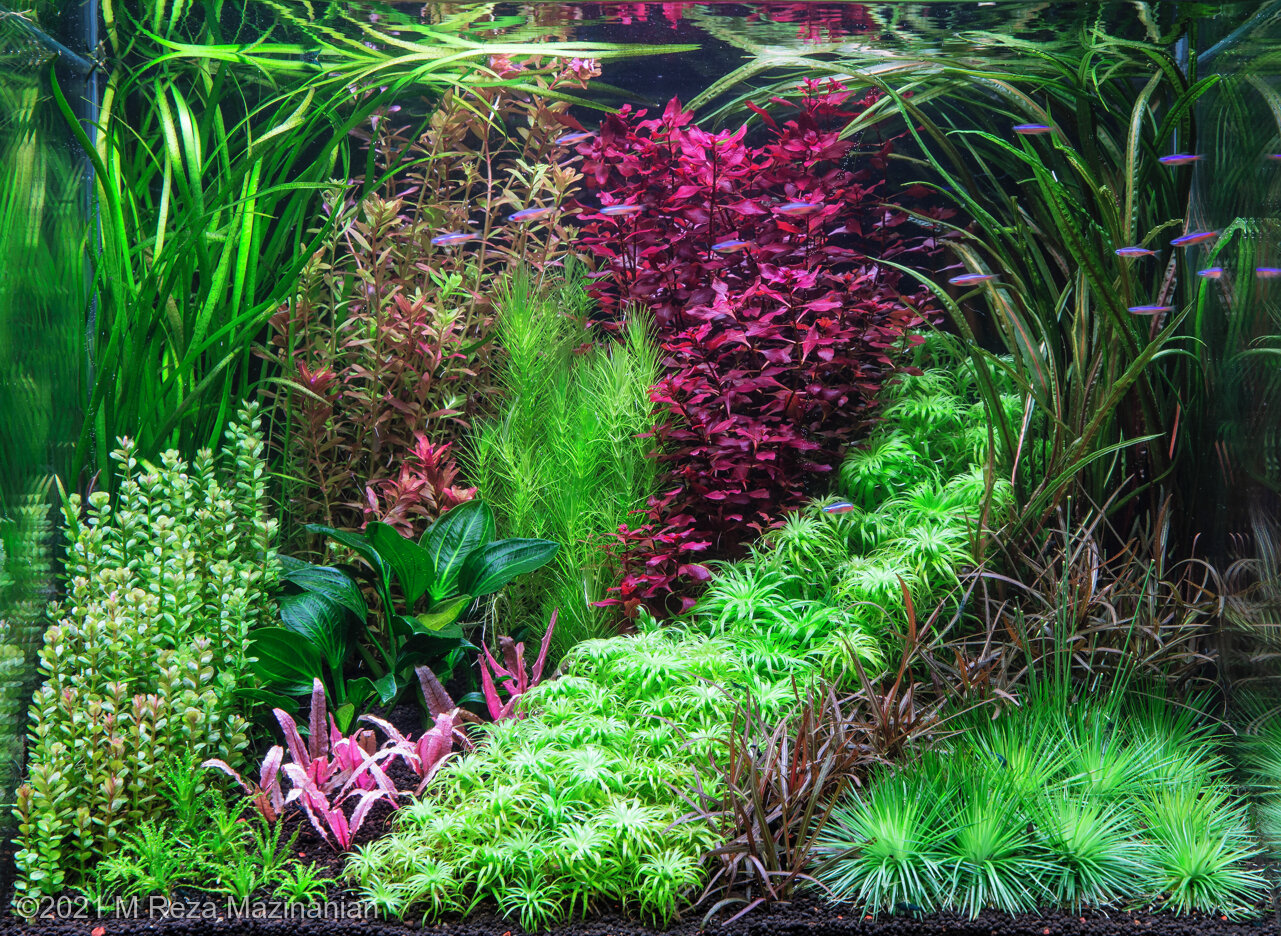
Dutch aquascape by M Reza Mazinanian
Build plant streets. The Dutch plant street - the plantenstraat - is the signature device of the style: a group running diagonally from the front glass towards the back, strongly tapering as it recedes. The narrowing does the work, forcing perspective and making a 60cm tank read like a garden path disappearing into the distance. This is what gives depth to Dutch style tanks. Plant species that grow to higher density and have some height variation make for better plant streets.
How Do You Create Contrast Between Plant Groups?
Force contrast between neighbours. Never place two similar groups side by side. Adjacent groups should differ in at least two of three ways: colour, leaf shape and leaf size. Set light green plants against dark green plants. Put a fine-leaved Rotala next to a broad-leaved Hygrophila. Let bluish green plants break up a long run of ordinary green stems. Leaf shape variation and leaf size variation are not decoration in a Dutch tank - they are the structure.
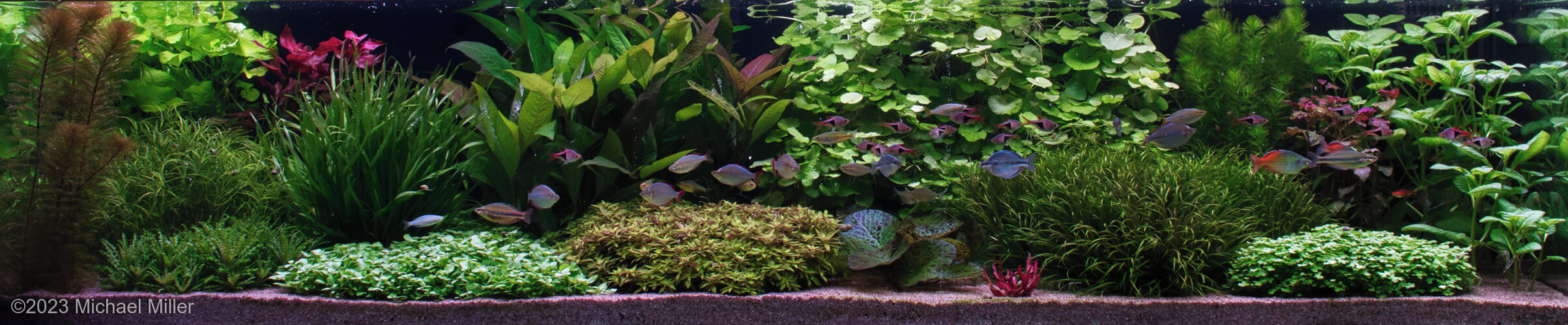
This Dutch aquascape by Michael Miller shows good contrast between groups even without the heavy usage of red plants.
How Many Red Plants Should a Dutch Aquascape Have?
Ration the reds. Bright red plants are the reason people fall for this style, and too many red plants is the most common way a first attempt goes wrong. Reds should punctuate, not dominate. Keep them to roughly a quarter of the planted area, and use them where you want the eye to land - a red group is a focal point plant by default. Red plants hog attention and two red groups should not be placed next to each other.
How Should Plant Heights Be Arranged in a Dutch Tank?
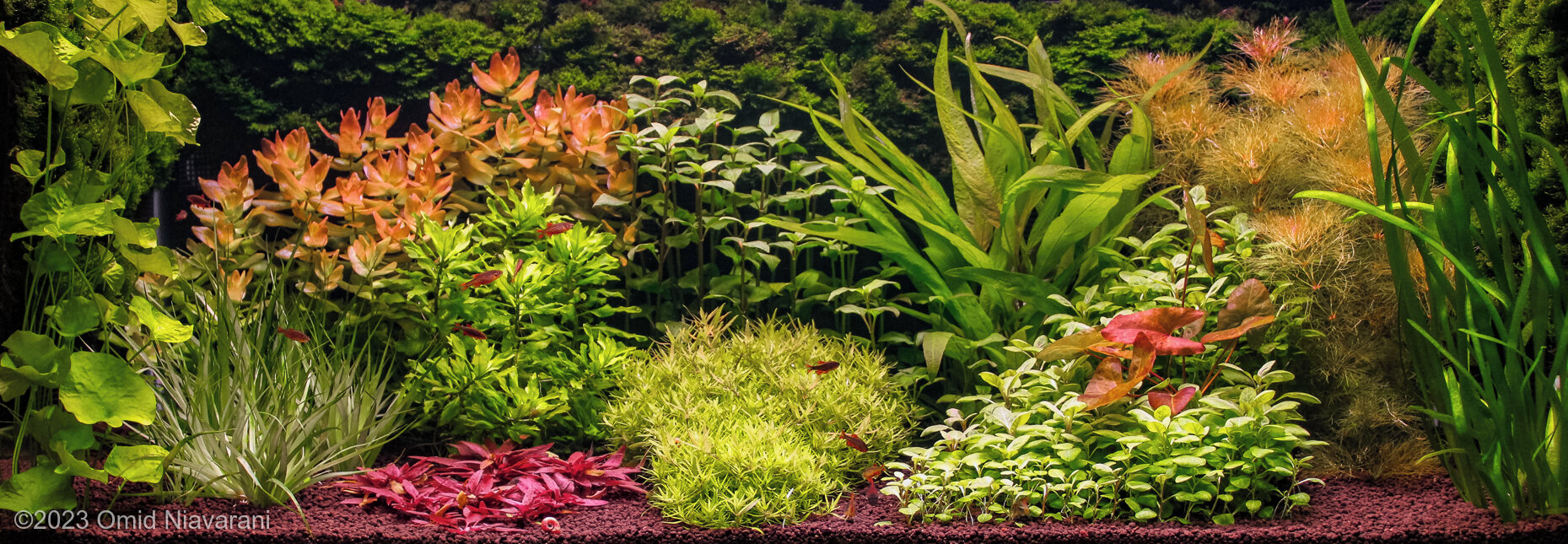
Dutch aquascape by Omid Niavarani
Terrace the heights. Spreading foreground plants at the front, mid ground plants behind them, tall background plants at the rear. These background plant bushes form the dense curtain that everything in front of them is framed against, and height should step up steadily as the tank recedes. The classic U-shaped plant layout - tall plants at both flanks sloping down to an open centre - is the easiest version to execute well, and it leaves a clean line of sight into the middle of the scape.
How Much of the Substrate Should Be Planted?
Fill the substrate. A Dutch tank should carry plants across roughly 80–90% of the substrate. Too few plants is the most common beginner error, and bare substrate is where algae goes to live.
Avoid symmetry. Groups of unequal size, placed at unequal distances, planted at unequal heights. Two bushes of exactly the same distance and size on either side of the tank will kill the layout stone dead.
Which Plant Types Belong in a Dutch Aquascape?
Mix your plant types. Stem plants provide the colour, but Dutch style aquascaping also wants rosette plants, grass-like plants and the occasional large-leaved specimen for scale. Slow growing plants - Cryptocorynes, Anubias, Bucephalandra, Staurogyne - should be placed in the foreground and midground precisely because they hold their shape between trims.
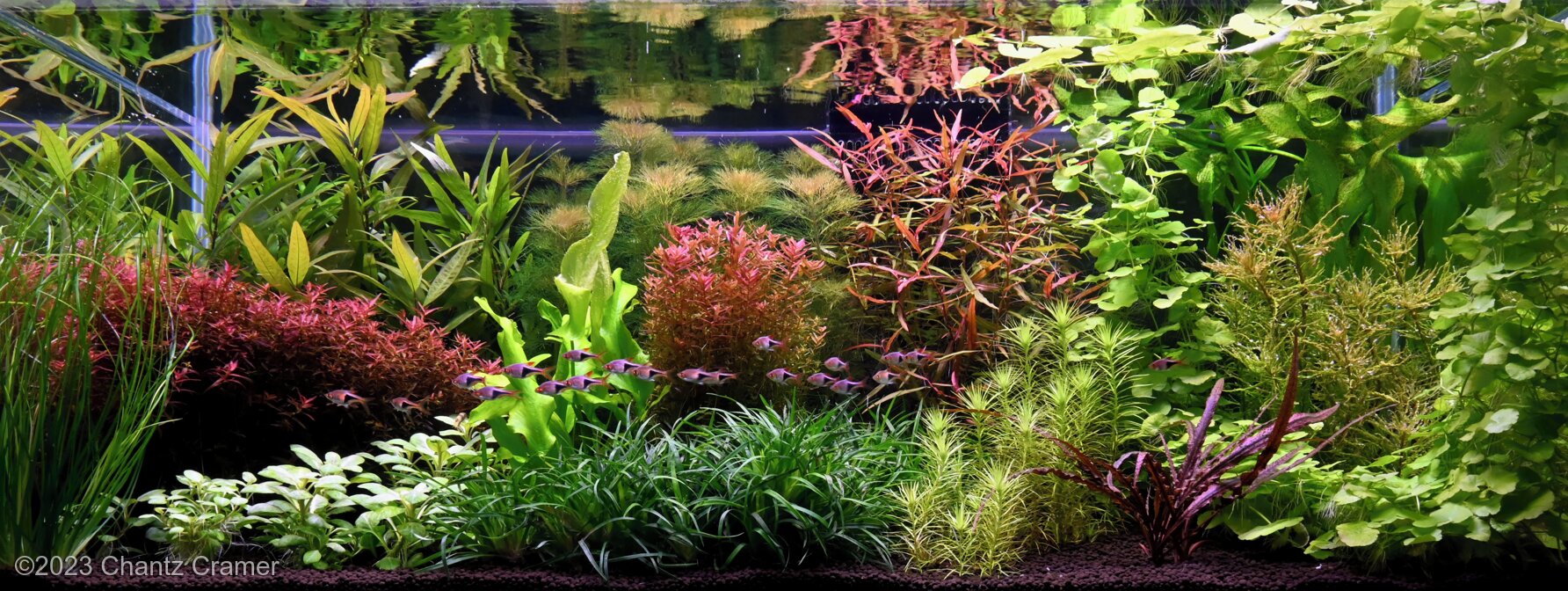
Dutch Aquascape by Chantz Cramer
Why Do Dutch Aquascapes Rely so Much on Stem Plants?
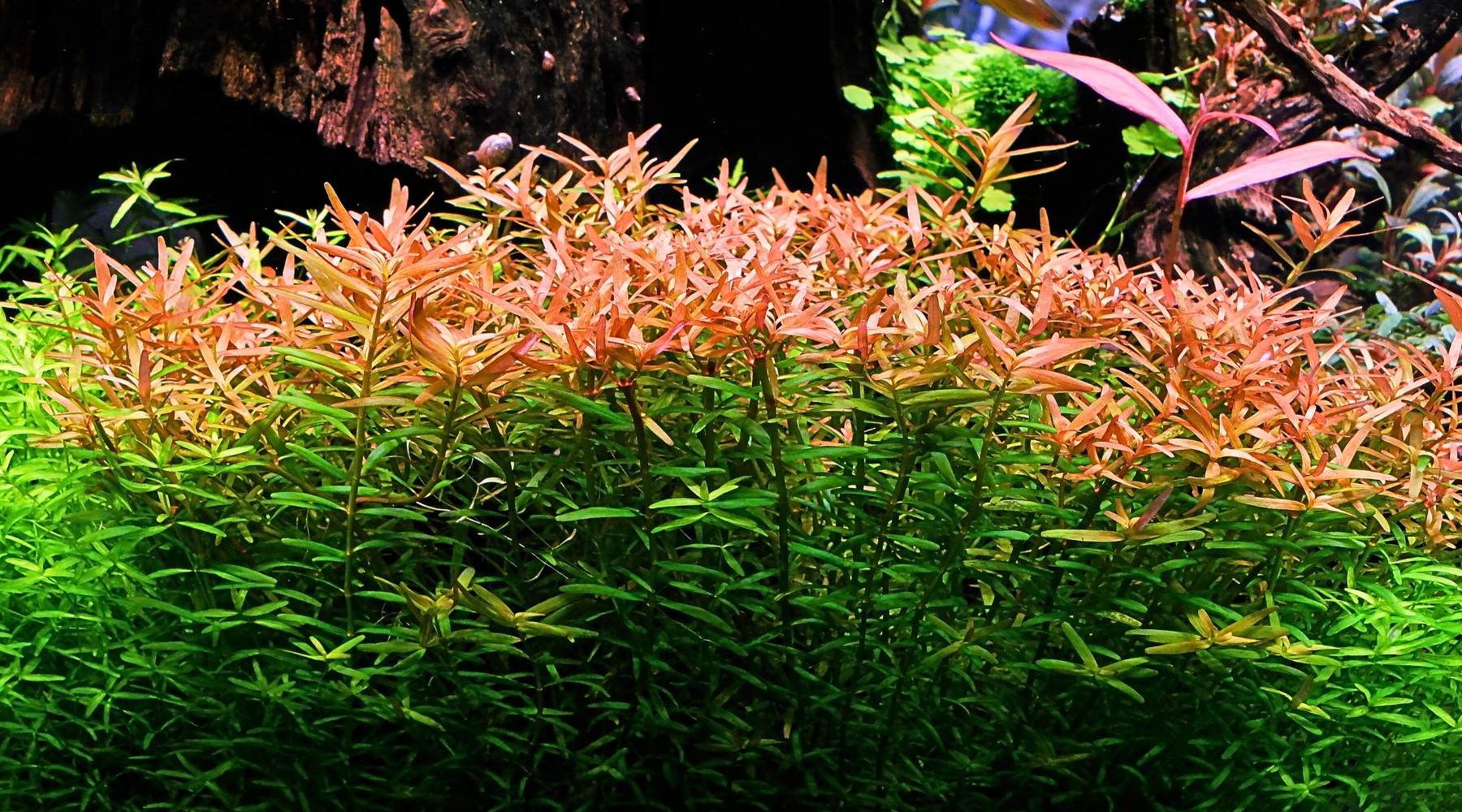
There are a huge number of stem plant species in the aquarium hobby and stem plants also give easy height options as many species can be trimmed to exactly the height needed in a certain plant grouping. They're fast-growing, intensely coloured, and endlessly reconfigurable.
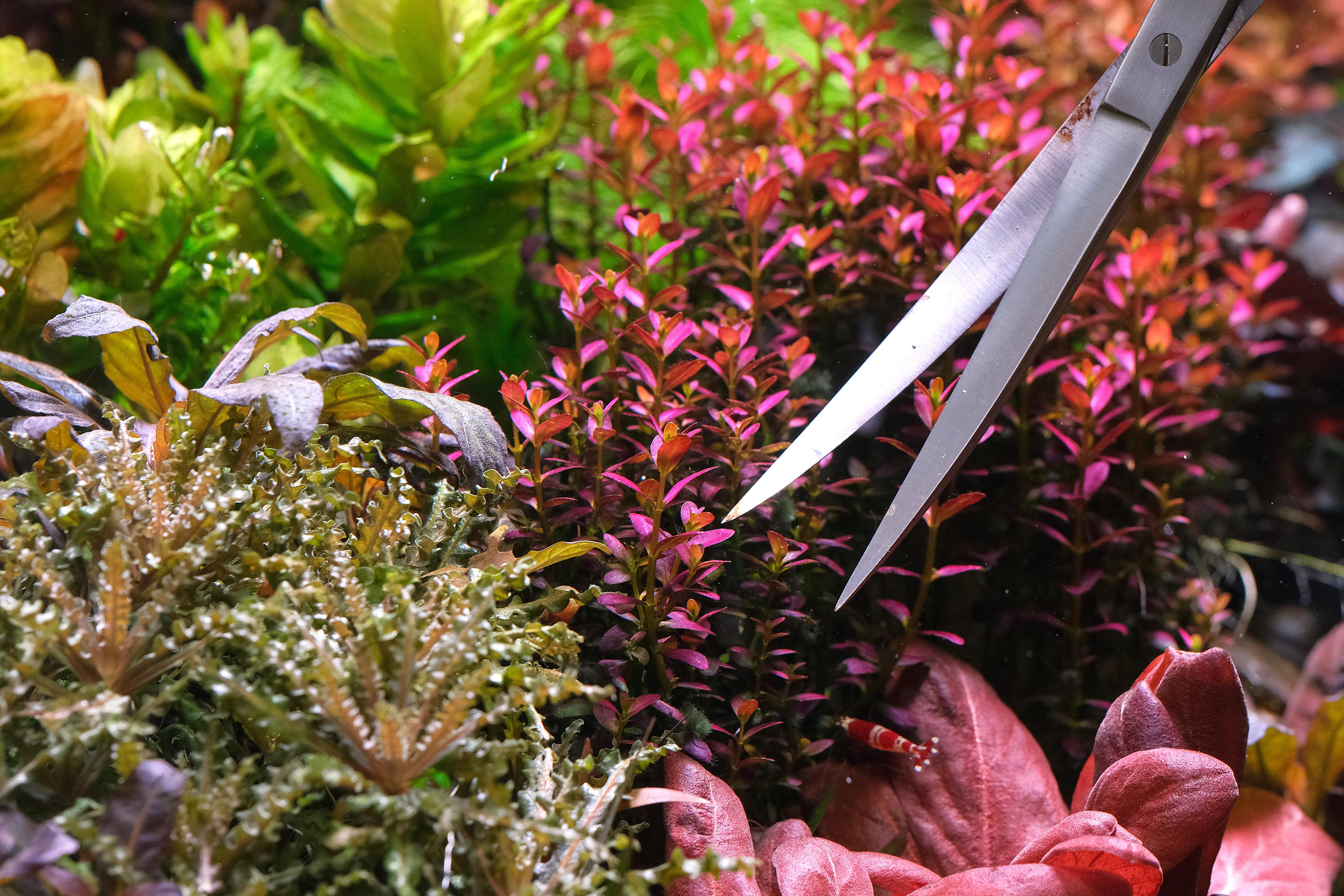
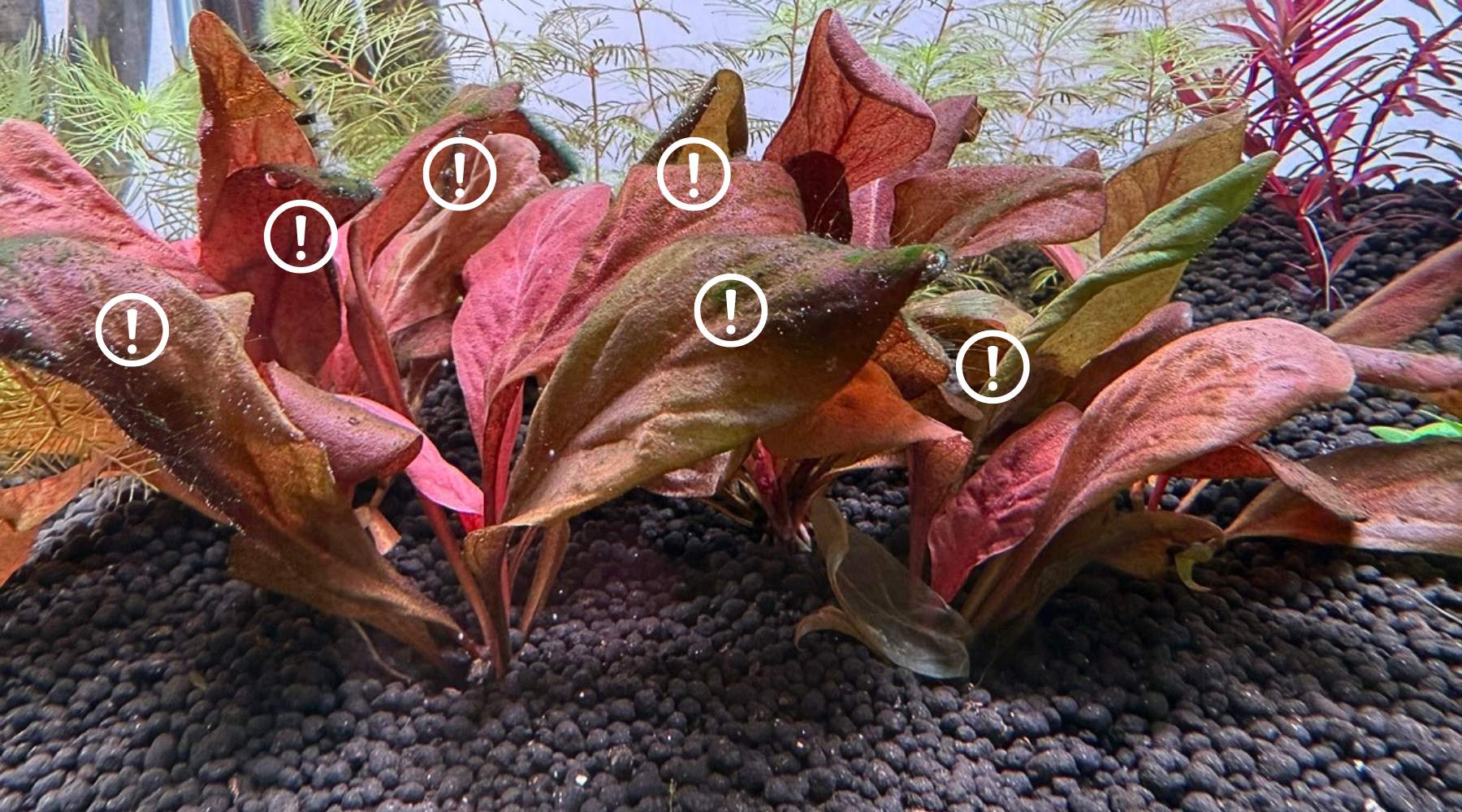
However, fast growing stem plants do require higher maintenance. In practical terms, this means regular trimming, and periodically replanting healthy tops while discarding old deteriorated stems and roots. This isn't a design flaw - it's just how stem plants work. The aquarists who thrive with Dutch tanks are the ones who embrace this cycle rather than fight it. The ones who resist it tend to find their tanks declining into algae-covered messes within a few months.
The standard to aim for: a well-trimmed bush rises and falls smoothly, with no runaway stems breaking the line.
How Much CO2 Does a Dutch Aquascape Need?
Can You Run a Dutch Aquarium on Liquid Carbon or DIY CO2?
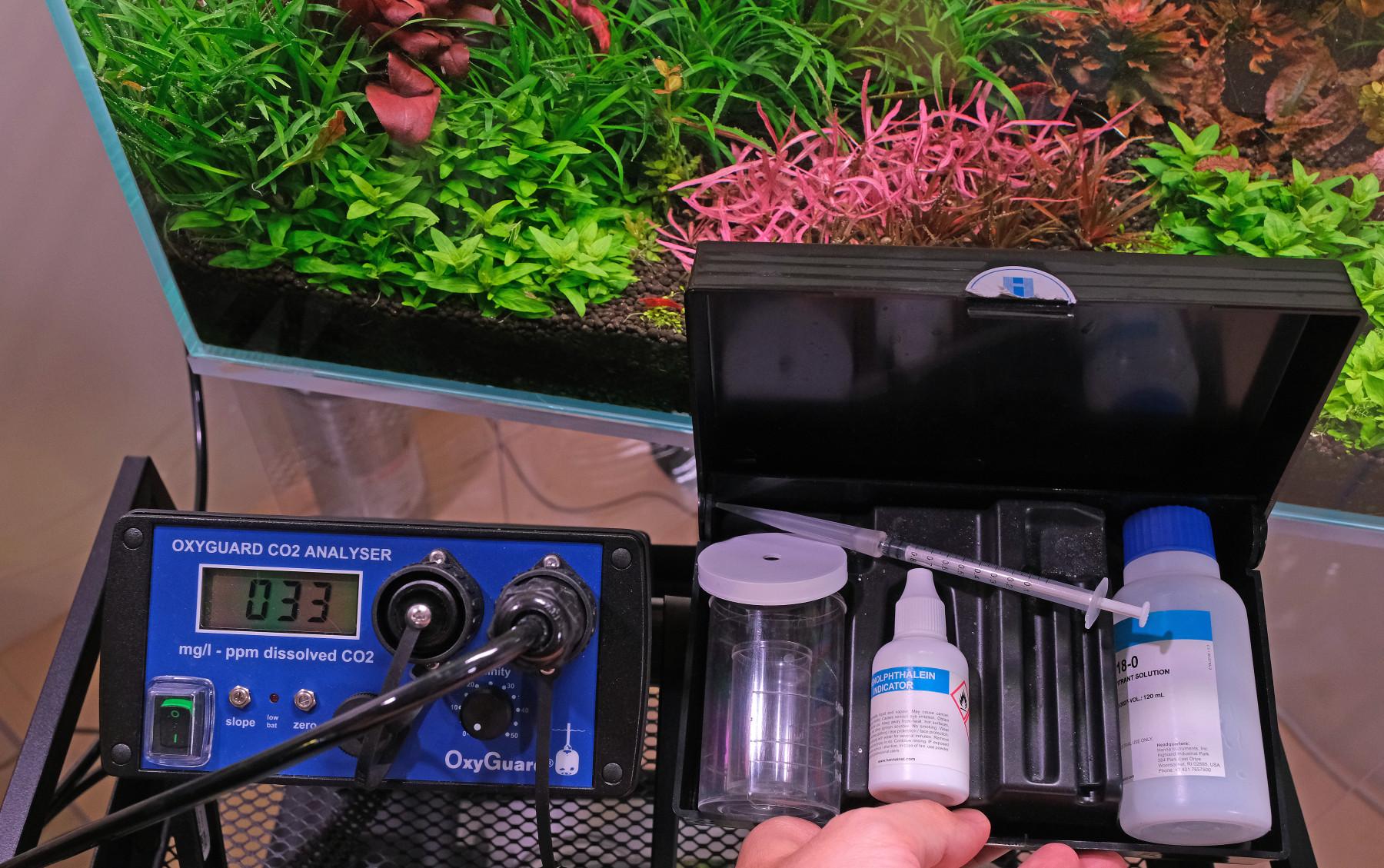
High-colour, dense stem plant growth requires stable, meaningful CO2 levels. Liquid carbon additives and DIY yeast systems may technically produce some CO2, but they won't deliver the stability this style needs. Budget for a proper pressurised CO2 system with a quality regulator and solenoid timer - it's the single most impactful investment for a Dutch tank.
Use the 1 pH drop method to dial in your levels: target a 1-point pH drop from your baseline. For more demanding species, having 30+ ppm CO2 saturation will be beneficial. Stability is also key. Erratic CO2 levels trigger plant adaptation responses and black brush algae. Run CO2 2–3 hours before the lights come on to hit peak CO2 saturation before the lights come on.
How Much Light Does a Dutch Style Tank Need?
Does Light Spectrum Affect Plant Colour?
This is the one style where a quality adjustable-spectrum aquarium LED is genuinely non-negotiable. The right spectral balance- particularly tuned red and blue channels - is what produces the deep, saturated plant colours that make Dutch tanks so striking. A cheap white light will grow the plants, but it won't render the colours well. The difference between an average tank and one that looks like internet photos online often comes down entirely to light quality.
Target at least 100 PAR at the substrate for good growth and colour density in most species, with room to push higher for the most demanding reds and purples. Unlike other styles, Dutch tanks may benefit from higher light, but this comes with a trade-off: higher light increases algae risk and demands more diligent maintenance in return.

What Substrate Is Best for a Dutch Aquascape?
Traditional Dutch style tanks were built on inert natural brown gravel, with nutrients delivered almost entirely through the water column. Inert substrates make replanting work less messy and this suits the stem plant selection of Dutch style tanks well. The plant dominance and high plant mass of Dutch aquascapes also make them very resilient against algae even with higher saturation of nutrients in the water column. Without a nutrient rich substrate as a backup, precise control of water column nutrient levels become key. This is both a strength and weakness of using inert substrates: you have total control over the water column, but control it well you must. Fluctuations in water column nutrient levels hit plants harder when they have no substrate to draw from.
Aqua soils are an alternative to inert substrates-they provide a store of nutrients to plants that ease the burden of juggling precise water column nutrient levels. However, aqua soil nutrients deplete over time and need replenishing. Aqua soil is also costly, and the growth pattern of plants change as the substrate ages and depletes. Fresh aqua soil makes growing difficult plants more easy, so this will appeal to newer aquarists - however, this effect only lasts as long as the aqua nutrients keep up. Aquasoil is also more messy to do replanting work in.
Either substrate can work for Dutch style tanks - aquarists need to measure the trade offs of each method and weigh which battle they want to fight.
How Much Maintenance Does Dutch Style Aquascaping Need?
Dutch tanks are high-metabolism systems. Organic waste accumulates faster than in lower-light setups, even without fish. Weekly water changes of 50–80%, combined with siphoning of substrate detritus and filter cleaning on a regular basis makes a huge impact.
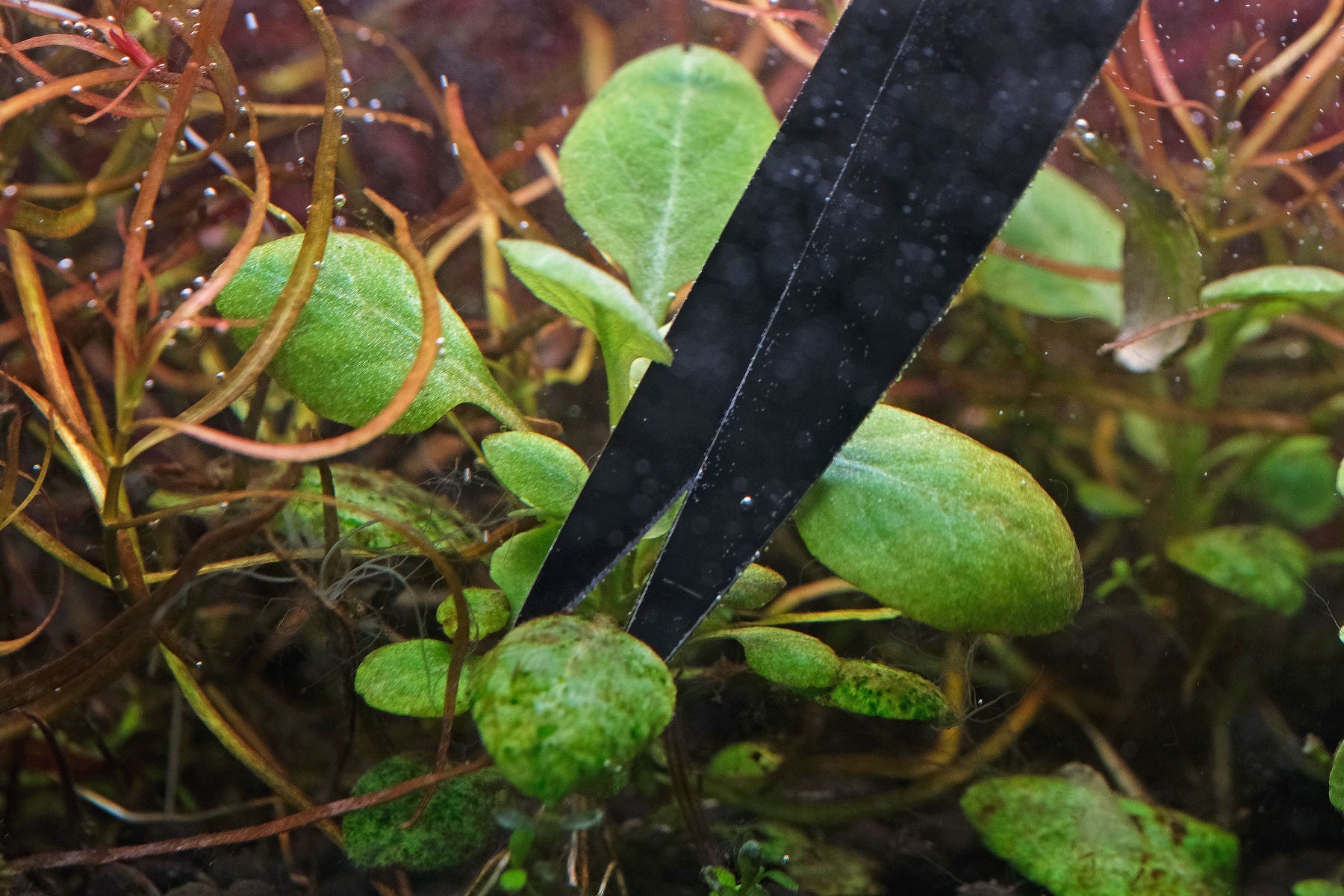
During these sessions, top and replant any stem bushes showing deterioration at the lower stems. Watch for overgrown foreground plants shading the groups behind them, and for missing midground plants - the gap that opens up when a mid-height group is trimmed hard and never recovers. Don't wait until things look bad. Staying ahead of the cycle is what keeps a Dutch tank in peak form.
What Fish Work Best in a Dutch Aquascape?
In a Dutch tank the plants are the subject and the fish are the accompaniment. Choose accordingly.
Pick one species and commit to a proper group -a dozen is a sensible minimum, and more looks better. A single tight school reads as a deliberate element of the composition. Four species in threes reads as clutter, and clutter is the one thing a Dutch tank cannot survive.
Beyond that, think in levels. A tank stocked entirely with mid-water swimmers leaves the top and bottom feeling empty; a small group of top-level swimmers, or a few unobtrusive bottom dwellers, fills out the picture. Keep the total stocking modest - too many fish makes a busy tank look busier still, and the point of all this planting is that the plants should be what you notice.
Is a Dutch Aquascape Hard for Beginners?
A Dutch tank is the sports car of planted aquariums. It's thrilling to drive, the colours are extraordinary, and the learning curve is real. Algae risk is higher than in any other freshwater style; the margin for error is smaller. The payoff, when everything clicks, is a tank that genuinely rivals a marine reef for visual impact.
Go in knowing the commitment. Enjoy the ride.
Explore The 2Hr Aquarist's dedicated guides on CO2 setup, stem plant maintenance, fertilisation strategy and algae control.




Share:
Vin Kutty | Dutch Style
How to Set Up an Iwagumi Aquascape: The 2Hr Way