
Naturally biodegrades

Many algicides accumulate over time and do long term damage to the tank's ecosystem. Both APT FIX and APT FIXLITE use active compounds that biodegrade naturally over 12- 24hours, with no nasty residues.

Fish and shrimp safe

Used according to instructions, both APT FIX and APT FIXLITE are gentle and safe.
Do not spot-dose directly on animals. Always ensure good flow and oxygen levels after use.

Fast Acting

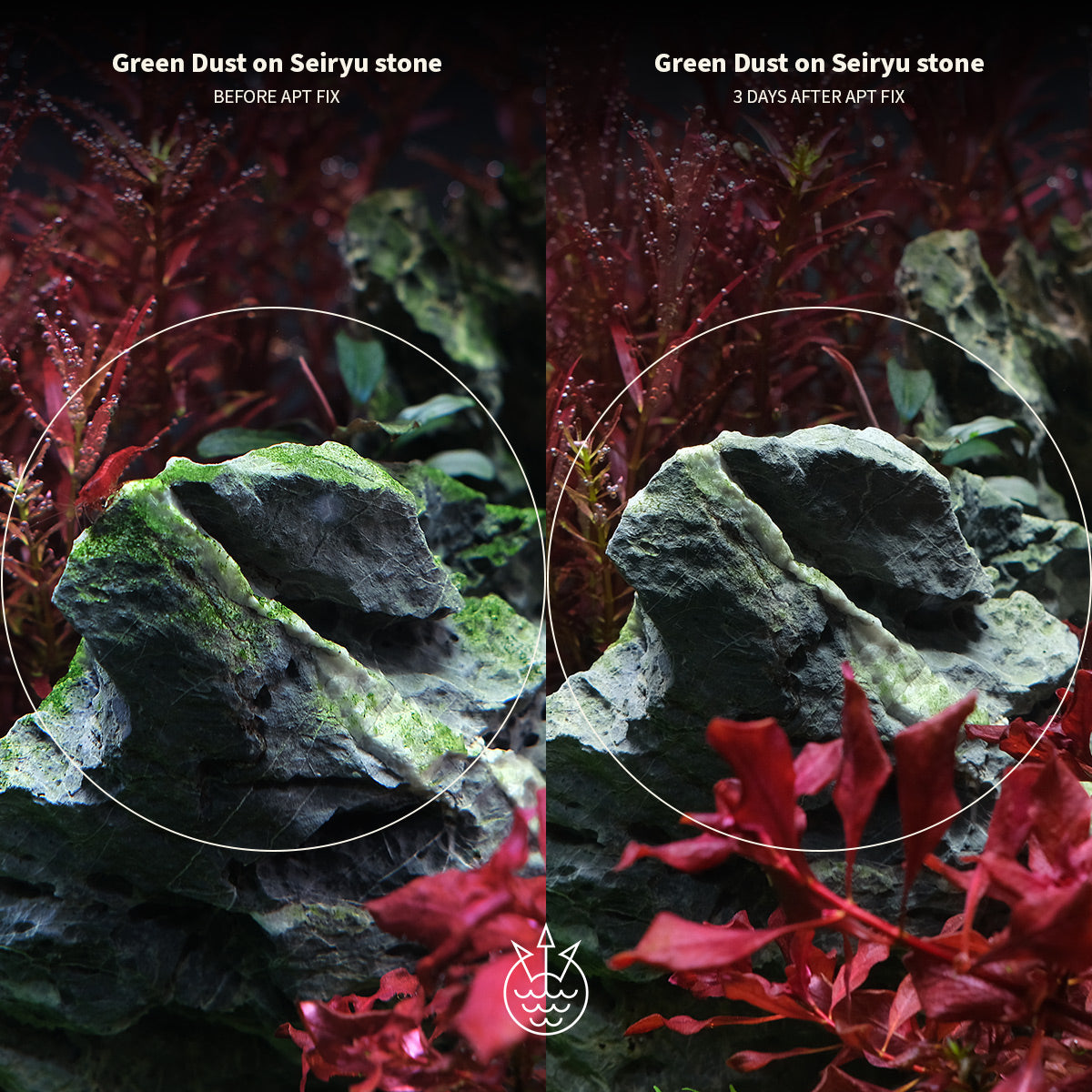
Deactivated algae often changes color, but will not instantly disappear. They naturally decompose or get consumed by snails, shrimps and other organisms over 3-9 days.

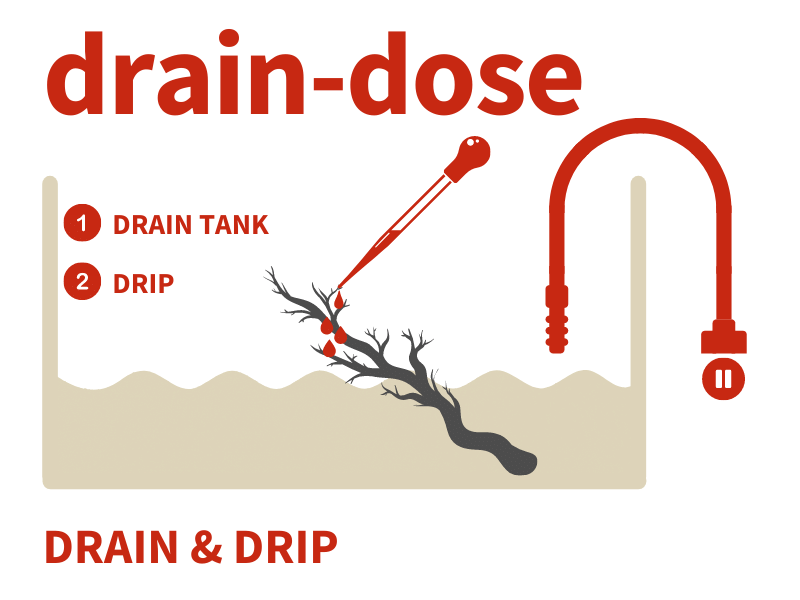
Drain and Drip

This is an effective approach for removing algae on hardscape: wood and rocks. Avoid this method for plants.

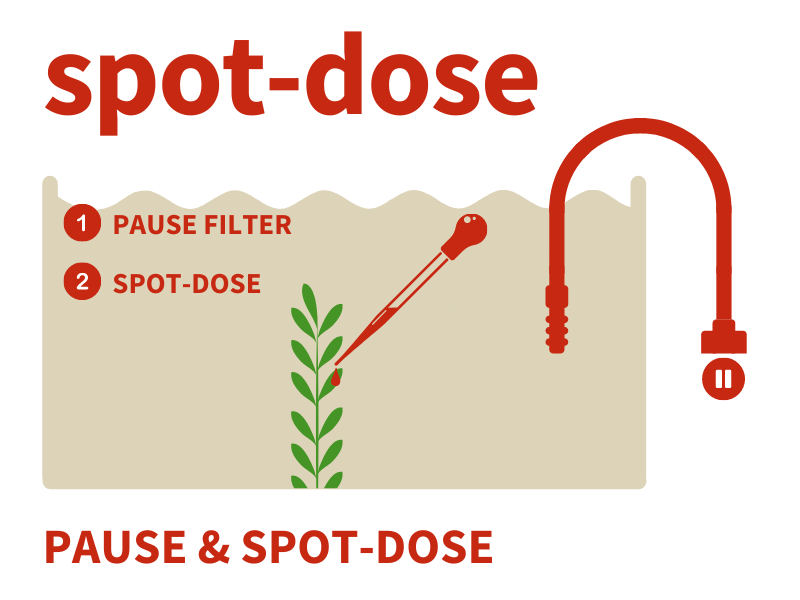
Pause and Spot-dose

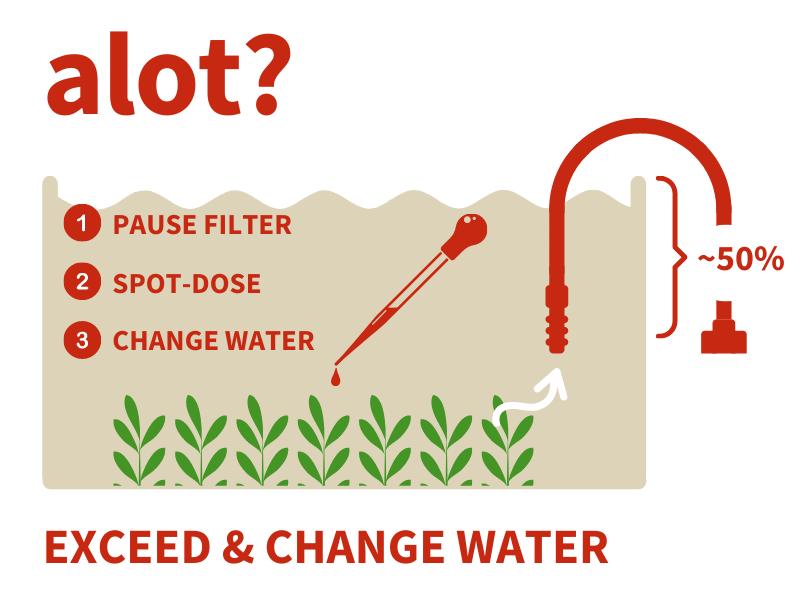
If you have alot of areas to cover, you can exceed the 1ml per 10L limit. Simply perform an 80% water change after spot-dosing.

Change Water

If you have alot of areas to cover, you can exceed the 1ml per 10L limit. Simply perform an 80% water change after spot-dosing.

BBA

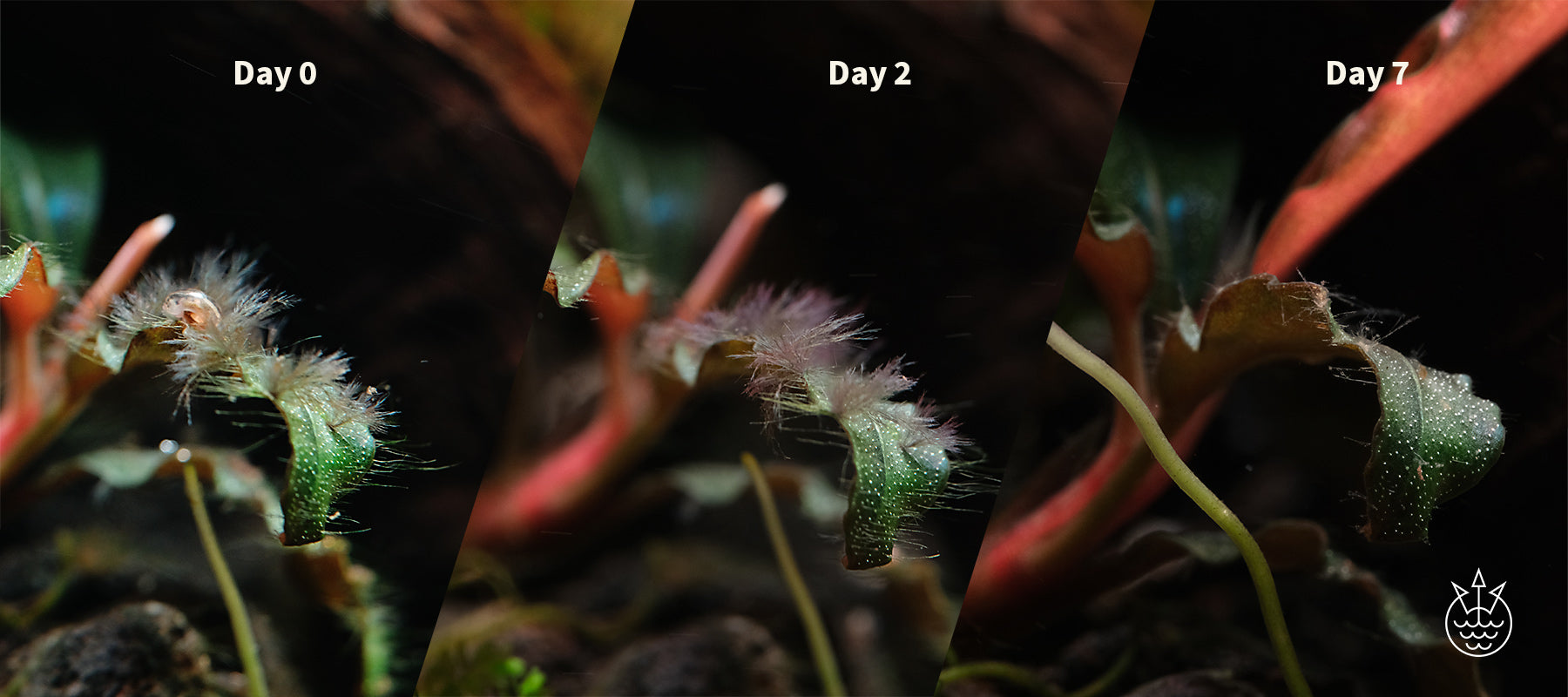
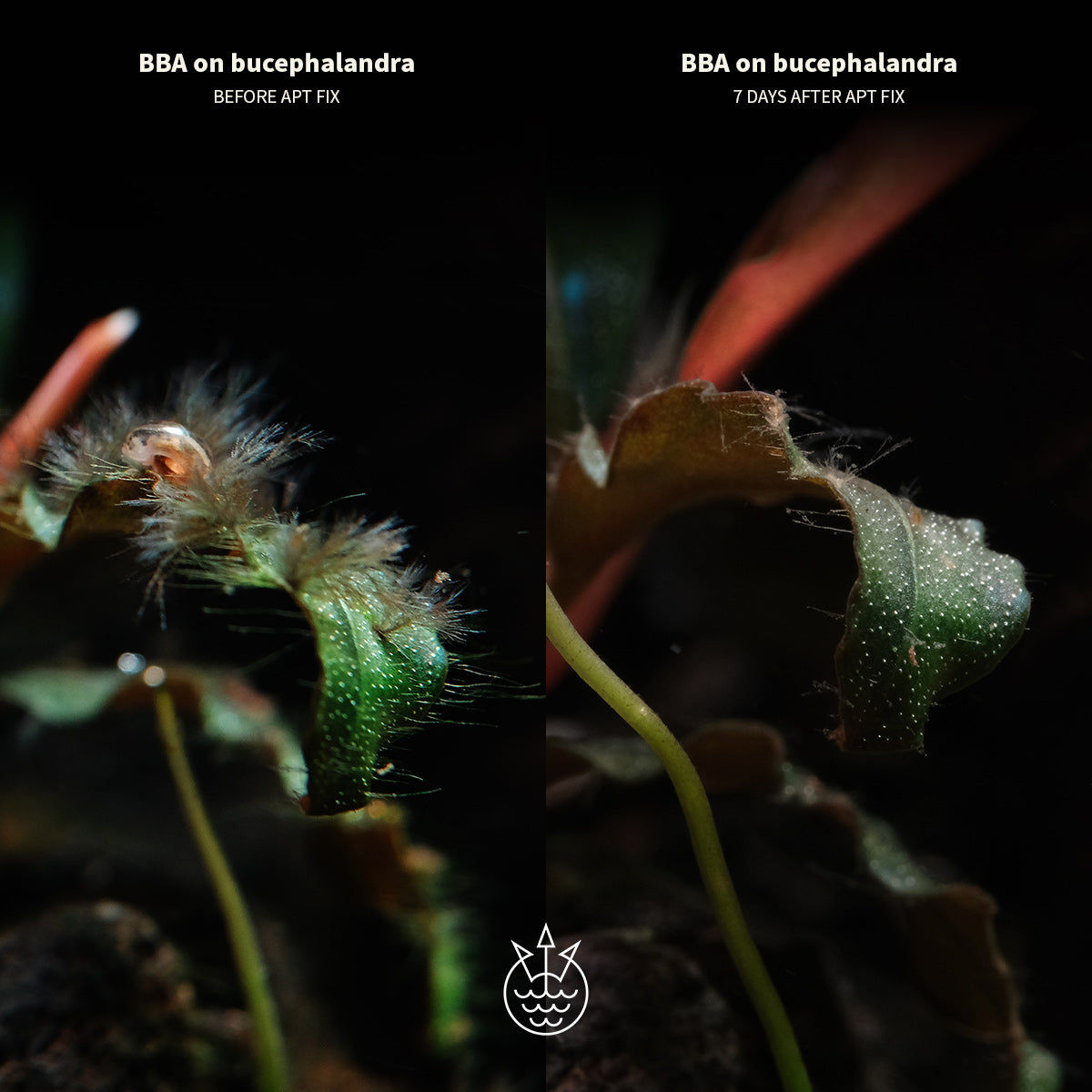
A single spot-dose of APT Fix. By Day 2, inactive BBA usually changes color to red and/or white. By Day 7, the leaf is now mostly free of algae.

Hair Algae

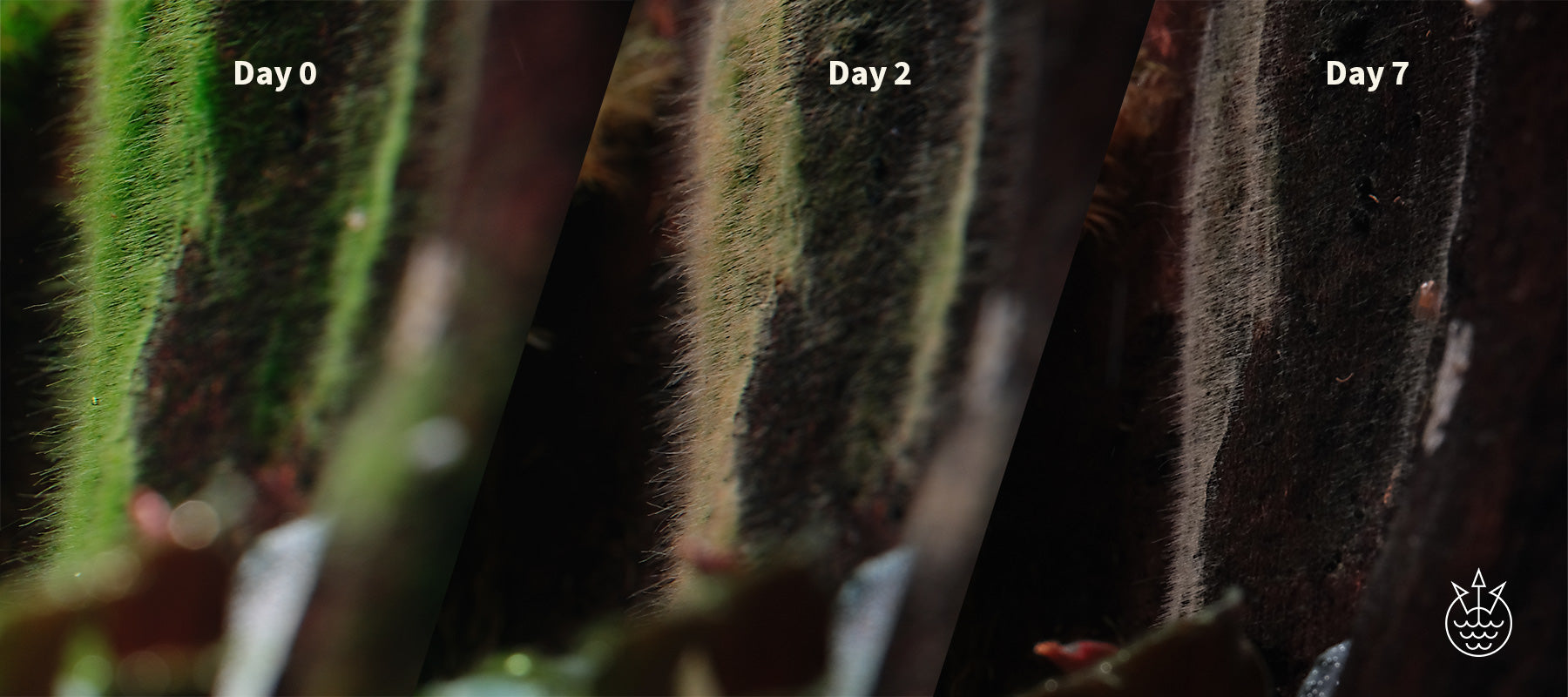
A single spot-dosage of APT Fix via the drain-dose method. By Day 2, hair-algae has lost some color. By Day 5, all the hair algae has been deactivated.

APT FIXLITE or APT FIX?

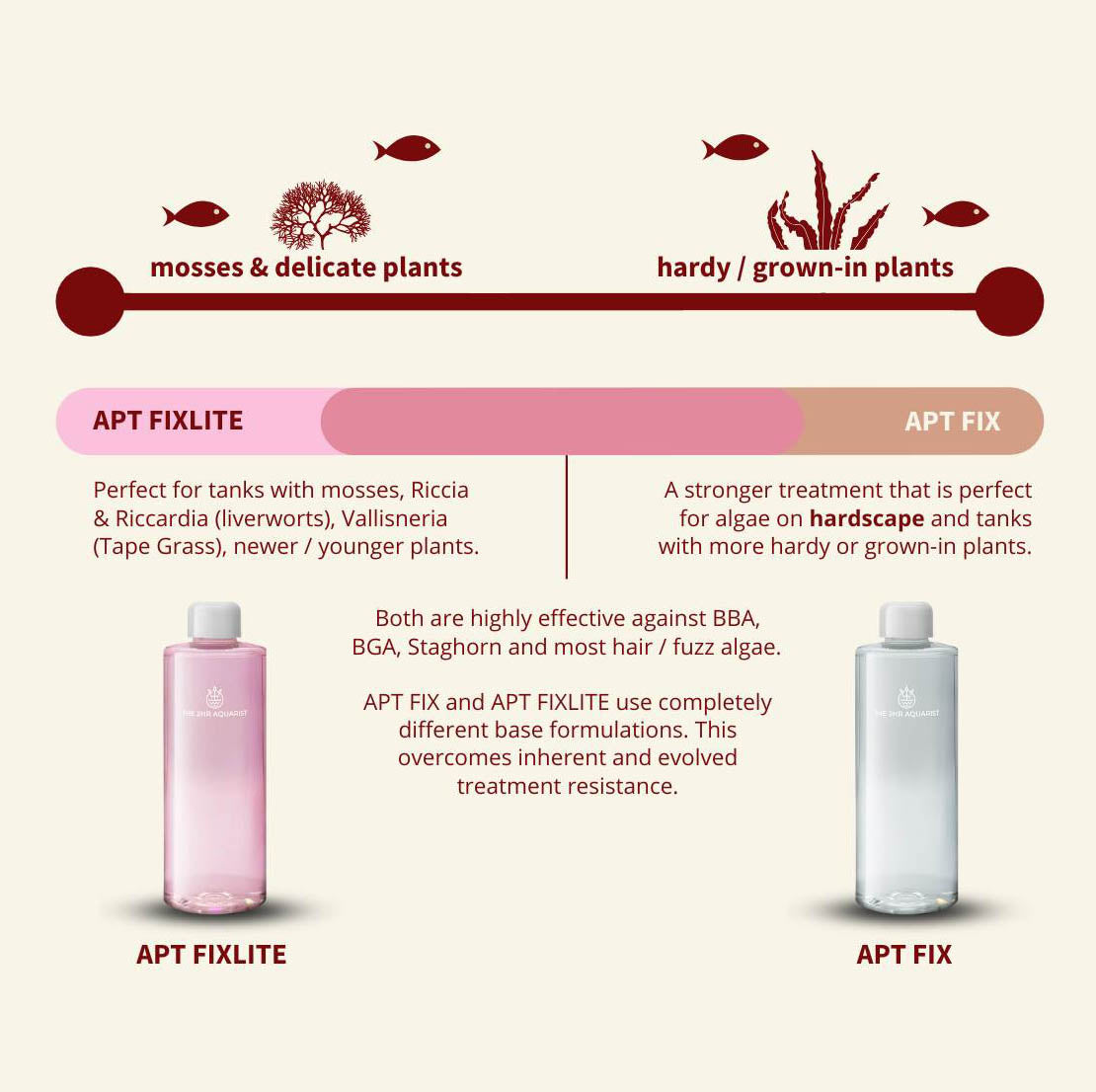
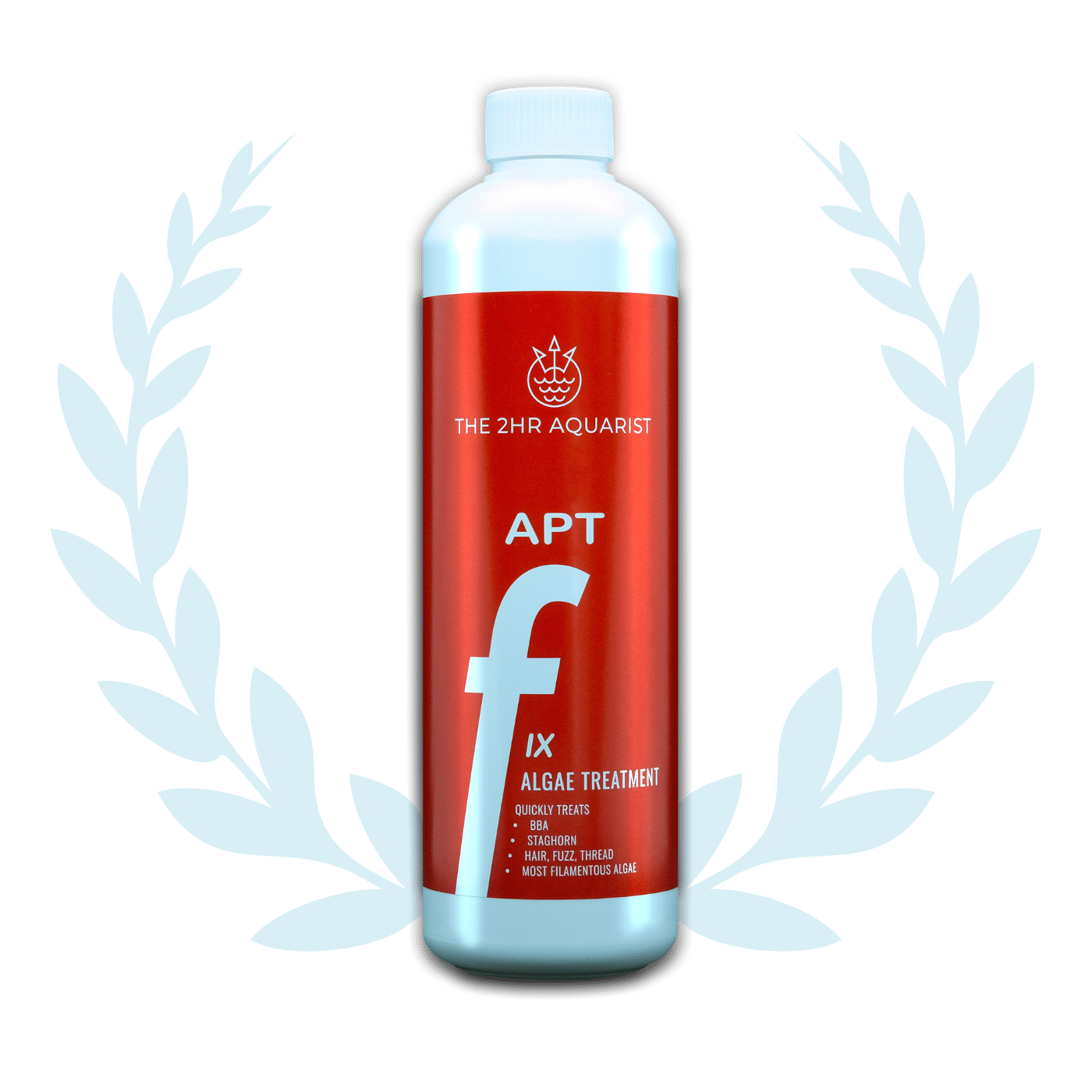
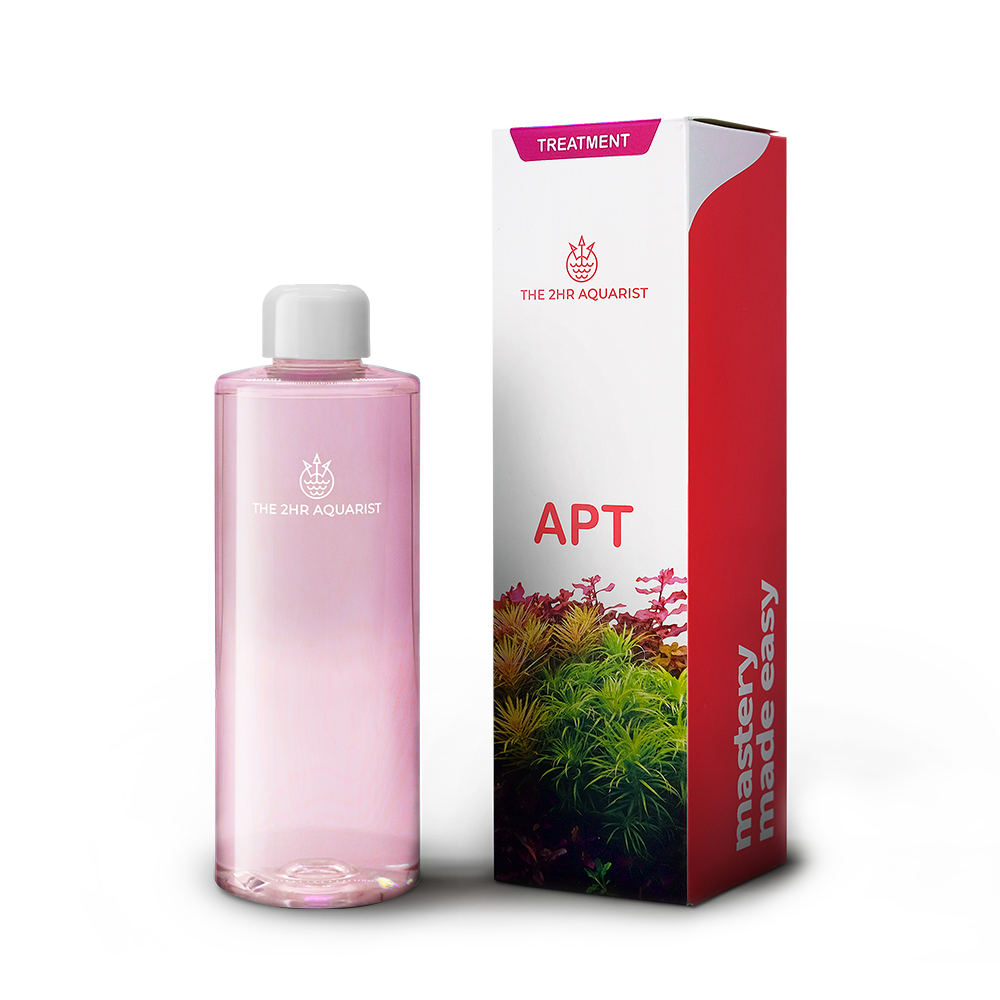
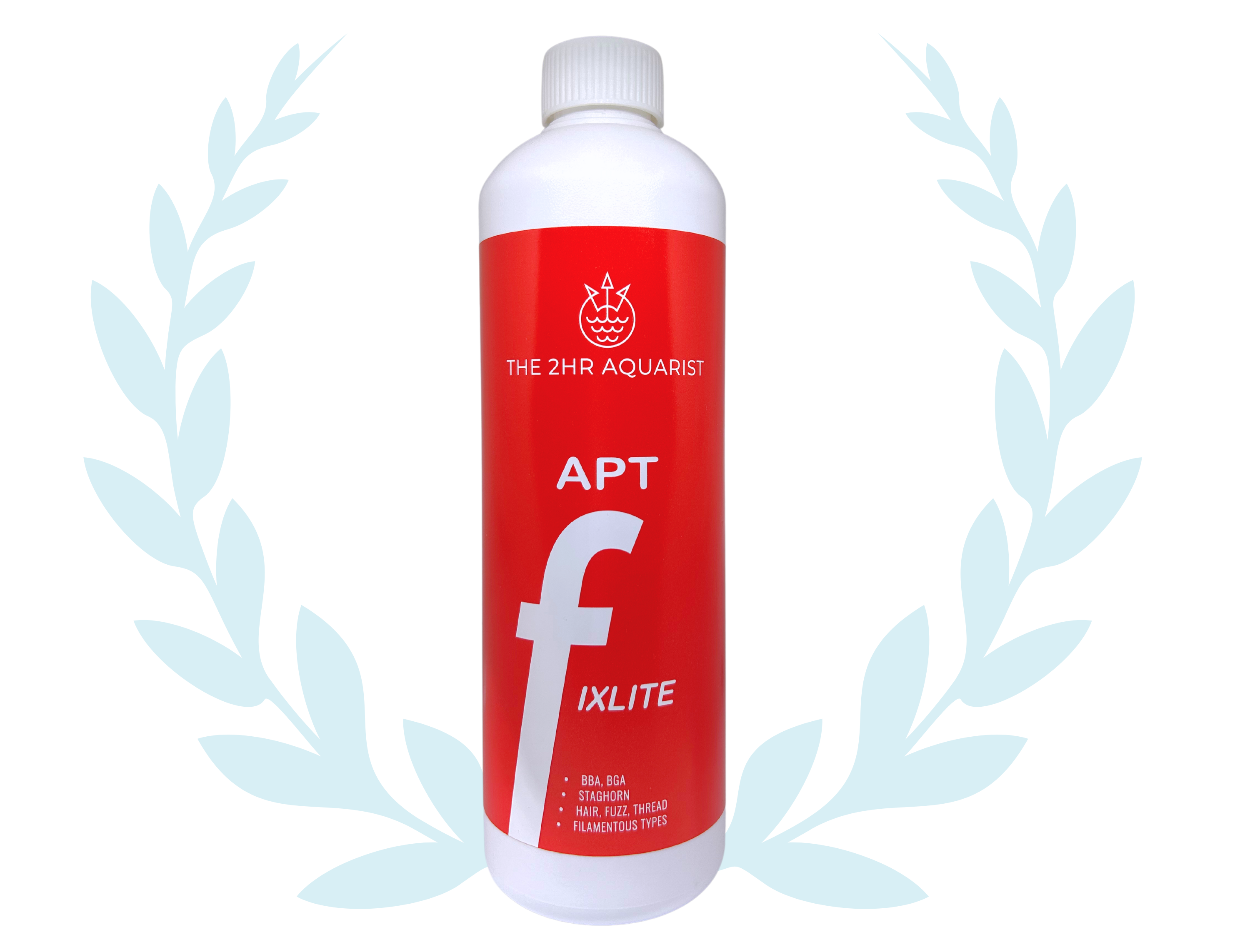
Use APT FIXLITE for mosses and more delicate plants. Use APT FIX for hardscape and grown-in plants. They use completely different base formulations, which overcome treatment resistance.

FAQs

Please read our FAQs page to find out more.

How do I dose and apply APT FIXLITE?

Spot-dose directly onto the algae with the included pipette- this is far more effective than pouring it into the water column. Pause your filter for a few seconds so the solution stays in contact with the target. A single dose is usually enough.

As a guide, keep within roughly 1ml per 10L of tank water; if you go beyond that to tackle a heavier outbreak, top the tank back up and do a large water change (50–80%) straight after.

For algae on hardscape like rocks and driftwood, you can lower the water level to expose the affected areas and drip FIXLITE onto them with the pipette or a small brush - hardscape only, not plants.

One thing that's easy to overlook but important: make sure the tank is well oxygenated after dosing. Increase surface agitation or run an air stone for the next day or two. Both the treatment itself and the decomposing algae draw on the oxygen your livestock relies on, so keeping O₂ levels up keeps your fish and shrimp comfortable while everything clears.

Should I use APT FIX or APT FIXLITE?

Both target the same range of algae - including black beard algae (BBA), hair, thread and fuzz algae - and both are spot-dosed the same way. The difference is strength relative to your plants. FIX is the stronger of the two, suited to robust, established planted tanks. FIXLITE is the gentler formulation, made for setups with delicate or young plants - mosses, liverworts, Vallisneria, and newly planted or freshly trimmed tanks - where you want to clear algae without stressing sensitive growth. If your tank leans delicate or is still maturing, reach for FIXLITE; if it's well established and hardy, FIX gives you a bit more punch. The two are compatible with each other and with the rest of the APT range, so either fits alongside your normal fertilising routine.

What to do about stubborn hair algae and Cladophora?
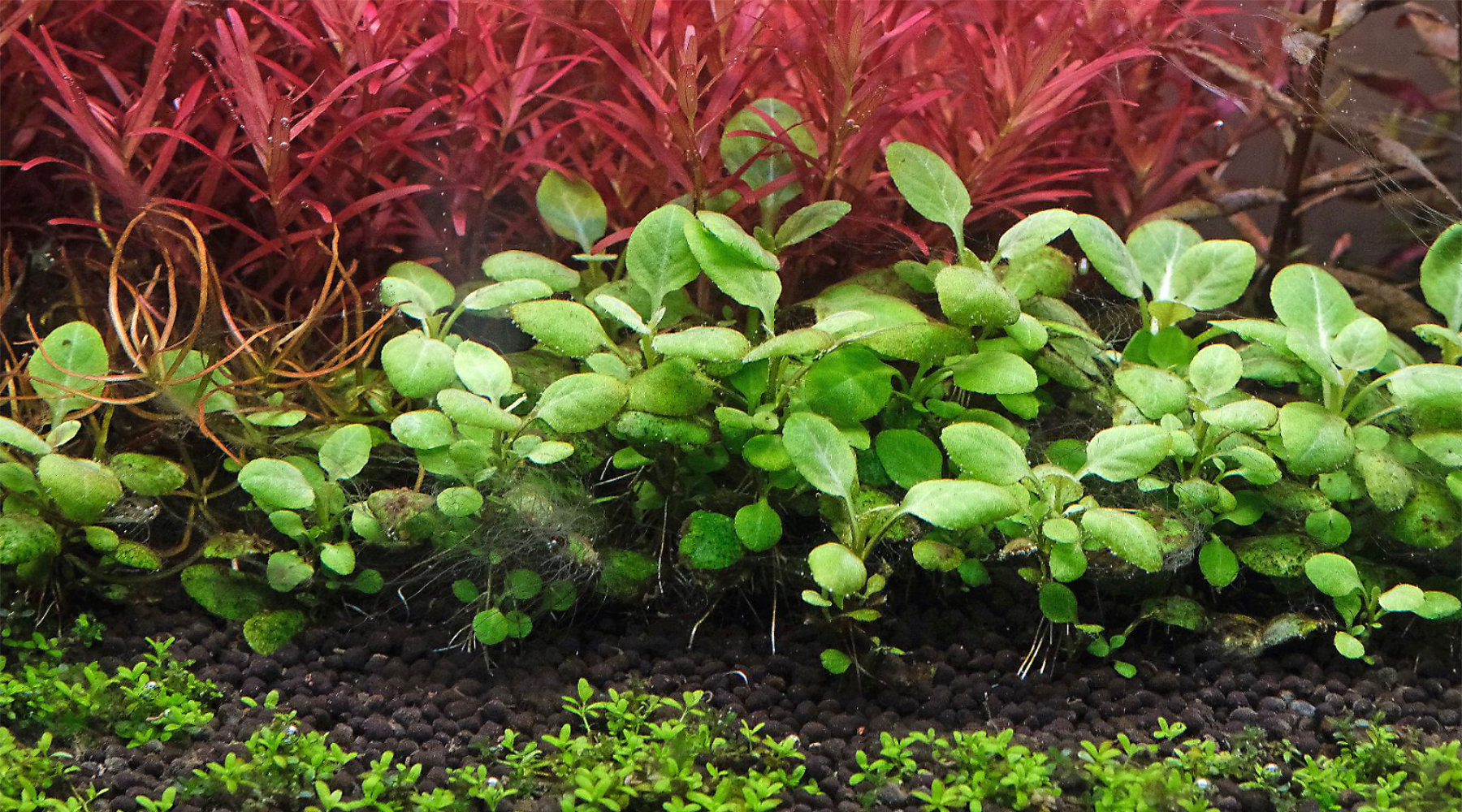
For most algae, spot-dosing is all you need. But large clumps of hair algae and Cladophora are the exception - these should be physically removed first, by trimming them away or pulling them out with tweezers, rather than relying on dosing alone.

There are two reasons. First, when you deactivate a dense mass in place, new algae tends to regrow over the top of the dead material very quickly, so visually it can look as though nothing happened. Removing the bulk by hand takes away that foothold. Second, although hair algae and Cladophora can look alike to the eye, they aren't all the same underneath: some varietals have tougher cell coatings - structurally closer to higher-order plants - which makes it harder for APT FIXLITE to penetrate and take effect. In those cases, manual removal does the heavy lifting, and a follow-up spot-dose on what remains cleans up the rest. Think of FIXLITE as the finishing step on thick clumps, not the whole job.

The 2Hr Way

View all

New Aquarium Algae: Why It Happens and How to Clear It

New Aquarium Algae: Why It Happens and How to Clear It

Brown fuzz on the glass. Green hair on your Monte Carlo. A haze in the water that makes you wonder what went wrong. Nothing went wrong - your tank is just young. Here's what's actually happening in a new aquarium and how to read the signs that it's fixing itself.

Read moreabout New Aquarium Algae: Why It Happens and How to Clear It
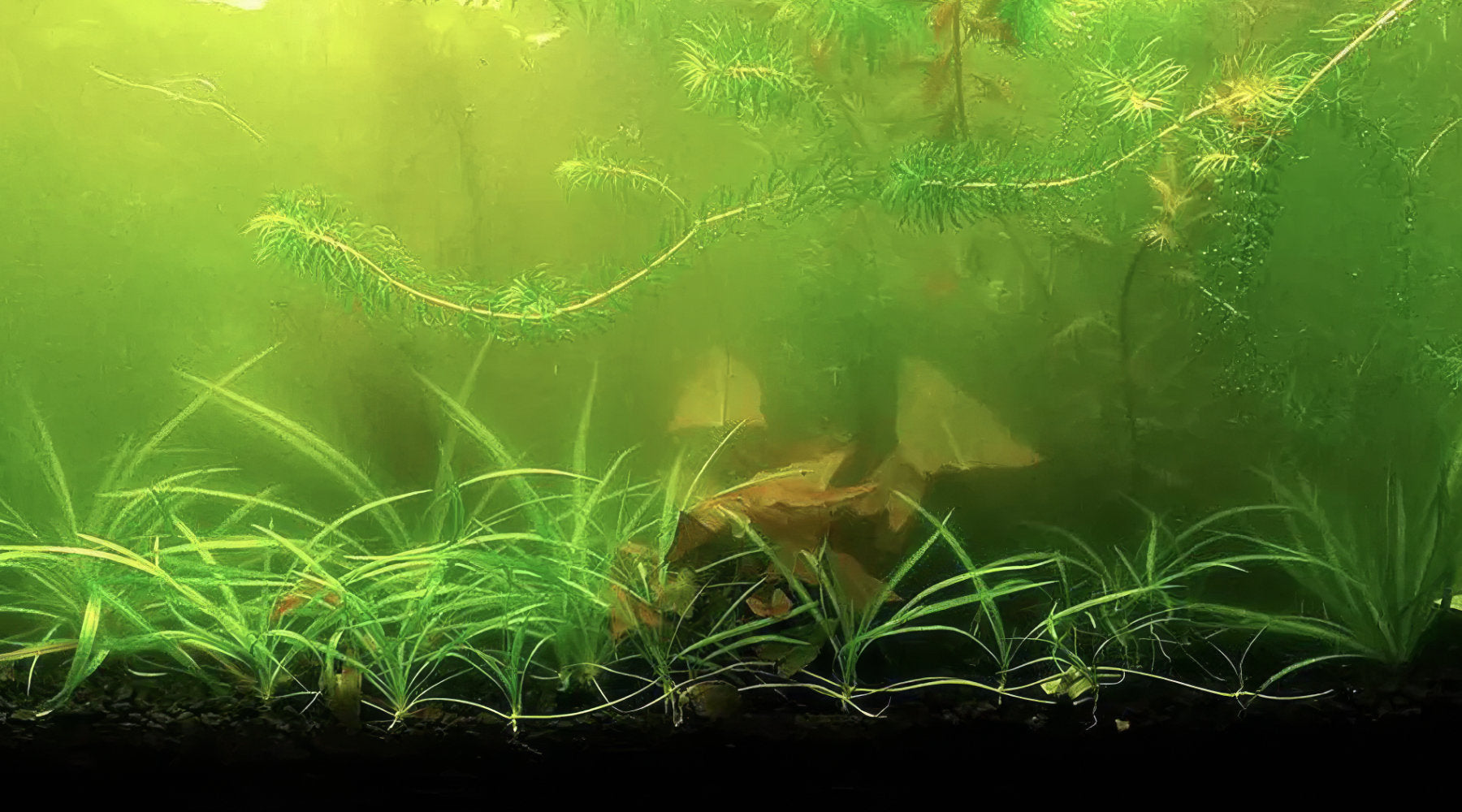
Green Water Algae: Why Your Aquarium Looks Like Pea Soup (And How to Clear It)

Green Water Algae: Why Your Aquarium Looks Like Pea Soup (And How to Clear It)

Your tank looks like pea soup and water changes barely dent it. Green water is a bloom of free-floating algae, driven by strong light plus dissolved waste. It rarely harms fish, but it hides everything. Here's what actually triggers the bloom and the tools that reliably clear it.

Read moreabout Green Water Algae: Why Your Aquarium Looks Like Pea Soup (And How to Clear It)
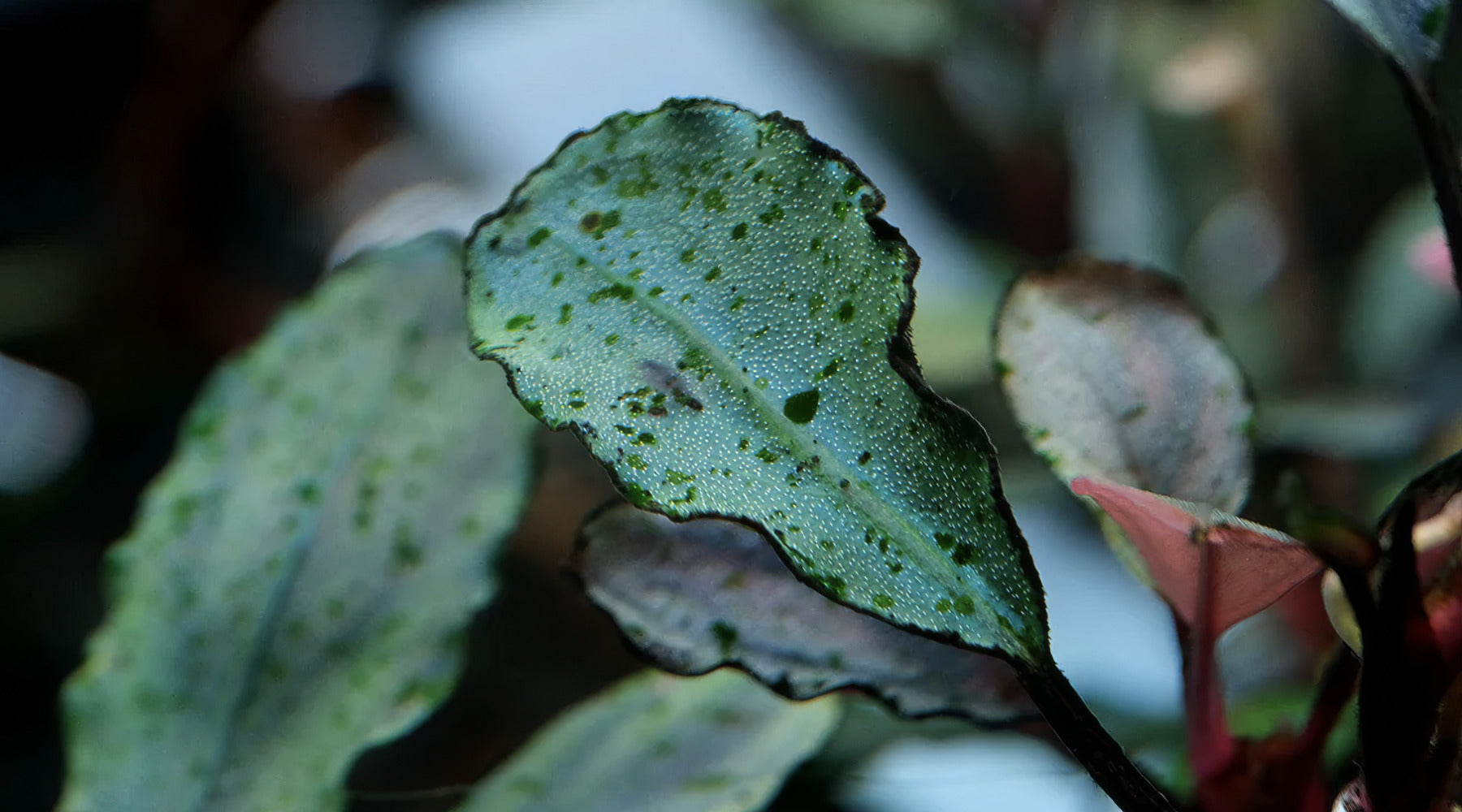
Green Spot Algae (GSA): What Causes It and How to Stop It

Green Spot Algae (GSA): What Causes It and How to Stop It

Those hard green dots on your glass and Anubias leaves are not random. They show up exactly where strong light hits slow, dirty, poorly circulated surfaces. GSA is a maintenance issue as much as a nutrient problem. Here is what is causing it and how to fix it.

Read moreabout Green Spot Algae (GSA): What Causes It and How to Stop It
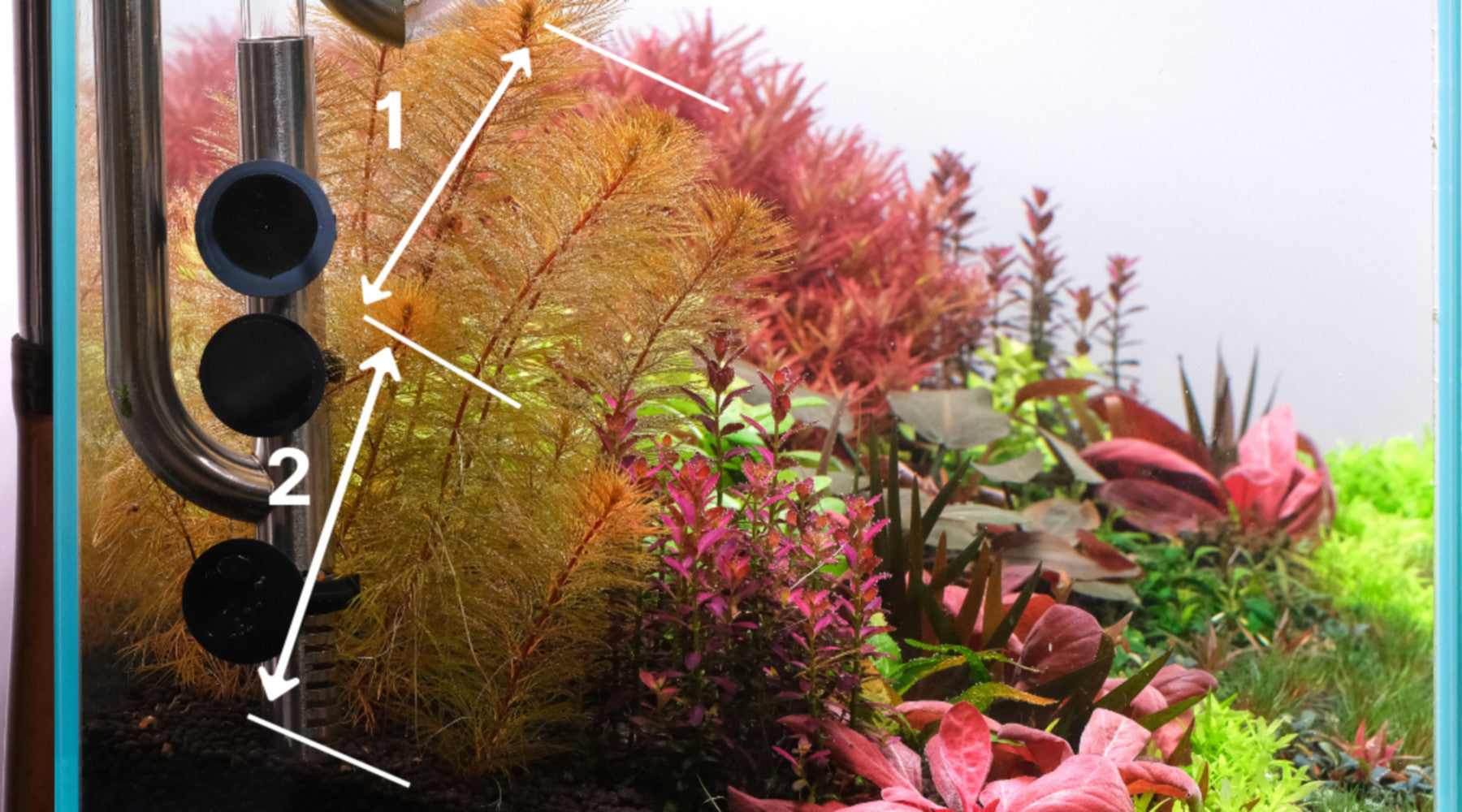
Clearing algae without algicides example 2

Clearing algae without algicides example 2

How to clear algae without algicides. Early steps to prevent algae from getting a foot hold on the tank.
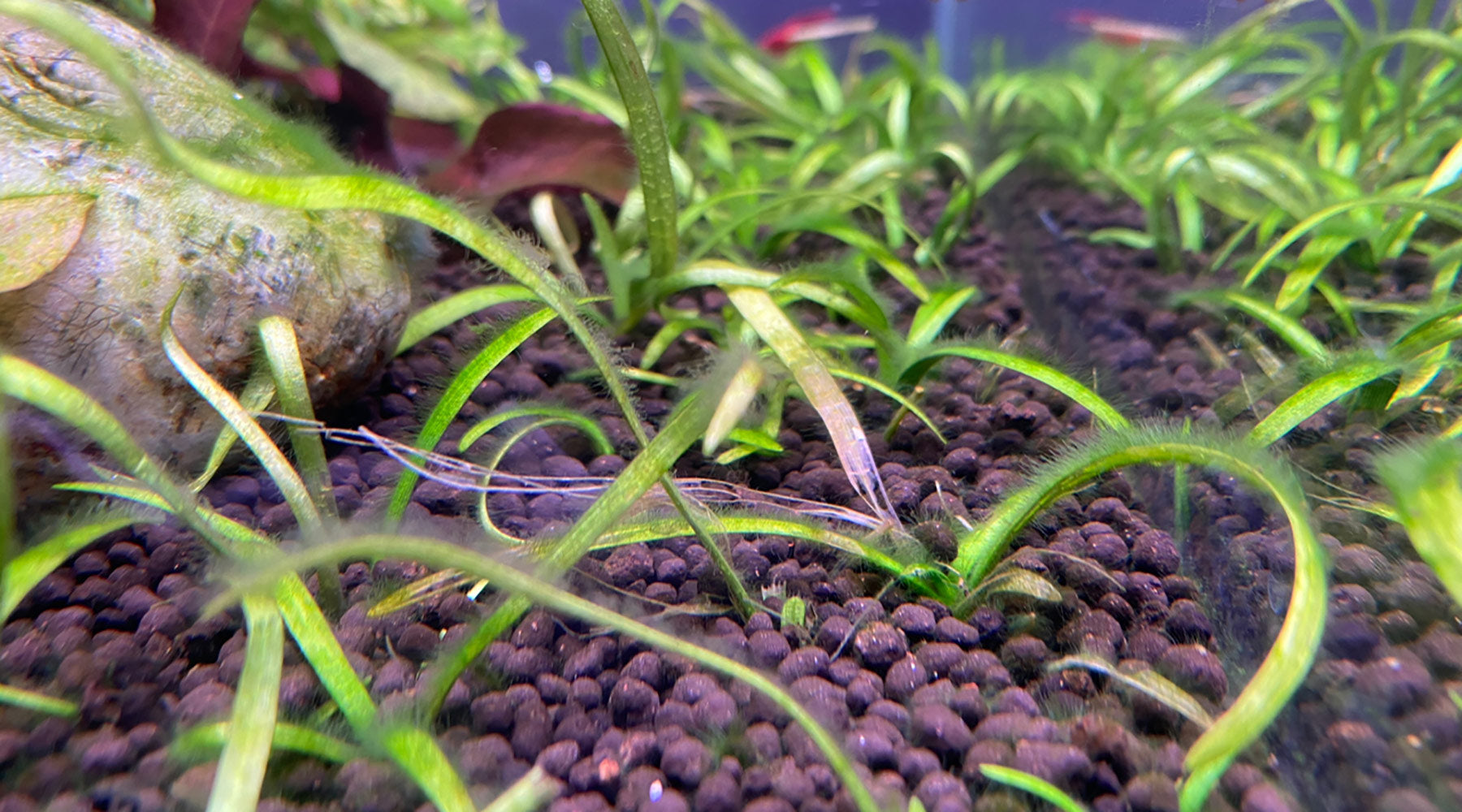
Read moreabout Clearing algae without algicides example 2

Green Hair Algae, Fuzz Algae, and String Algae in Planted Tanks: Causes and Fixes

Green Hair Algae, Fuzz Algae, and String Algae in Planted Tanks: Causes and Fixes

Hair, fuzz, and string algae are hobbyist labels for the same filamentous green algae, and on plants they nearly always trace back to one thing: stressed plants. This guide breaks down what actually triggers them, how to tell them apart from Cladophora, and the two-step fix that clears them for good.

Read moreabout Green Hair Algae, Fuzz Algae, and String Algae in Planted Tanks: Causes and Fixes
Solving localized algae problems

Solving localized algae problems

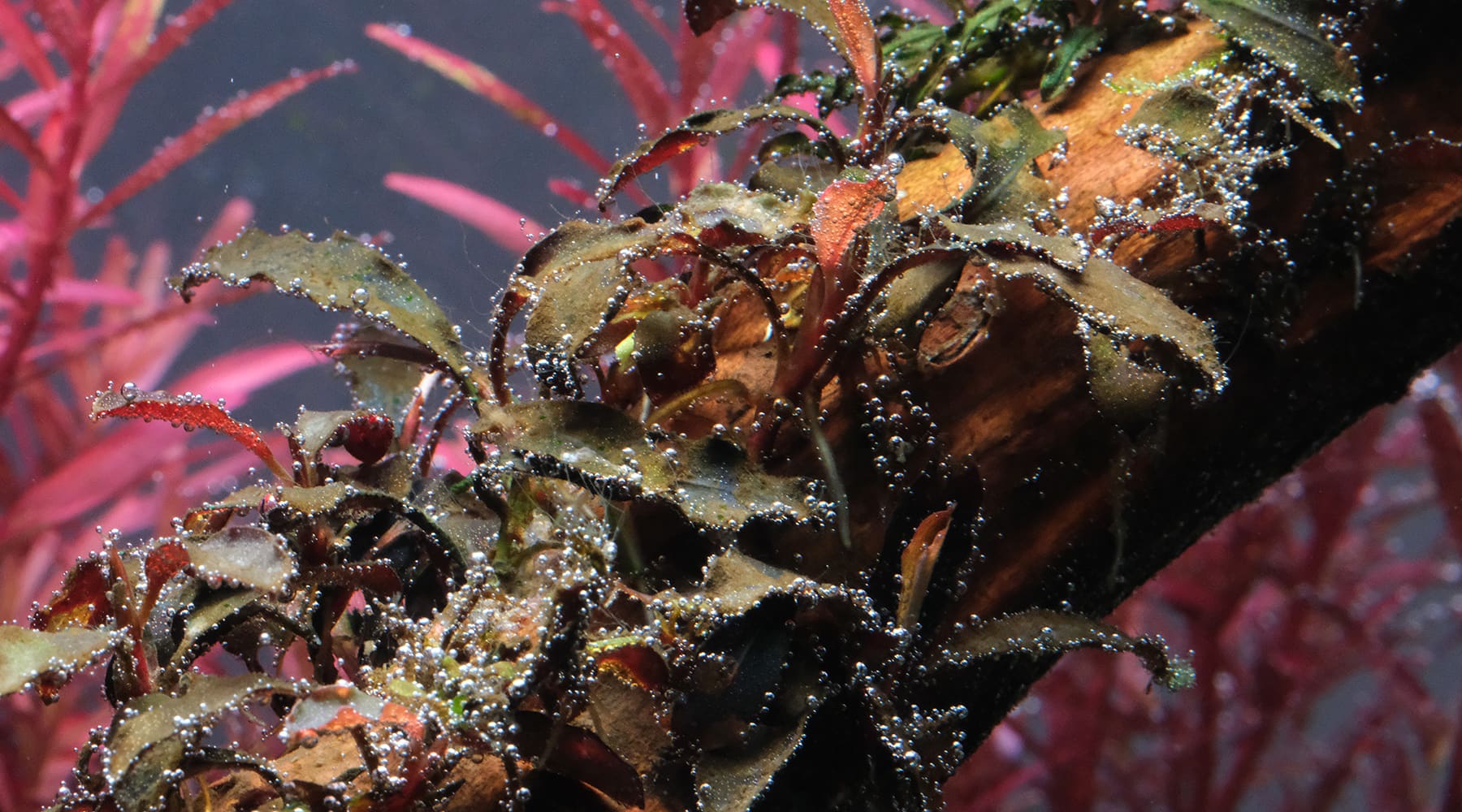
Not all algae issues are tied to CO2, light or nutrients. In this example, we examine how eddy currents depositing debris around a stem plant bush can trigger algae in particular spot.
Read moreabout Solving localized algae problems

How to Get Rid of Brown Algae (Diatoms) in Planted Aquariums - Complete Guide
How to Get Rid of Brown Algae (Diatoms) in Planted Aquariums - Complete Guide
Diatoms, also known as brown algae, appear as brown patches on plants. Brown algae is common in new setups for the first couple of weeks. Often, brown algae or diatoms can go away without much intervention as the tank matures. Read on to find out how to remove brown algae or diatoms from planted tank.
Read moreabout How to Get Rid of Brown Algae (Diatoms) in Planted Aquariums - Complete Guide